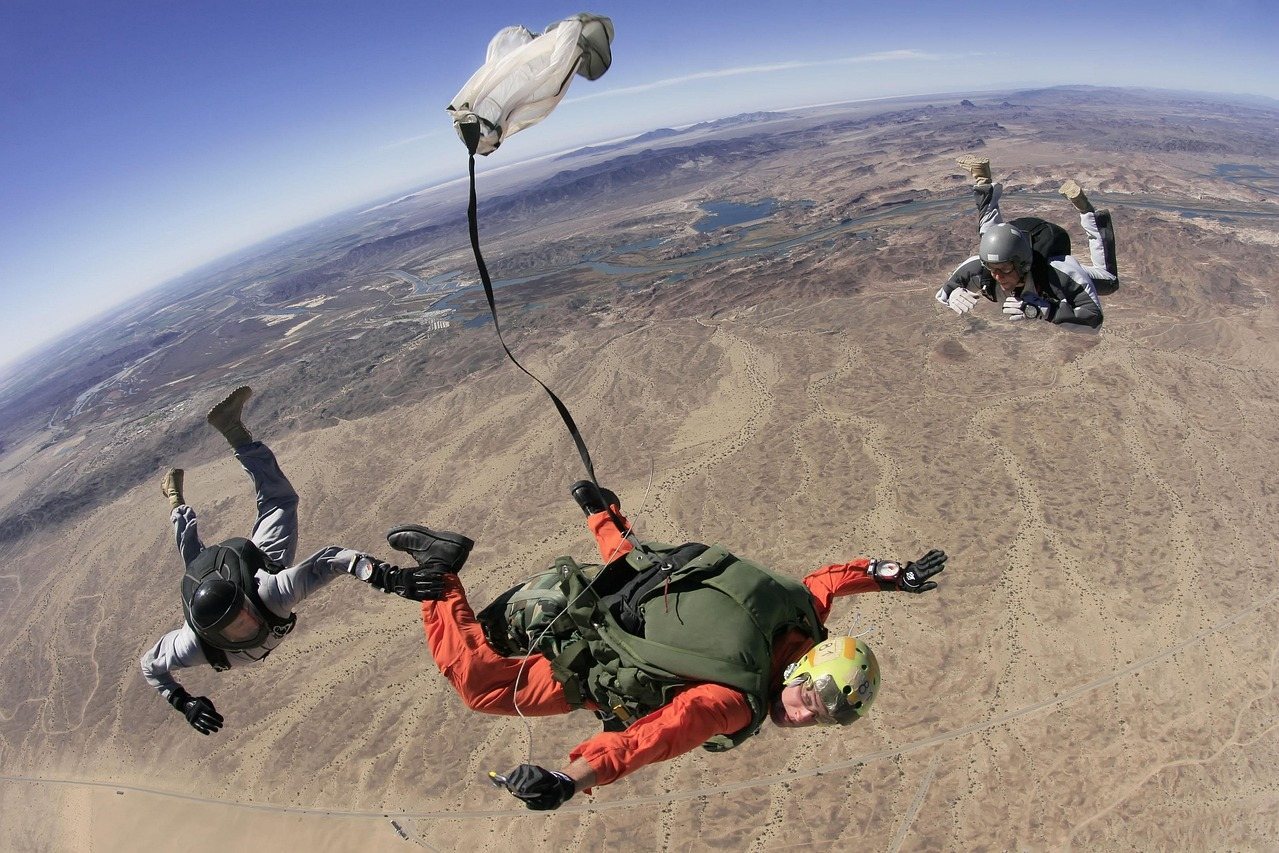
Freefalling in the Sonoran Sky: Discovering Tucson’s Hidden Gem of Skydiving
Discover the hidden gem of Tucson, Arizona for skydiving enthusiasts. Perfect weather, stunning views, experienced instructors & unique subtopics.
Tucson doesn’t have a dropzone inside city limits, but it has two good ones within an hour’s drive, and that’s the hidden part. Skydive Marana sits about 20 minutes north of town at Marana Regional Airport, and Skydive Arizona in Eloy, about an hour up I-10, is one of the best-known skydiving centers in the world. Expect to pay roughly $220 to $280 for a first tandem, plus about $100 if you want video. The best months to jump are October through April.
Prices as of October 2026, as listed on each dropzone’s own site. They change, so check the booking page before you go.
Your two main options near Tucson
Skydive Marana: the close one
Skydive Marana has been running since 1991 out of the Avra Valley, just west of the Tucson Mountains. It’s a small operation. Tandems go up to 12,500 feet, and the FAQ says to plan on about two hours for one person, or half a day if you bring a big group.
The standard tandem was listed at $279 when we checked, with lower rates for groups of four or more, military, and students. Video runs about $99. Weekends run 8 a.m. to 5 p.m. Weekday jumping depends on staff and weather, so call ahead (they answer the phone seven days a week) before you plan a weekday trip.
Skydive Arizona: the big one in Eloy
Skydive Arizona opened in 1978 and calls its aircraft fleet the largest at any skydiving center in the world. It’s a full skydiving resort: bunkhouse, RV hookups, team rooms, a restaurant and bar (the Bent Prop Saloon), and an on-site wind tunnel, SkyVenture Arizona. Experienced jumpers come from all over the world to train here, and the center hosts FAI world championship events.
For a first-timer, that means a busy place running like a well-oiled machine. Tandems go to 13,000 feet with about 50 seconds of freefall. The tandem page listed $259 (with a discount for students, military, and first responders) and $115 for video when we checked. Plan on half a day.
Hours change with the season. From October through April they’re open every day, 7:45 a.m. to 5 p.m. From May through September they start earlier to beat the heat and don’t jump on Tuesdays or Wednesdays.
One more within reach
If you’re willing to drive about as far as Eloy, Phoenix Skydive Center in Casa Grande, a family-run dropzone at the city’s municipal airport, flies tandems to 12,000 feet. Its listed price was $219, the cheapest of the three. Freefall is shorter from that height (they say 35 to 45 seconds), and their weight limit is lower.
What it costs, and the fine print
- Tandem jump: roughly $220 to $280 at the three dropzones above, before video. Prices move, and Arizona dropzones run promotions a lot, so check the booking page.
- Video: about $100 to $115 extra.
- Age: all three require you to be 18 with a government photo ID. No exceptions for teenagers, even with a parent’s signature.
- Weight: Skydive Arizona’s limit is 220 lbs for men and 200 lbs for women. Skydive Marana takes up to 220 lbs, then charges $1 a pound up to 250. Phoenix Skydive Center’s limit is under 210 lbs. Body shape matters too, because the harness has to fit right, so be honest when you book.
- Booking fees: some online booking adds a fee (Phoenix Skydive Center lists $9.95).
When to go: Tucson weather, honestly
Desert weather is good for skydiving most of the year, but not all of it. Two things can wreck a summer jump day.
Heat. Tucson summers routinely go past 100°F. Hot air is thin, so planes climb slower, and you’ll be sweating in a jumpsuit on hot asphalt. That’s why Skydive Arizona moves its summer start time to 6:30 or 7 a.m. If you’re jumping in June, book the first load of the day.
Monsoon. The National Weather Service counts June 15 through September 30 as monsoon season. Afternoon thunderstorms throw out gust fronts that the NWS says often go over 40 mph, plus dust storms and lightning. Dropzones stop jumping when that weather moves in, and it can move in fast. Summer mornings are usually calm, so jump early.
October through April is the sweet spot: mild temperatures, steady air, and full daily hours at Eloy. Bring a light jacket for a winter jump. At 12,500 feet it’s a good 40°F colder than on the ground.
One tip from Skydive Marana’s FAQ: don’t cancel just because of a bad forecast. Call the dropzone that morning. They know the local weather better than your phone app does.
What you’ll see from up there
This is the real reason to jump near Tucson. From Marana, you’re right next to the Tucson Mountains and the western part of Saguaro National Park, and Skydive Marana points to the Santa Catalina Mountains as the view everyone remembers from the parachute ride down. In Eloy you’re over flat desert farmland with mountain ranges in every direction.
Don’t expect to pick out cactus during freefall. At 120 mph you’ll mostly notice the wind and the horizon. The parachute ride is where you get to look around: a few quiet minutes with nothing below you but desert.
A first tandem, step by step
- Check in and sign the waiver. Bring your ID. The waiver is long and blunt about the risk. Read it anyway.
- Training. About 20 minutes at Marana: the body position for exit and freefall, and how to lift your legs for landing. Your instructor handles the parachute.
- Gear up. Harness, goggles, sometimes a jumpsuit. Wear sneakers that stay on, not sandals or boots.
- The ride up. This is when most people get nervous, and that is normal. Watch the ground shrink and go over your arch one more time.
- Freefall. About 50 seconds to a minute from 12,500 to 13,000 feet, at around 120 mph.
- Canopy ride and landing. A few minutes under the parachute, then a slide-in or standing landing.
Who’s strapped to your back
All three dropzones say they follow USPA safety rules. A USPA tandem instructor needs at least 500 jumps, three years in the sport, a D license, and an FAA medical certificate before taking a student, and that’s only the minimum. Most instructors at busy dropzones have thousands of jumps.
The overall numbers: USPA counted 16 skydiving deaths out of 3.47 million jumps in 2025, about 0.46 per 100,000 jumps. The risk isn’t zero, which is why the waiver exists.
Want more than one tandem?
If the first jump hooks you, Tucson is a good place to learn to skydive on your own. Both Skydive Marana and Skydive Arizona teach Accelerated Freefall (AFF), and Eloy is a common place for students from around the country to come and train. You need 25 freefall jumps plus written and practical exams to earn a USPA A license.
Night jumps and formation skydiving (the big circles of people linking up in freefall) come later. They’re for licensed jumpers, and night jumps need a sign-off from the dropzone’s safety officer. You won’t see them offered as a first-timer add-on.
Not ready to jump out of a plane? SkyVenture Arizona, the wind tunnel at Skydive Arizona, lets you try freefall with an instructor and no airplane. They also take kids, which the airplane jumps don’t.
Before you book
- Pick by what matters to you: closest drive (Marana), biggest operation and every-day winter hours (Eloy), or lowest listed price (Casa Grande).
- Check the weight limit and bring ID. Those are the two things that send people home.
- Jump October through April if you can. In summer, take the first load of the morning.
- Leave the whole half day open. Wind holds and busy loads happen.
- Call that morning instead of trusting the forecast.
Photo by 12019 on Pixabay.