Where to Skydive in the U.S.: Seven Drop Zones Worth Planning a Trip Around
Seven U.S. skydiving drop zones grouped by view, plus the national rules, safety numbers, and landing facts to know before you book.
You've probably watched a friend's skydiving video and thought, "I could do that, but where?" The answer depends on what you want to see on the way down. For ocean views, look at Oahu's Kawaihāpai Airfield, Skydive San Diego, or Skydive Sebastian in Florida. For mountains, try Skydive Yosemite or Skydive Lake Tahoe. For desert, go to Skydive Arizona in Eloy or the drop zone in Moab, Utah. Below is what each place offers, a few myths to drop before you book, and what the safety numbers say.
Over the Ocean: Oahu, San Diego and Sebastian
Kawaihāpai Airfield, Oahu, Hawaii. Civilian skydiving on Oahu runs out of Kawaihāpai Airfield in Mokulēʻia, formerly called Dillingham Airfield. Its future is more secure than it used to be. A 50-year lease between the U.S. Army and the Hawaii Department of Transportation took effect on July 6, 2024. Jumps are made from fixed-wing airplanes at altitudes from 8,000 to over 14,000 feet. You may see older articles promise helicopter skydives in Hawaii. Don't count on one. The commercial drop zones fly airplanes.
Skydive San Diego, Jamul, California. This drop zone sits at 13531 Otay Lakes Road in Jamul, inland from the city. From 13,000 feet you can see the San Diego metro area, the Pacific Ocean, and Tijuana, Mexico. It is one of the few jumps in the country where you can see two countries at once.
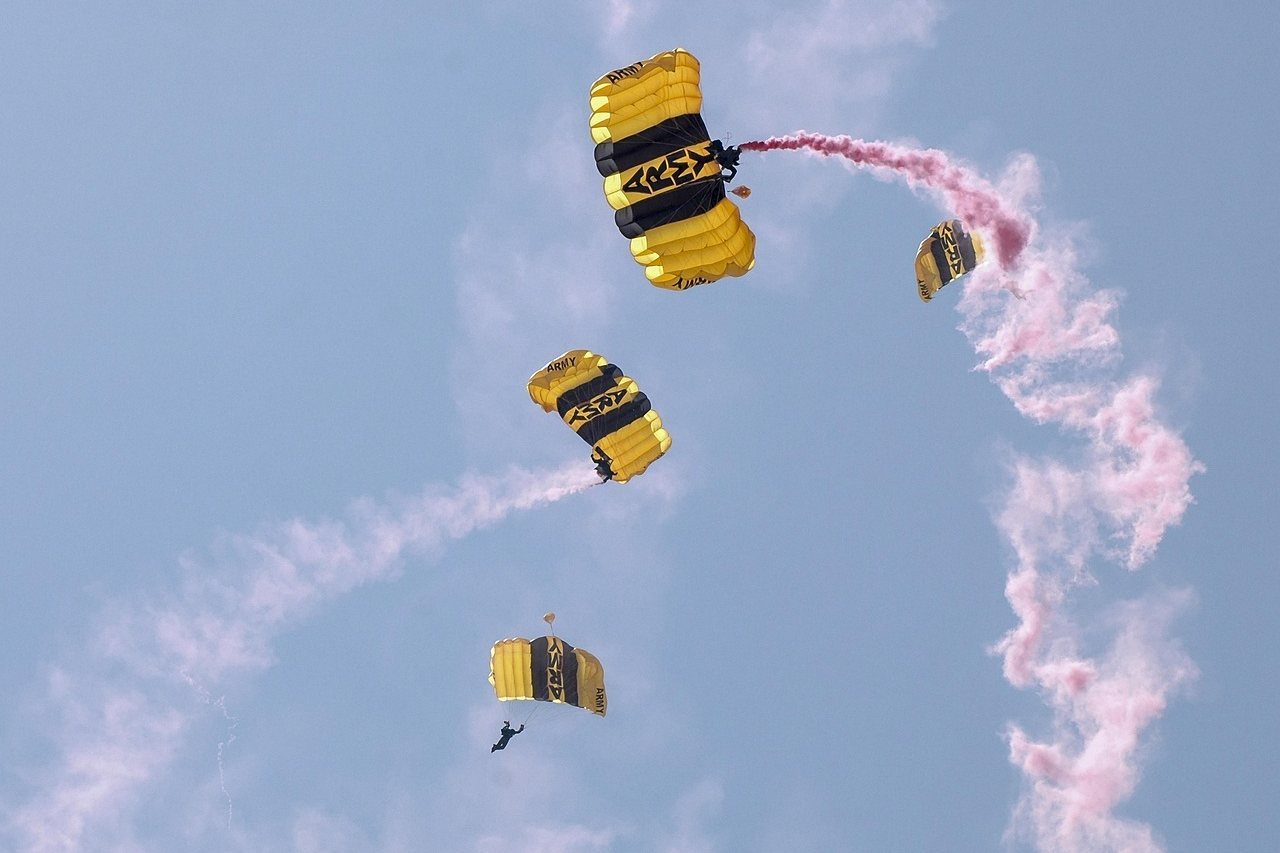
Skydive Sebastian, Sebastian, Florida. Florida's east coast offers a different kind of water view. Skydive Sebastian operates from Sebastian Municipal Airport at 400 Airport Drive West. From the plane you look out over the Sebastian Inlet, the Indian River Lagoon, and the Atlantic Ocean. One correction to a common myth: you won't land on the beach. Standard jumps on the Florida coast touch down in designated landing areas at the airport. Beach landings are reserved for authorized demonstration events, such as holiday shows by costumed skydivers.
Over Mountains and Lakes: Yosemite and Tahoe
The coast isn't the only place with water views. Inland California and Nevada trade the ocean for granite and alpine lakes.
Skydive Yosemite, Mariposa, California. Skydive Yosemite flies from Mariposa-Yosemite Airport at 5020C McCready Way, outside the park. From the air you can see landmarks in Yosemite Valley. You land back at the airport, though, not in the park. Federal rules prohibit delivering or retrieving a person by parachute inside any National Park System unit without a permit from the superintendent. That is why no drop zone lands inside Yosemite.
Skydive Lake Tahoe, Minden, Nevada. The name says Tahoe, but the drop zone is at Minden-Tahoe Airport in Minden, Nevada. All of its operations and landings happen there. Some articles claim you can choose whether to land in California or Nevada. You can't. Every jump lands at the Minden airport.
Over the Desert: Eloy and Moab
Skydive Arizona, Eloy, Arizona. If one place in this list deserves to be called a destination, it is probably this one. Skydive Arizona is widely described as one of the largest skydiving centers in the world. It has a 90-acre campus, three grass landing fields, and a fleet that includes Twin Otters and Skyvans. It is in Eloy, more than 50 miles from Phoenix, so don't expect views of downtown. The center also runs special high-altitude jumps up to 18,000 feet. Above 15,000 feet cabin altitude, FAA rules require supplemental oxygen for everyone on board, so jumpers breathe onboard oxygen during the climb.
Moab, Utah. Moab's red rock country also draws skydivers. Commercial skydiving there operates from Canyonlands Regional Airport (CNY) under FAA rules. Moab is also known for BASE jumping, which is a separate sport. As of May 2026, the Bureau of Land Management's Moab Field Office allows commercial tandem BASE jumping at specific permitted sites. It also bans aerial and roped sports in Mineral and Hell Roaring Canyons to protect bighorn sheep and raptors. If you plan to try both sports on one trip, check which sites are open before you go.
Before You Book: The Rules Every Drop Zone Follows
Wherever you jump, the same national rules apply.
- You must be 18. The U.S. Parachute Association (USPA) sets a strict minimum age of 18. Parental consent does not change it.
- Wind can cancel your jump. Student skydivers may not jump in ground winds above 14 mph. That limit applies to students, not to everyone. Licensed skydivers have no USPA wind limit and set their own. On a breezy day, experienced jumpers may still be flying while first-timers wait on the ground.
- The reserve parachute is inspected on a schedule. Federal rules require a reserve made only of synthetic fibers to be packed by a certificated parachute rigger within 180 days before use. Reserves with natural fibers must be packed within 60 days. The drop zone handles this, but it's a fair question to ask.
How Safe Is Skydiving, Really?
The USPA tracks civilian skydiving deaths every year.
- 2019: About 3.3 million jumps and 15 fatalities, or 0.45 per 100,000 jumps.
- 2024: About 3.88 million jumps and 9 fatalities, or 0.23 per 100,000 jumps. This was the lowest rate ever recorded.
- 2025: About 3.47 million jumps and 16 fatalities, or 0.46 per 100,000 jumps.
The risk is low, but it isn't zero. The USPA titled its 2025 report "A Need for Vigilance," and the rate goes up and down from year to year. Following the rules above, especially waiting out the wind, is part of what keeps it low.
If One Jump Isn't Enough
Many people who do a tandem jump at one of these drop zones want to jump on their own next. To earn a USPA A license, you need:
- at least 25 skydives
- a completed USPA A-License Progression Card
- 5 group skydives with one or more other people
- a passing score on oral and written exams
After that, these seven drop zones become more than a single trip. You can work through them as a list.
Sources (36)
- Skydive Carolina: Is Skydiving More Dangerous Than Driving?
- USPA: A Milestone in Safety, the 2024 Fatality Summary
- USPA: The 2024 Non-Fatal Incident Summary, Part One
- USPA: A Need for Vigilance, the 2025 Fatality Summary
- eCFR: 14 CFR Part 105
- Cornell LII: 14 CFR § 105.43
- eCFR: 14 CFR § 91.211
- USPA Skydiver's Information Manual, Section 5-6
- eCFR: 36 CFR § 2.17
- Cornell LII: 36 CFR § 2.17
- USPA: Minimum Age to Skydive
- Skydive the Wasatch: Skydiving Requirements and Safety
- USPA: Are These Winds OK to Jump In?
- Skydive Carolina: Wind Conditions for Skydiving
- USPA: Safety Check, 200, the Non-Magical Magic Number
- Skydive Midwest: Skydiving Licenses Explained
- Hawaii DOT: Army and HDOT Set to Negotiate 50-Year Lease for Dillingham Airfield
- U.S. Army: New Lease Agreement Secured for Kawaihāpai (Dillingham) Airfield
- Go Hawaii: Oahu Air Activities
- Skydive Guides: Skydive Hawaii
- Go Skydiving: San Diego
- San Diego Reader: Skydive San Diego
- The Yosemite Inn: Skydiving in Mariposa
- Yosemite.com: Be Brave, Skydive Yosemite
- Skydive Arizona: Facilities
- Adrex: Skydive Arizona, One of the Largest DZs in the US
- Skydive Arizona: High Altitude Jumps
- Moab BASE Access: BASE Jumping in Moab
- BLM: Commercial Tandem BASE Jumping Authorized in Grand County
- BLM: New Wildlife Protections in Mineral and Hell Roaring Canyons
- Travel Nevada: Skydive Lake Tahoe
- All Lake Tahoe: Skydiving
- Sebastian PD: Flight Procedures
- Sebastian Daily: Skydiving in Sebastian Offers an Incredible View
- Skydive Sebastian
- CocoaBeach.com: Santa Skydivers in Cocoa Beach