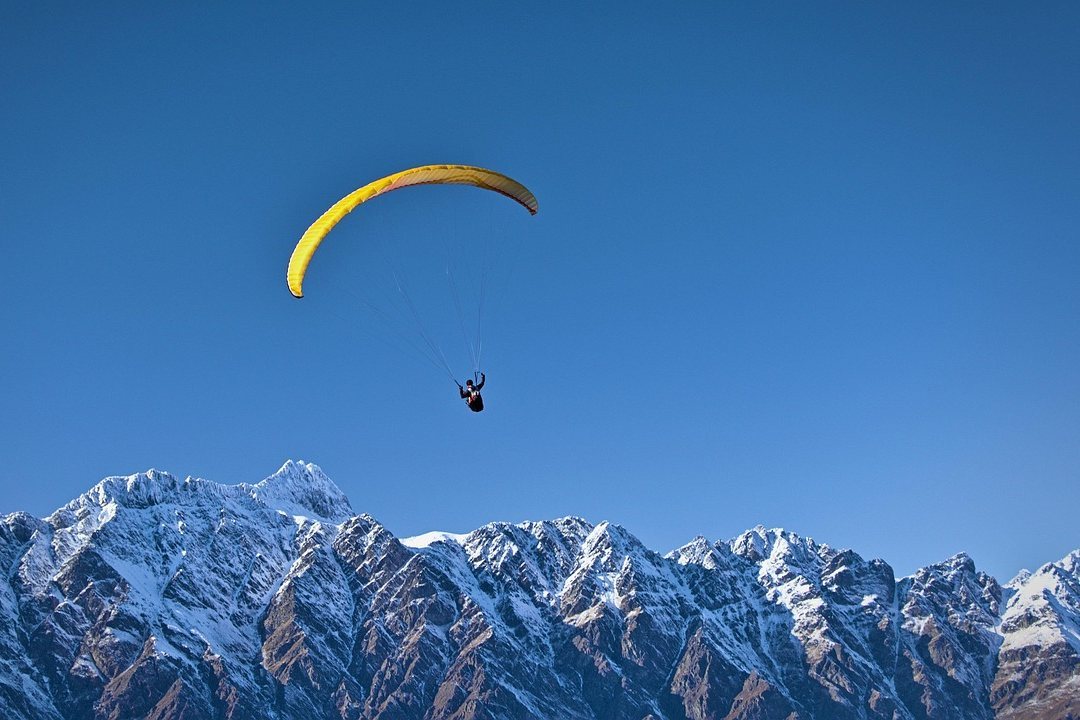
Adrenaline Junkies Rejoice: Skydiving Adventures Around the World
Discover the ultimate thrill-seeking activity for adrenaline junkies. Explore popular skydiving destinations, extreme experiences, and more.
If you want a skydive worth traveling for, these are the trips that deliver: a helicopter jump over the Swiss Alps at Interlaken, a freefall over the Palm Jumeirah in Dubai, an 18,000-foot jump over the glaciers at Franz Josef in New Zealand, the Great Barrier Reef from above Cairns, and the big American dropzones in Arizona, California and Florida. Every place below was operating and taking bookings when this was written, and the prices are the listed rates from each dropzone’s own site. Expect a tandem to run roughly $200 to $300 in the US and more for the scenic international jumps.
Prices as of October 2026, as listed on each dropzone’s own site. They change, so check the booking page before you go.
United States: the big three dropzones
The US has some of the busiest skydiving centers in the world. These three are open year-round and see jumpers from everywhere.
Skydive Arizona, Eloy
Skydive Arizona sits in the desert between Phoenix and Tucson and runs what it calls the world’s largest fleet of skydiving aircraft. A tandem is listed at $259 ($239 for students, military and first responders), from up to 13,000 feet above the ground, with about 50 seconds of freefall. The desert is flat and wide open, so there is a lot of room to land. Summer hours shift earlier because of the heat.
Skydive Perris, Southern California
Skydive Perris, inland from Los Angeles and San Diego, jumps from 14,000 feet for about 60 seconds of freefall. Tandems are listed from $199. If you want something stranger, Perris also lists an 18,000-foot high-altitude tandem ($399, about 90 seconds of freefall, offered on set dates) and a tandem out of a DC-9 jet airliner ($999, offered rarely). The weight limit is 240 pounds, with a surcharge over 220.
Skydive DeLand, Florida
Skydive DeLand, near Orlando, has been running since 1982 and is open seven days a week all year. A tandem is listed at $237. Florida is a good winter pick when dropzones up north slow down for the cold.
Switzerland: helicopter jumps over the Alps
Skydive Interlaken is the one people put on a bucket list. Most jumps go from a helicopter, so instead of a long climb in a plane you lift straight up off the valley floor with the Eiger, Mönch and Jungfrau in front of you. Listed prices run from CHF 490 for the Interlaken helicopter jump (about 14,000 feet) to CHF 540 over the Lauterbrunnen valley and CHF 690 for the Eiger jump, which adds a mountain flight. Plan on 2 to 3 hours. They jump year-round, weather permitting, and in the mountains the weather decides a lot, so leave yourself a spare day.
Spain: Empuriabrava on the Costa Brava
Skydive Empuriabrava is about an hour and 45 minutes north of Barcelona and is one of the best-known dropzones in Europe. The standard tandem is €299 from 13,500 feet, about a minute of freefall at around 200 km/h (124 mph), then roughly five minutes under the parachute over the coast and the canals of the town. Packages with video and photos run up to €479, and €749 buys a private flight.
Dubai: the Palm
Skydive Dubai jumps over the Palm Jumeirah, the man-made island shaped like a palm tree, with the skyline behind it. A tandem from up to 13,000 feet starts at AED 2,199 and includes photos and video. It is one of the priciest tandems on this list, and you pay for the view. They stand down when the wind is wrong, so build some slack into your trip.
Australia: Byron Bay and Cairns
Both are run by Skydive Australia and are open seven days a week.
- Byron Bay: up to 15,000 feet over the beaches and the Cape Byron headland, from AUD 385.
- Cairns: up to 15,000 feet with the Great Barrier Reef, rainforest and city below, from AUD 355. You land in a field south of town and ride a bus back.
New Zealand: Franz Josef and the glaciers
Skydive Franz Josef on the South Island’s West Coast flies you past the Fox and Franz Josef glaciers with Aoraki/Mount Cook in view. You pick your altitude: 10,000 feet (from NZ$349, up to 30 seconds of freefall), 13,000 feet (from NZ$429), 16,500 feet (from NZ$549), or the 18,000-foot Kea Jump (from NZ$799, up to 85 seconds of freefall after a 30-minute scenic climb). If you want the longest fall you can get without a license, this is a good place to do it.
When a tandem stops being enough
Most people who get hooked go on to a solo course. The usual US route is Accelerated Freefall (AFF), and 25 jumps plus a few skills checks gets you the USPA A license. After that, the bigger stuff opens up in steps:
- Night jumps: the USPA B license requires at least 50 jumps, and night jumps are one of its privileges. You exit in the dark with lights on your gear and land on a lit target.
- Wingsuits: the USPA wants at least 200 jumps and a current license before wingsuit training. The suit turns a fall into a glide, so you cover ground instead of dropping straight down.
- BASE jumping: jumping from Buildings, Antennas, Spans (bridges) and Earth (cliffs). You still use a parachute. You just have far less altitude and time to fix a problem, which is why it is far more dangerous than skydiving from a plane.
The jumps that set the bar
- Joe Kittinger, 1960: jumped from a balloon at 102,800 feet over New Mexico and fell for 4 minutes 36 seconds, hitting about 614 mph.
- Felix Baumgartner, 2012: the Red Bull Stratos jump from 127,852 feet. He reached 843.6 mph, Mach 1.25, the first person to break the sound barrier without engine power. Kittinger was his mission control voice.
- Alan Eustace, 2014: topped Baumgartner with a jump from about 135,890 feet over Roswell, New Mexico. It is still the altitude record.
- Jeb Corliss, 2011: jumped from a helicopter and flew a wingsuit through the roughly 100-foot-wide arch of Tianmen Cave in China.
How safe is it?
Safer than most people think, and not risk-free. In 2025, USPA members made 3.47 million jumps and there were 16 civilian skydiving deaths in the US, or 0.46 per 100,000 jumps, according to the USPA. The USPA says most accidents come from human error, often bad landings under a working parachute, not gear failure. The most common injury is an ankle hurt on landing.
In the US, the FAA requires every jumper to wear a main and a reserve parachute, and the reserve must be packed by an FAA-certificated rigger within the previous 180 days. A USPA Group Member dropzone has agreed to follow USPA safety standards for instructors, gear and pilots. Overseas, each country runs its own system. Ask who certifies the instructors and when the reserve was last repacked. A good dropzone answers right away.
Before you book a trip around a jump
- Check the weight limit. Many dropzones cap tandems around 220 to 240 pounds and charge extra near the top.
- Bring government photo ID. Most US dropzones require you to be 18.
- Leave a spare day. Wind, clouds and mountain weather cancel jumps, and the good dropzones refund or reschedule.
- Price the video before you go. It is often an add-on, and you can’t buy it after you land.
- Don’t drink the night before or dive within 24 hours of the jump. Ask the dropzone for their exact rules.
Photo by Pexels on Pixabay.