AFF vs. Tandem: Which Path to a Skydiving License
Tandem is one jump with an instructor attached. AFF is the fast track to jumping on your own. How each one works, what training looks like, and what it takes to earn a USPA A license.
If you want to skydive, there are two common ways to start: a tandem jump or AFF (Accelerated Freefall). One is about the experience. The other is about learning to skydive yourself. Here's the difference.
Tandem: the experience
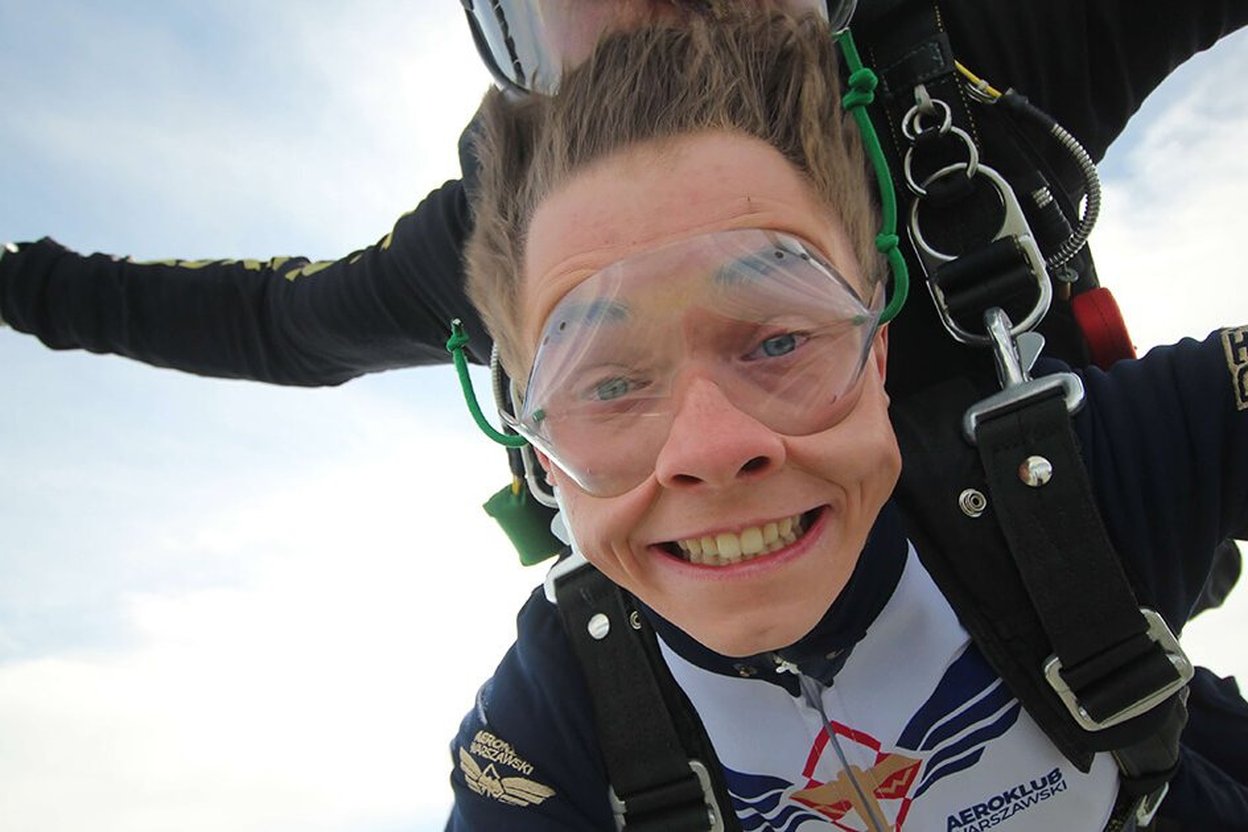
On a tandem skydive, you're harnessed to an experienced, rated instructor who handles everything: the exit, freefall stability, deploying the parachute, steering and landing. You're a passenger with a great view.
- Training: a short briefing, usually under an hour, on body position, exit and landing.
- Freefall: typically from about 10,000 to 14,000 feet, depending on the drop zone.
- Best for: a first jump, a bucket-list day, or seeing if you like it.
Many people make a tandem jump first, then decide whether to learn to jump on their own.
AFF: learning to skydive
AFF (Accelerated Freefall) is a training program that teaches you to jump with your own parachute.
- Ground school: usually a few hours to a full day covering equipment, freefall, emergency procedures, canopy flight and landing.
- First jumps: you wear your own student parachute system. On early AFF jumps, two instructors hold onto you as you exit and fall, helping you stay stable and checking your skills. You deploy your own parachute.
- Progression: as you show the skills, you jump with one instructor, then solo, working through set levels.
- Radio help from the ground is common during your first canopy landings.
AFF is called "accelerated" because you start freefalling from full altitude on your first student jump, instead of older methods that started with lower, static-line jumps.
The USPA A license
In the U.S., the United States Parachute Association (USPA) issues skydiving licenses. The first is the A license, which lets you jump without supervision at USPA drop zones and with other licensed jumpers.
Requirements include:
- At least 25 jumps.
- Completing the USPA A-license proficiency card, covering freefall skills, canopy flight, landing accuracy, equipment and emergency procedures.
- A written exam and an oral quiz.
- Check dives with an instructor.
Check USPA's current requirements and your drop zone's program for details.
Which should you choose?
Choose tandem if:
- You want to try skydiving once.
- You're not sure you'll love it.
- You want the least training before your jump.
Choose AFF if:
- You know you want to skydive on your own.
- You're ready for training and a series of jumps.
Many students do a tandem first, then sign up for AFF. Some drop zones count tandem jumps toward the training progression.
Cost
AFF costs more upfront, because you're paying for ground school, instructor time and gear rental for multiple jumps. Getting to an A license is a bigger investment than a single tandem. Prices vary a lot by drop zone; ask for the full cost to license, including any repeated jumps.
Safety
Skydiving's safety record has improved dramatically. In 2024, USPA reported its lowest fatality rate ever. Students jump with modern equipment, including an automatic activation device that deploys the reserve if needed. See BASE vs. skydiving risks.
Getting started
Find a USPA Group Member drop zone, ask about their tandem and AFF programs, and visit if you can. See skydiving for beginners and tandem flight: the perfect introduction.
Sources (1)
Photo: Kacper Drobik Skydiving by Raxoye, CC BY-SA 4.0.