Trampoline Safety Rules for Kids (What Pediatricians Recommend)
The American Academy of Pediatrics discourages home trampolines, but millions of families have one anyway. Here are the rules pediatricians say to follow if yours is in the backyard.
Here's the honest starting point: the American Academy of Pediatrics (AAP) discourages recreational trampolines at home. Its policy statement, "Trampoline Safety in Childhood and Adolescence," says home trampolines lead to a lot of injuries, from sprains and broken bones to serious neck injuries.
But a lot of families have one anyway, or are thinking about buying one as a gift. If you do, the AAP lays out rules that cut the risk. Here they are in plain words.
The rules
1. One jumper at a time
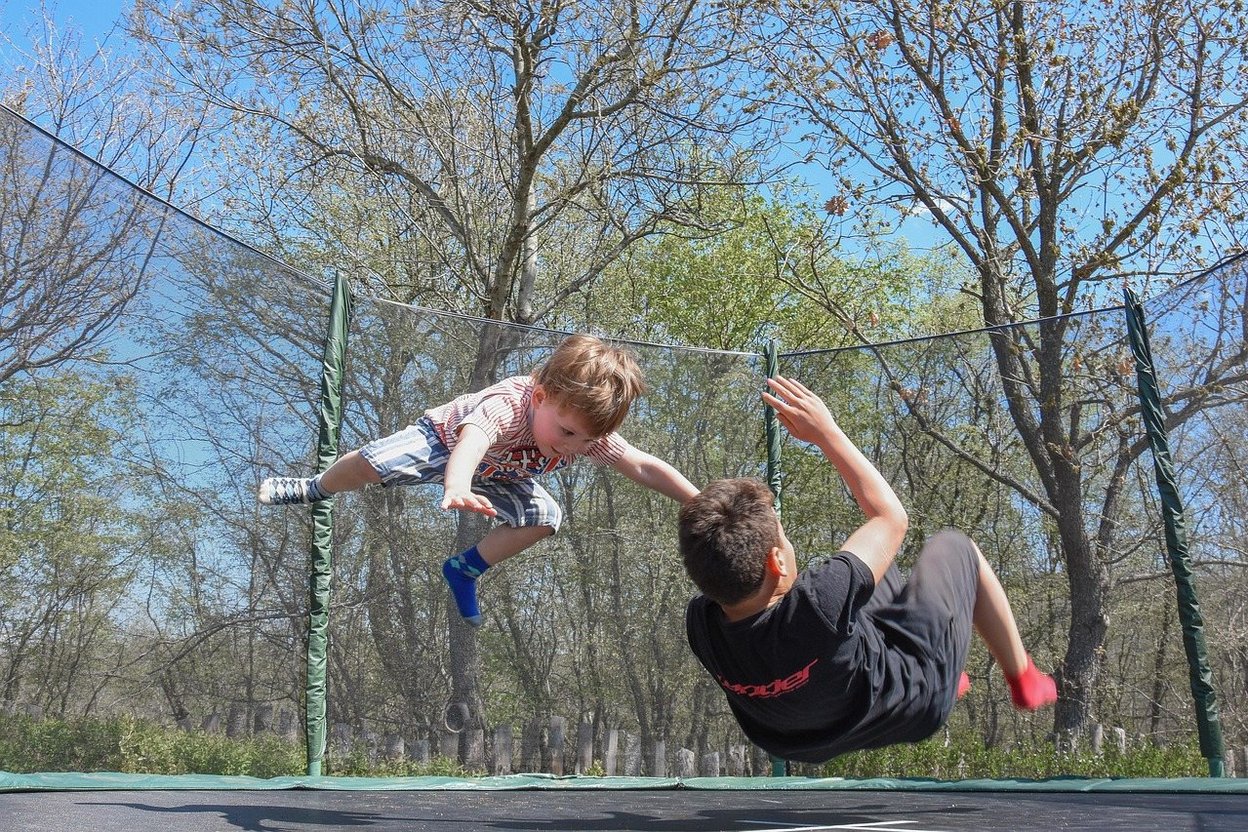
This is the big one. Many trampoline injuries happen when two or more kids jump together. The smaller child usually gets hurt, bounced off by the bigger one's landing.
2. No flips or somersaults
Flips and somersaults are behind some of the most serious trampoline injuries, including injuries to the neck and spine. The AAP says not to allow them at home. Save flips for a coached gym with proper equipment.
3. An adult actively watching
Not just home, not just nearby: actively watching and willing to enforce the rules. The AAP is clear that an adult simply being present isn't enough.
4. Pads on the frame and springs
Make sure the frame, hooks and springs are fully covered with pads that are in good shape.
5. Ground level is safer
Placing the trampoline at ground level (in-ground) means falls are shorter. If yours is above ground, keep the area around it clear of trees, fences, rocks and toys.
6. Check it regularly
Look for torn mats, rusty or missing springs, frayed nets and bent frames. Replace worn parts. See winterizing a trampoline for keeping it in shape through the cold months.
7. Very young kids
Pediatric and orthopedic groups recommend keeping children under 6 off full-size trampolines.
What about nets?
Nets can keep kids from falling off the edge, and that's worth something. But most injuries happen on the mat, from bad landings and collisions. A net doesn't prevent those, so it doesn't replace the other rules.
Check your insurance
Some homeowners insurance policies exclude trampoline injuries, charge more, or require a net or a fence. Call your agent before it goes up, not after someone gets hurt.
Write the rules down
Post the rules on a sign by the ladder. Kids are more likely to follow them, and visiting friends (and their parents) know them too.
The other options
If you'd rather skip the backyard trampoline, a well-run trampoline park with trained court monitors, or a coached gymnastics class, gives kids the bounce with more supervision.
Sources (3)
AAP: Trampoline Safety in Childhood and Adolescence (Pediatrics) · AAP News: Jump on trampoline safety · Cleveland Clinic: Surprising Dangers of Trampolines for Kids
Photo by Anestiev on Pixabay.