Springless vs. Spring Trampolines: Which Is Better?
Springless trampolines use flexible rods or bands instead of steel springs. How they compare on bounce, safety, price and durability, and which makes sense for your family.
If you're shopping for a trampoline this holiday season, you'll see two kinds: the classic spring trampoline and the newer springless style. Here's how they compare.
How they work
Spring trampolines have steel coil springs connecting the mat to a round or rectangular steel frame. A padded cover goes over the springs.
Springless trampolines use something else to create the bounce: most often flexible fiberglass rods set under the edge of the mat, or elastic bands. The frame is usually under the mat, out of the way.
Bounce
- Spring: a firmer, higher bounce. Rectangular spring trampolines are what gymnasts train on.
- Springless: a softer, smoother bounce. Some people love it, some say it feels less lively.
Safety
The biggest selling point of springless designs is that there are no springs or frame at the jumping edge to land on or get pinched by. Pads on spring trampolines wear out and slide, leaving springs exposed.
That said, most trampoline injuries come from multiple people jumping at once, falls off the trampoline, and failed flips, not from springs. Any trampoline needs the same rules. See trampoline safety rules for kids.
Price
- Spring: cheaper. A wide range, from budget to premium.
- Springless: usually costs more for the same size.
Durability
- Spring: springs can be replaced individually. Frames rust over time if they're cheap.
- Springless: rods and bands can be replaced too, but parts are brand-specific and can cost more. Good ones are built to last.
Which to pick
- Tight budget or want a big bounce: a well-made spring trampoline with a good net and pad.
- Younger kids, safety is the top worry, budget allows: springless.
- Either way: buy a good net, anchor it, and replace worn parts.
See buying a trampoline as a holiday gift for sizing and what to look for, and anchoring a trampoline against wind before winter.
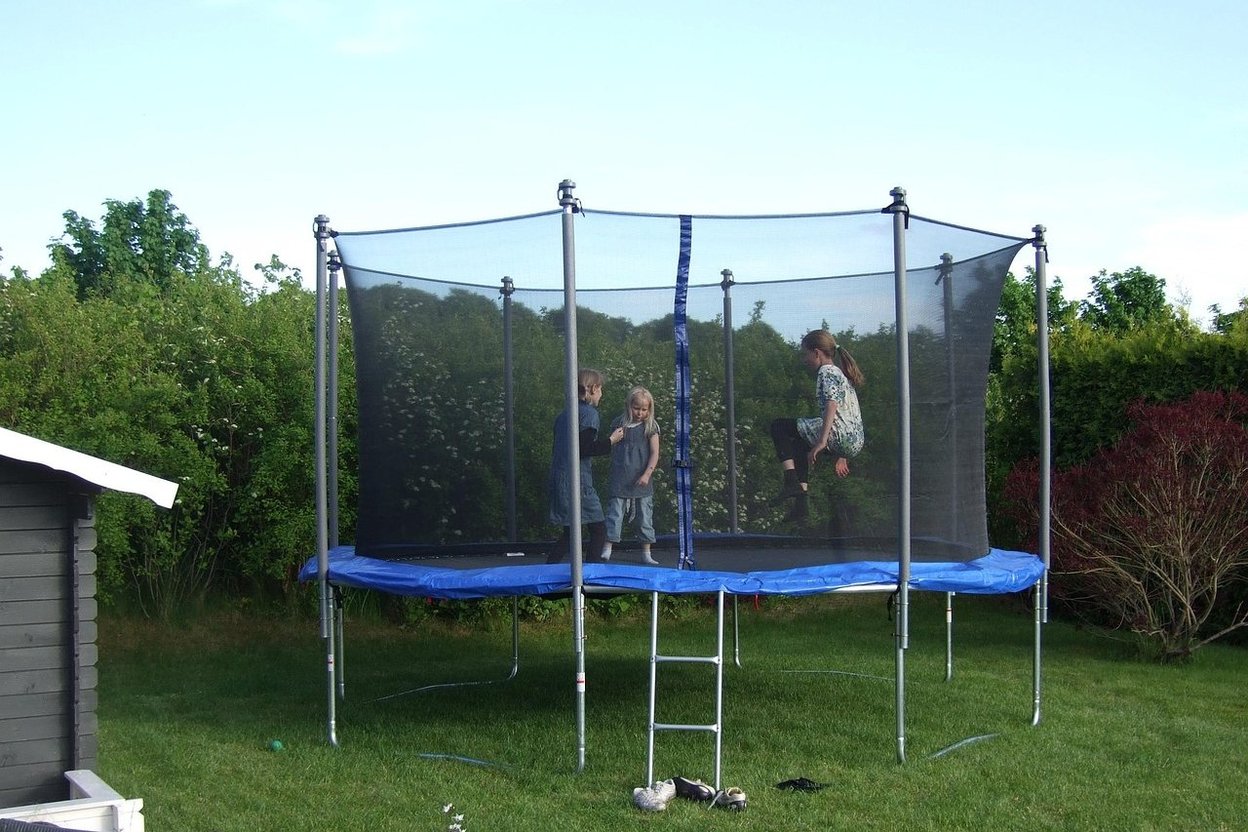
Photo by kamazoo on Pixabay.