Can You Jump on a Trampoline When the Mat Is Wet or Icy?
Why a wet, frosty or icy trampoline mat is a no-go, what manufacturers advise, and how to clear snow and ice safely before the kids bounce.
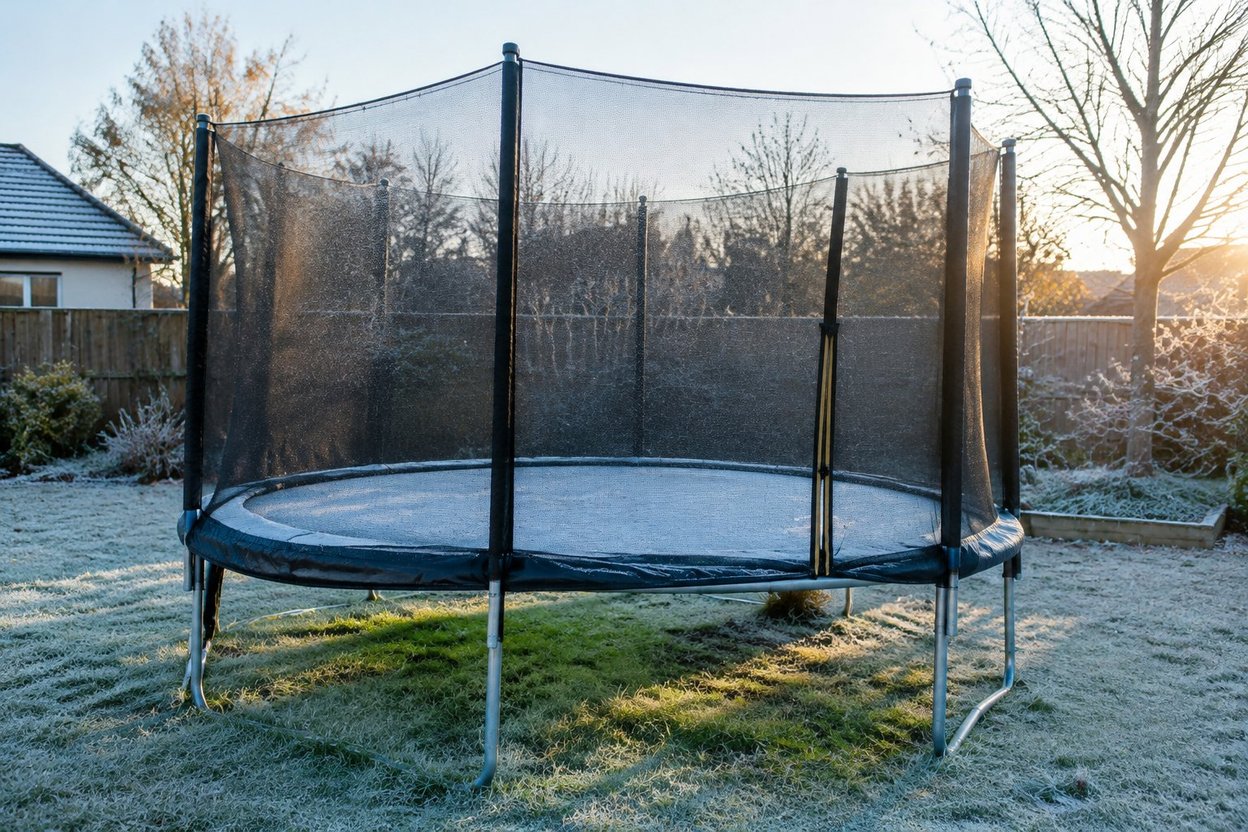
It's a cold fall morning. The leaves are soggy, there's frost on the lawn, and the kids are already at the back door asking to go jump. The trampoline mat shines with dew or rain, or has a thin layer of ice on it. The answer is no. Don't jump on an icy or snowy mat, and don't jump on a wet one either. Here's why, what manufacturers say, and how to get the trampoline safe to use again.
The Short Answer
Wait until the mat is dry and has no ice or snow on it.
That isn't just extra caution. It matches what trampoline makers tell owners. Many trampoline manuals say not to use the mat when it's wet because it gets too slippery for safe jumping, and that the trampoline should only be used in suitable weather. Acon tells owners to make sure the trampoline is "clear of ice and snow before jumping." Springfree says plainly that "bouncing on an icy trampoline can be dangerous" and advises skipping jumping when the mat is slippery.
Backyard trampolines are already risky on a dry, sunny day. The American Academy of Pediatrics (AAP) strongly discourages home trampolines. Its policy says safety measures such as nets and padding have not significantly reduced injury rates, and that catastrophic injuries do happen (as reported by HealthDay, September 2012). The U.S. Consumer Product Safety Commission estimated 104,691 emergency-room-treated trampoline injuries in 2014.
So a wet or icy mat doesn't create a new danger. It makes an existing one worse. If your family jumps anyway, the least you can do is cut out the easy extra risks, and a slippery mat is one of the easiest to avoid.
Why Wet and Icy Mats Are a Problem
On a trampoline, the moment that matters is when your feet hit the mat. On a dry mat, your feet grip and push you back up in a controlled way. On a wet mat, your feet can slide on landing. You don't get a clean bounce. You get a jumper who lands off-balance, legs going out sideways, sometimes heading toward the springs, the frame or the edge.
Ice is worse. Acon says jumping on ice or snow means slipping and falling, and that it also damages the mat. Snow hides how slick the surface is underneath, so a jumper can't tell where the icy patches are.
Footwear makes it worse in two ways:
- Wet socks and bare feet slide more easily on a damp mat than dry feet do.
- Shoes are a problem even when the mat is dry. Many manuals warn that ordinary shoes cause extra wear on the mat material and say not to wear them unless they're made for trampolines. Muddy, wet sneakers bring in grit and water at the same time.
The usual injury patterns still apply. According to the AAP, most trampoline injuries happen when several people jump at once, and falls off the trampoline and attempted flips can cause neck and spine injuries. A slippery mat makes losing control more likely in all of those situations. These wet-mat warnings come from manufacturers' safety guidance, not from injury studies of wet mats, so treat them as practical advice rather than a statistic.
What Manufacturers Say
The wet-mat warning shows up in manuals from many unrelated brands. Manuals sold under the Rusta, Overstock, Salta and Hornbach/Pragma names all include some version of "don't use the mat when it's wet." When companies that otherwise have nothing in common print the same warning, it's worth listening to.
Brands that write about weather in more detail say much the same:
- Acon says cold weather on its own isn't the problem. Jumping is fine in the cold as long as the surface is dry and free of ice. Rain and moisture, Acon says, make the mat "slippery and potentially damaging the mat over time."
- Springfree warns that bouncing on an icy trampoline can be dangerous and says to skip jumping when the mat is slippery.
- Kangaroo Hoppers puts more weight on the equipment: "Snow and ice can damage the trampoline by weighing down the mat." It also says using sharp tools to remove ice voids the warranty.
There's a gap worth knowing about. Not every brand publishes clear weather guidance, and wording differs from model to model. Dig out your own manual, or find the PDF on the manufacturer's site, and read the safety and maintenance sections. If your manual is stricter than this article, follow your manual. Also check what it says about clearing snow and ice, because the wrong method can cost you the warranty.
How to Get a Trampoline Safe to Use Again
Most of the time, the fix is just waiting. After that, the job is getting rid of snow and ice without damaging the mat.
After rain or dew: Let it dry. Fall mornings are often damp until the sun has been up a while, so plan backyard jumping for the afternoon. Before anyone climbs on, press the mat with your hand. If it's damp to the touch, it isn't ready.
After snow: - Use a soft broom or soft-bristle brush. Springfree says not to use hard bristles or shovels on the mat, and to brush snow off through the zippered door of the enclosure. - Don't let it pile up. Acon recommends clearing snow before it reaches about 4 inches, because heavy snow left for a long time can damage the springs. - Don't climb onto the mat to clear it. Standing on a snowy mat is exactly what you're trying to avoid.
After ice: - The simplest option is to let it melt on its own, which is what Acon recommends. - To speed it up, Kangaroo Hoppers suggests hot water or a high-pressure hose sprayed from below the mat. - Never chip, scrape or pry at ice. Sharp tools can puncture or tear the mat, and Kangaroo Hoppers says using them voids its warranty.
Prevent it next time: A weather cover keeps rain, leaves and snow off the mat, so it's ready to use sooner.
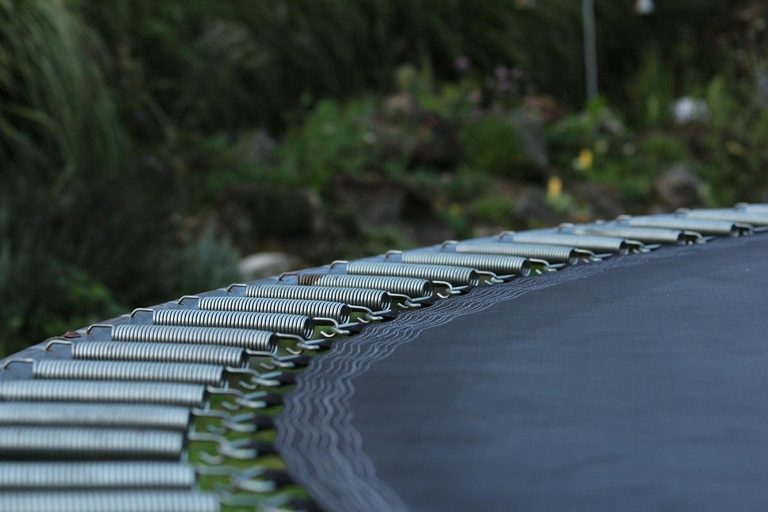
Inspect before the first bounce: After hard weather, check the springs, frame and padding for rust, wear or damage, as Kangaroo Hoppers recommends. Make sure the pad still covers the springs and frame completely, the net has no tears, and nothing has sagged. Swap out anything worn before kids jump again.
Winter Care and When to Take It Down
Whether the trampoline stays up all winter depends on the brand and where you live.
Some manufacturers say their trampolines can stay out all year. Springfree says its trampoline can remain outdoors year-round and that in very heavy snow you should brush off the excess with a soft-bristle brush. Acon also presents its trampolines as year-round equipment and says its mat keeps its elasticity in the cold. These are manufacturers' claims about their own products, so they don't automatically apply to other brands.
Kangaroo Hoppers gives the opposite advice for snowy, icy climates: remove the mat, springs, pad and net, and store them somewhere dry and shaded until spring.
Wind needs planning too, whichever route you choose. Kangaroo Hoppers warns that strong winds can move a trampoline and recommends an anchor kit or a sheltered spot. Fall storms can be windy, so anchor the trampoline before Halloween decorations go up and before the first cold snap.
Quick Checklist: Go or No-Go?
Before anyone climbs on, check:
- Mat is dry to the touch. If not, it's a no-go.
- No ice, frost or snow anywhere on the mat. If there is, it's a no-go.
- Snow and ice were cleared with soft tools only, with no chipping or scraping.
- Springs, frame, pad and net checked after bad weather for rust, tears or gaps.
- Trampoline is anchored or in a sheltered spot.
- Bare feet or trampoline-specific shoes, not wet socks or street shoes.
- One jumper at a time, no flips, and an adult watching.
If every box is checked, go ahead and jump.
Sources (12)
- Active Fun TP330 manual (ManualsLib)
- Rusta trampoline manual
- Overstock trampoline manual
- Salta First Class manual
- Hornbach/Pragma trampoline manual
- Jumpflex assembly manual
- Acon: Trampolines in Different Weather Conditions
- Springfree: Winter Maintenance Tips
- Springfree FAQ
- Kangaroo Hoppers: Safety Tips
- HealthDay: AAP Strongly Discourages Home Trampolines (Sept. 24, 2012)
- CPSC Trampoline Safety sheet