How Do You Hide a Trampoline Before Christmas Without Damaging It?
Hide a trampoline before Christmas by storing it dry and indoors, and learn how to pack, inspect, and reveal it without damage.
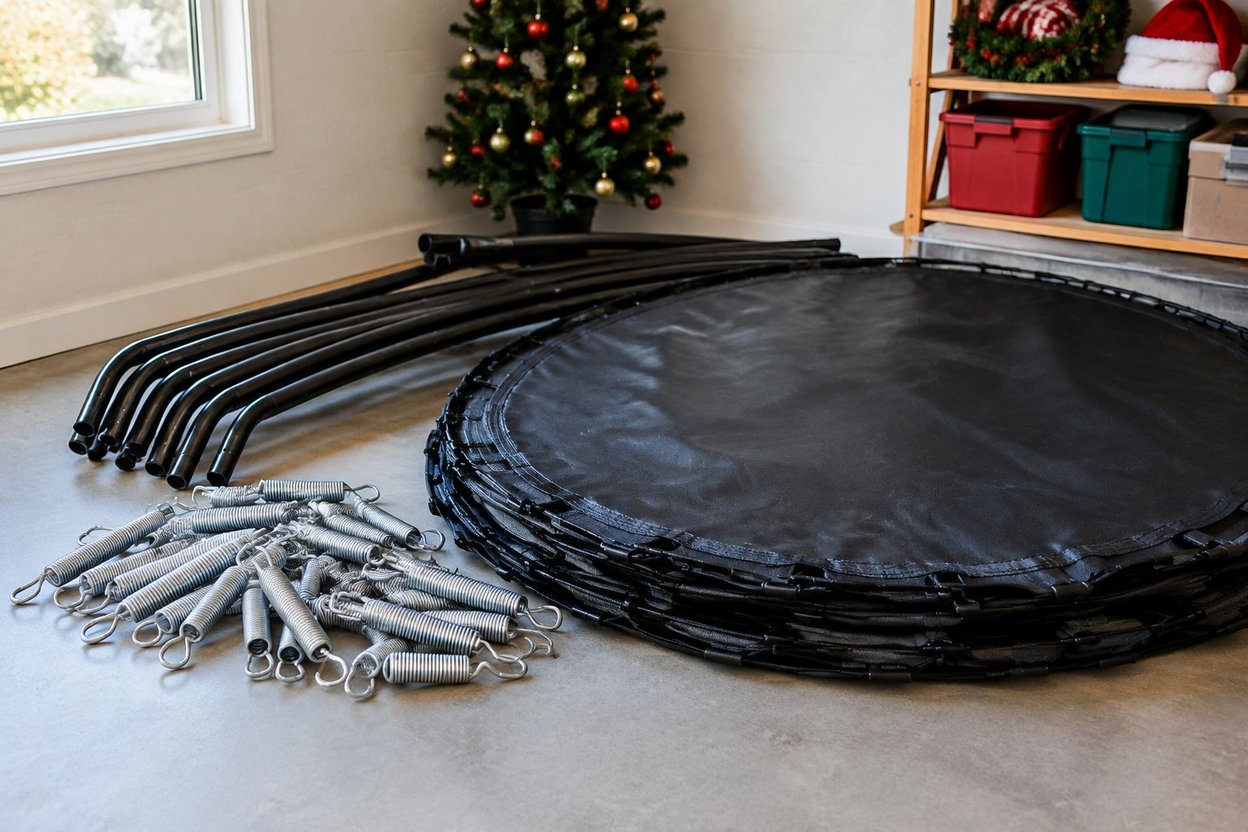
You've ordered a full-size trampoline for Christmas, and now the kids keep wandering into the garage. Hiding the shipment and protecting its parts turn out to be one planning problem. For a Christmas surprise, store your unassembled trampoline indoors in its original packaging, with every part and the packaging dry. If it is already assembled, follow your model's disassembly instructions before storing it.
Keep it disassembled and dry whenever possible
The UpIsJump team recommends keeping an unassembled trampoline indoors in its packaging, as long as the packaging and everything inside it are dry. If yours is already assembled, take it apart using your model's instructions before storing it. This is our recommendation, adapted from manufacturer dry-storage guidance. It is not a tested guarantee, and no manufacturer has tested it as a Christmas hiding method.
Skywalker advises storing these removed components in a dry location:
- the mat
- padding
- netting
- springs
JumpSport gives similar guidance for its SkyBounce system. These directions support dry storage, but they do not promise damage-free storage.
A dry garage or shed can work if its conditions suit the shipment. You can also ask another household to keep the package in a dry indoor space. Check the location before you move the trampoline there, and keep the packaging and components dry the whole time.
Choose a hiding place that fits the actual shipment
Pick your hiding place only after checking the package dimensions and weight for your exact model. The product-page specifications or shipping information will tell you what is arriving. Package sizes vary by model, so a general guess could send you to a space that can't hold the shipment.
Measure the storage area and the full access route, including doorways and any turns along the way. Make sure the package can get through without being forced into a tight spot. Check the floor and surrounding area for leaks before you put the box away.
If a garage or shed is your only option, confirm that it stays dry where the box will sit. Cover or turn away the outer packaging, since labels and branding can give the surprise away to curious children. If your home has no suitable spot, another household's dry indoor space is a practical alternative.
Pack an assembled trampoline without creating damage
Preparing an assembled trampoline comes down to three things: cleaning dirty parts gently, drying the fabric completely, and following your model's disassembly instructions. Use mild soap and a gentle method, because harsh cleaning products can damage trampoline materials.
Let the mat and net dry fully before you pack them. Photograph the assembled trampoline first, so you have a reference when it's time to put it back together. Then remove the parts in the order your model specifies, and keep the hardware organized with the parts it belongs to.
Spring and rod removal differs by design, so rely on the instructions for your specific trampoline rather than a universal sequence. JumpSport, for example, directs SkyBounce owners to reverse the installation steps. Springfree specifies a rod-removal sequence and warns against twisting the mat edge during removal. Follow your manual for each part, and store the clean, dry components together.
If it must stay outside, follow the model's winter instructions
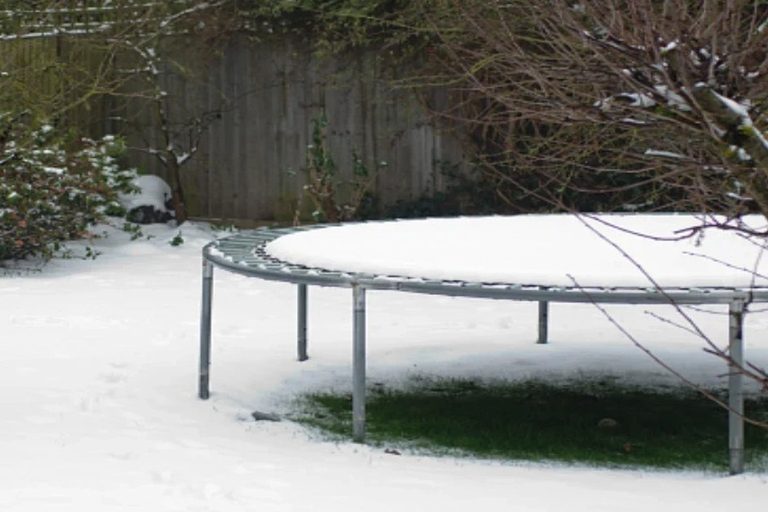
A cover alone doesn't deal with snow buildup or wind. Accumulated snow can damage components: JumpSport identifies a risk of spring damage, and Springfree's user warnings say it reduces mat-rod life.
Use a cover made for your trampoline model and follow the manufacturer's winter guidance. If snow collects, clear it with a soft broom or brush. Shovels and scraping tools can damage the fabric, so keep them away from the mat.
Follow the manufacturer's directions for anchoring or disassembly too. Skywalker recommends anchoring its assembled frame, while Jumpflex cautions that anchoring cannot guarantee protection in extreme conditions. A generic tarp stretched over an upright enclosure is not a universal solution, so use only the cover and setup your model's manufacturer supports.
Plan the reveal around assembly and inspection
Read your trampoline's instructions before Christmas Eve and leave enough time to assemble it. Springfree estimates that two people need about two to four hours for a first-time assembly, plus extra time. That figure is Springfree's own and says nothing about other brands.
If assembly won't fit your schedule, wrap a picture of the trampoline or a gift note explaining the plan.
Before anyone uses it, inspect it for:
- tears in the mat or other fabric
- damaged springs or bent frame parts
- missing or loose parts, and padding or enclosure components that aren't attached securely
For the first bounce, follow the CPSC outdoor play checklist: supervise children, allow one jumper at a time, and skip somersaults.