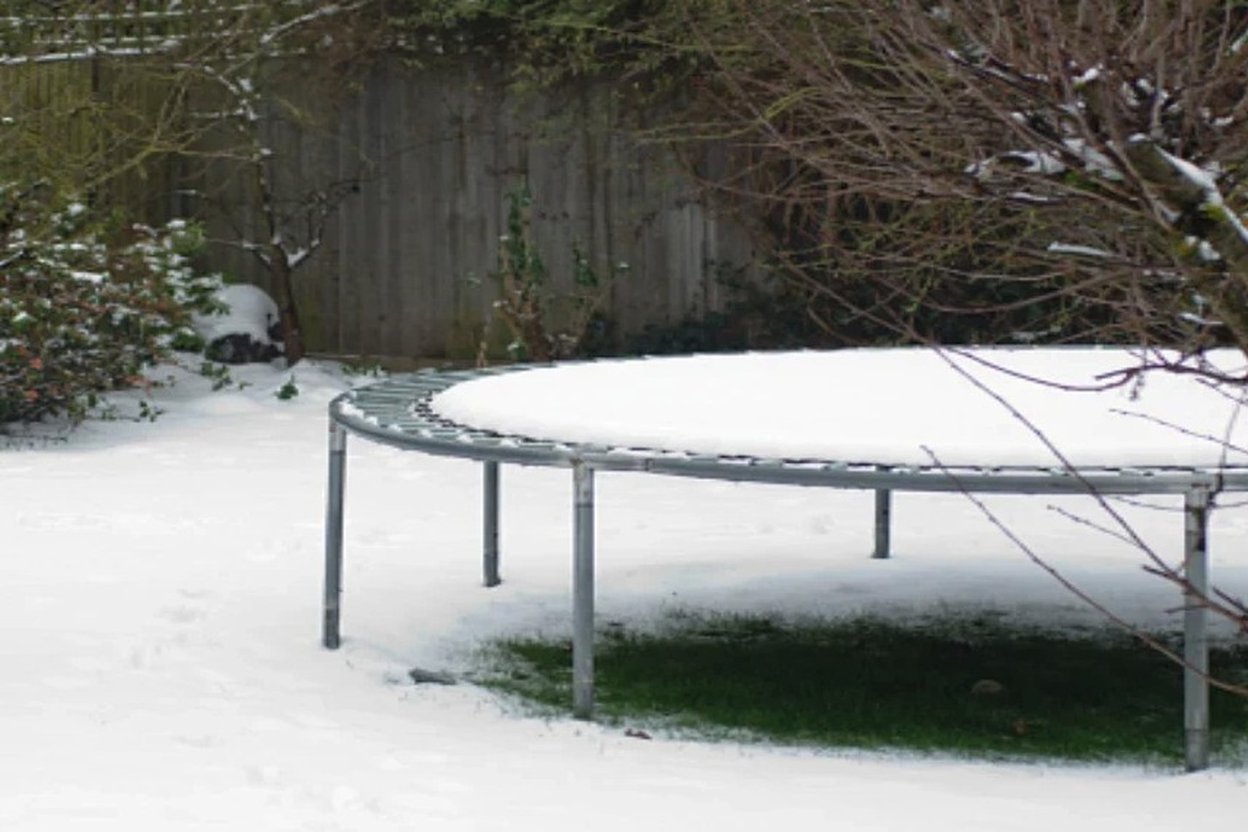
Winterizing a Trampoline: Snow, Wind, and Storage
Snow load, winter winds and freeze-thaw are hard on backyard trampolines. Whether to take it down or leave it up, how to anchor it, and how to keep the mat, springs and net in shape until spring.
A backyard trampoline is built to be outside, but winter is still hard on it. Heavy snow stretches the mat and springs, winter storms can lift a trampoline and throw it across the yard, and UV and freeze-thaw cycles wear out the net and padding. A little work in the fall adds years to its life.
Option 1: Take it down
The most protective choice, if you have room to store it.
- Remove the net and padding first; store them dry and indoors.
- Remove the springs with a spring puller and keep them in a dry bin.
- Fold the mat loosely and store it indoors.
- Disassemble or stack the frame.
Option 2: Leave it up, but prepare it
Many families leave the frame up. If you do:
- Take down the net and padding. These wear fastest in sun, snow and ice, and nets catch wind like a sail.
- Anchor it. A wind stake kit or auger anchors screwed into the ground keep it from blowing away. Every year, trampolines get thrown into fences, cars and houses by storms.
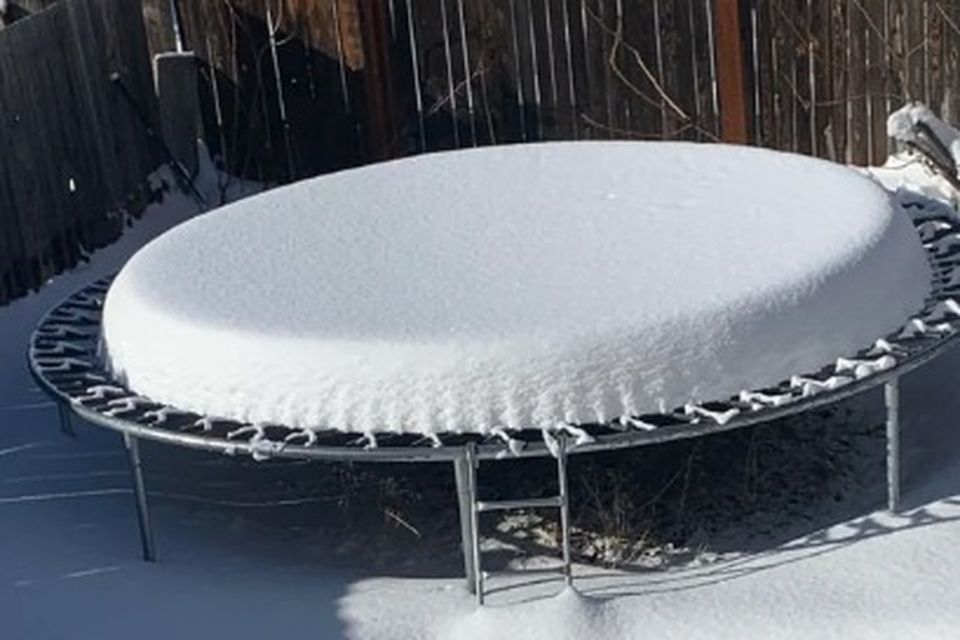
- Clear heavy snow after big storms. Use a broom or plastic snow pusher, never a metal shovel. Snow load stretches springs and the mat.
- Don't jump on a frozen or icy mat. Cold mats and springs are less forgiving, and ice is slippery.
- A weather cover keeps snow and debris off, but secure it well so it doesn't become another sail.
Photos: our own family's trampolines after winter storms.
Check it in spring
Before the first bounce: - Look for rust on the frame and springs. - Check the mat for tears or loose stitching. - Replace stretched or broken springs. - Reinstall the net and padding and check all fasteners.
Safety first, all year
Supervise kids, one jumper at a time, and keep the net and padding in good shape. The American Academy of Pediatrics has long cautioned against recreational home trampoline use because of injury risk, and recommends strict safety precautions if families have one.