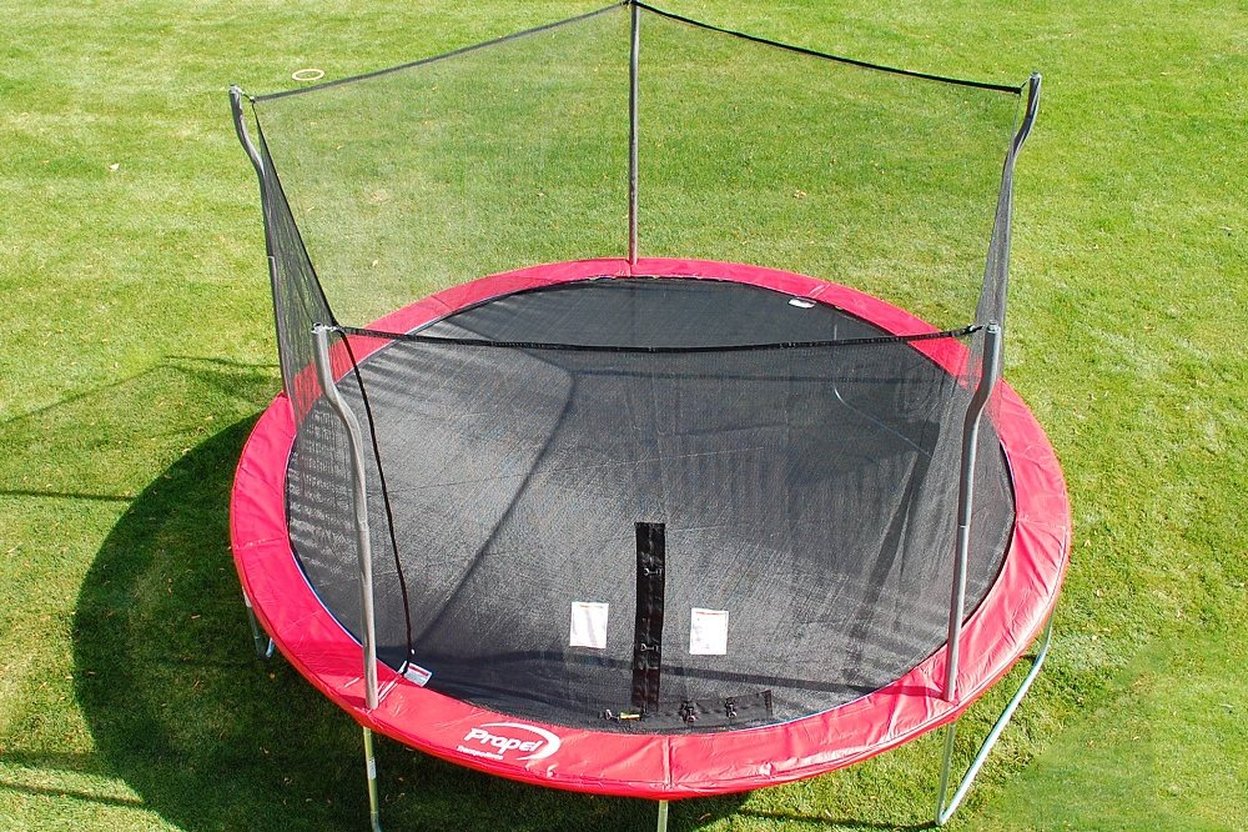
Buying a Trampoline as a Holiday Gift: Size, Springs, Nets
A backyard trampoline is a big holiday gift. How to pick the size and shape, what the springs and frame tell you about quality, why the net matters, the safety standards to look for, and where it goes until spring.
A trampoline is one of those holiday gifts kids remember for years. It's also a big purchase that sits in your yard for a decade, so it's worth getting right. Here's what to look at before you buy.
Safety first: what pediatricians say
The American Academy of Pediatrics discourages recreational trampoline use at home, because trampolines cause a lot of injuries, mostly sprains and fractures. If you decide to buy one, the AAP's advice for reducing the risk includes:
- One jumper at a time. Most injuries happen when more than one person is jumping.
- Adult supervision.
- No flips or somersaults without proper training.
- Padding that covers the springs and frame.
- Kids under 6 shouldn't use full-size trampolines.
Go in knowing the risks, and set rules from day one.
Size
Round backyard trampolines usually come in sizes from about 8 to 16 feet across.
- Measure your yard. You need the trampoline's footprint plus clear space around it, away from fences, trees, sheds and anything hard.
- Bigger isn't always better. A bigger mat gives more room, but it's still one jumper at a time.
- Check overhead, too: no branches or power lines above.
Shape
- Round: the most common and usually the cheapest. The springs push jumpers back toward the center.
- Rectangular: a more even bounce across the mat, favored by gymnasts. Usually more expensive.
- Oval and square: in-between options that fit some yards better.
Springs and frame
The springs and frame tell you a lot about quality:
- More, longer springs generally mean a smoother, deeper bounce.
- Galvanized steel frames resist rust, which matters for a trampoline that lives outside year-round.
- Thicker frame tubing is stronger.
- Springless trampolines use flexible rods or bands instead of springs, which removes the pinch points. They cost more.
The net
A safety net enclosure keeps jumpers from falling off the edge, one of the most common ways people get hurt. Look for:
- A net that attaches at the mat, inside the springs, so jumpers can't land on them.
- Padded poles.
- A zippered or overlapping entrance that closes securely.
- UV-resistant netting, since sunlight breaks it down over time.
Nets help, but they don't prevent injuries from landing badly on the mat or colliding with another jumper.
Standards to look for
In the U.S., look for trampolines that meet the ASTM standard for backyard trampolines (ASTM F381) and enclosures (ASTM F2225). Check the weight limit, too, and follow it.
Hiding a trampoline until the holiday
Trampolines usually ship in a few heavy boxes. Plan on:
- Hiding the boxes in a garage, basement or a neighbor's house.
- Assembly time. It's usually a two-person job that takes a few hours. Many families set it up on the first warm weekend in spring and give "the boxes" as the gift.
- Winter. If you set it up in winter, see winterizing a trampoline. Knock snow off the mat; heavy snow can stretch it.
Anchoring
Wind can lift and flip a trampoline. An anchor kit with stakes that screw into the ground is cheap insurance.
Homeowners insurance
Some insurance companies ask about trampolines, raise premiums, or require a net. Call your agent before you buy.
The best gift
The best trampoline gift comes with rules: one jumper at a time, no flips, adults around. Write them on a card and give that with the box.
Photo: Trampoline with enclosure by Nayand, CC BY-SA 3.0.