How Long Does a Backyard Trampoline Last? Part-by-Part Lifespans and When to Replace
Typical outdoor trampoline lifespans, part by part, plus what shortens them and the signs it's time to replace the mat, springs, net, or frame.
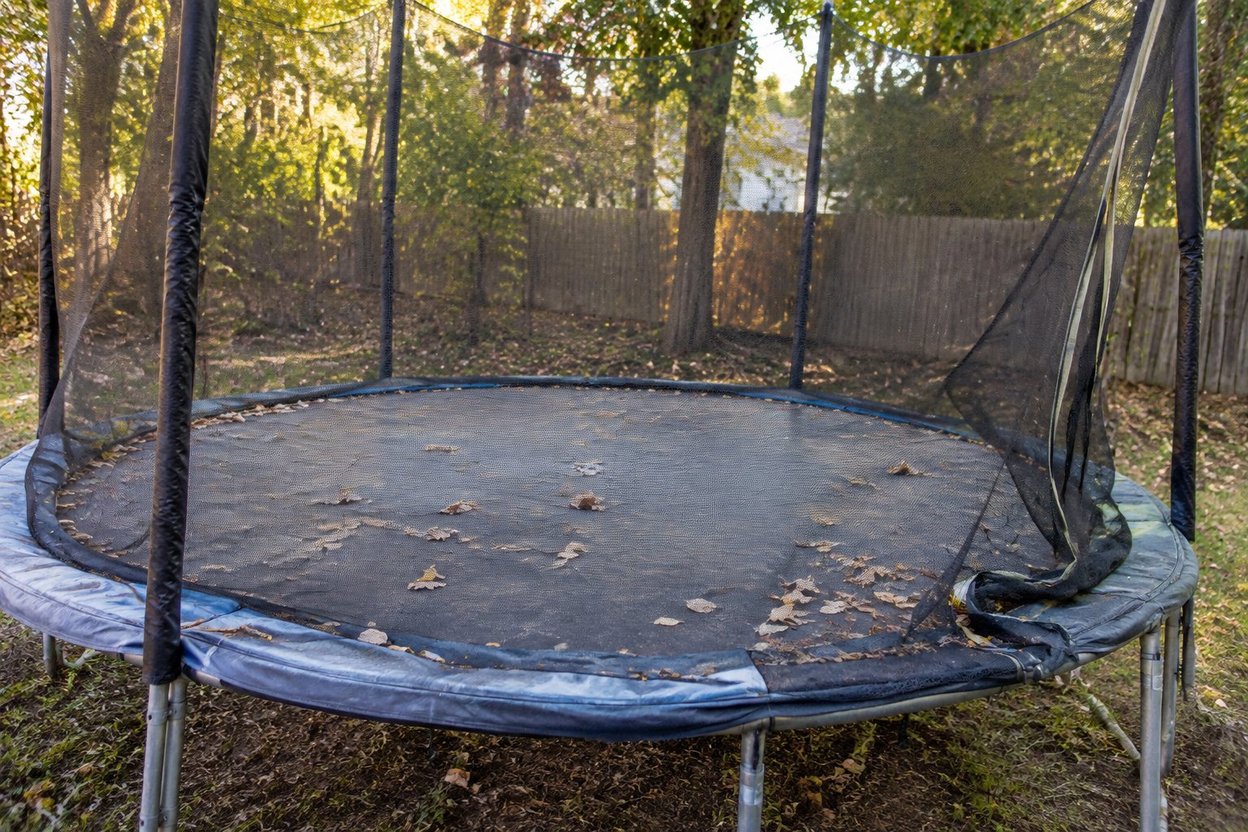
You're raking leaves off the trampoline mat in October and you notice it. The black has faded to gray, a few springs have orange spots, and the safety net sags in one corner. So how much longer will it last? Most outdoor trampolines last about 3 to 8 years. Budget models often wear out in 1 to 3 years, and well-built premium ones can go 10 years or more. But the parts wear out at different speeds, so the real question is which part is wearing out and what to do about it.
The short answer
The most common figure is 3 to 8 years for a typical outdoor trampoline. It comes from Springfree, a maker of premium trampolines. Trampolines.com, a retailer, gives a slightly more hopeful 5 to 10 years for most trampolines and says higher-quality models last longer. Springfree says its own trampolines last 10 years or more with reasonable use and upkeep.
Keep in mind who is giving these numbers. Almost all lifespan figures come from companies that sell trampolines or replacement parts. Nobody publishes independent tests of how long trampolines last outdoors, so treat every range in this article as a rough guide, not a guarantee.
Owner stories vary just as much. One owner reported six years from a $400 trampoline, with the frame, mat and springs still in good shape. Another had to replace the mat on a 5-year-old 14-foot trampoline after the spring clips rusted. Those are single cases, but they show the pattern. A trampoline rarely fails all at once. A worn mat or a rusty set of springs usually means a repair, not a whole new trampoline.
That's why it helps to know how long each part should last.
Lifespan part by part
Springfree and Acon, another trampoline brand, have both published part-by-part estimates. They don't fully agree, which tells you how rough these numbers are.
- Frame: 3 to 10 years in general, per Springfree. A low-quality frame lasts 5 to 10 years and a high-quality one 10 to 20. Acon puts frames at 3 to 8+ years. The frame is usually the last part to go.
- Mat: 1 to 5 years in general, per both Springfree and Acon. Springfree says a high-quality mat can last 5 to 10 years.
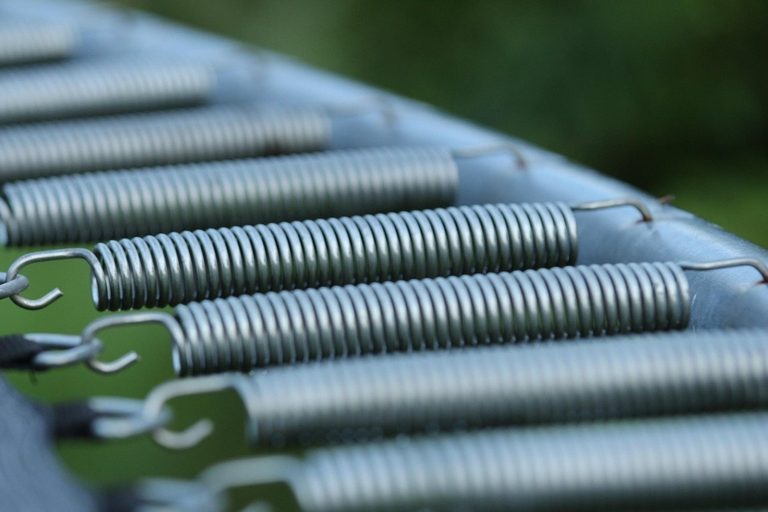
- Springs: 1 to 3 years in general and 5 to 10 years in high-quality builds, per Springfree. Acon says 3 to 4 years. In another article, Springfree puts springs at 2 to 4 years depending on quality.
- Enclosure net: This range is the widest. Springfree says a low-quality net may last only a couple of months to a year, while a high-quality net can last 5 to 10 years. Acon recommends replacing the net about every 3 years on trampolines that meet ASTM or CE safety standards.
- Spring pad: The pad covers the springs and frame edge. It sits in full sun and gets stepped on every time someone climbs on, so expect it to wear out around the same time as the mat. Check its condition rather than going by its age.
The gap between cheap and premium builds shows up most in the mat, springs and net. Frame material matters too. Springfree says a galvanized steel frame (steel with a protective zinc coating) is likely to outlast a frame without that protection, because the zinc slows rust.
These ranges assume normal backyard conditions, but backyards differ a lot.
What shortens a trampoline's life outdoors
Sun. Springfree calls UV light the biggest single threat to a trampoline. Trampolines.com says UV fades the mat and weakens its fibers over time. The same goes for the net and pad. A trampoline in full sun all day ages faster than one with afternoon shade.
Rain and rust. Heavy rain can pool on the mat and drip onto the frame and springs, and that's how rust starts, according to Trampolines.com. Springfree also lists salt water, which matters if you live near the coast.
Snow. Snow is heavy. A thick layer can strain the frame and springs and warp the mat, per Trampolines.com.
Wind. A trampoline that isn't anchored can lift and tumble across the yard in a storm. That can bend the frame and wreck the net, not to mention a fence or a car.
Heavy use. How often it gets used is one of five things Trampolines.com lists as shortening mat life. A trampoline that hosts the whole neighborhood every afternoon wears out faster than one used on weekends.
Going over the weight limit. Springfree says a jumper over the weight limit raises the risk of bottoming out (hitting the ground through the mat) and breaking parts. The limit is a safety rule as well as a durability rule. Check the one printed on your model and stick to it, including when adults want a turn.
Poor upkeep and cheap materials. These are the last two items on Trampolines.com's list. Loose bolts, ignored rust and a low-grade mat all shorten the clock.
You can't control the weather, but you can control most of the rest.
How to make it last
Most of this takes a few minutes, and fall is a good time to start.
- Anchor it. Trampolines.com recommends heavy-duty corkscrew anchors or cement weights. Do it before winter storms, not after the first one.
- Use a weather cover. Trampolines.com and Acon both recommend a weather-resistant cover to cut UV and moisture.
- Clear water, snow and leaves. Sweep off standing water and snow so the weight and moisture don't sit on the mat and springs. Acon says that if the trampoline stays in use over winter, you should brush snow off regularly. Wet fall leaves trap moisture too, so clear them off.
- Inspect it weekly. Trampolines.com recommends a weekly look at the mat. While you're there, check the springs, pad and net. Look again after any big storm for tears and rust.
- Tighten the hardware. Acon recommends checking screws and bolts and keeping them tight, and checking the springs for rust.
- Keep heat away. Acon warns against placing the trampoline near a grill or fire pit. Keep that in mind for fall bonfires and Thanksgiving cookouts.
- Store the soft parts in winter. If nobody will jump until spring, Acon suggests taking off the mat, springs and net. Trampolines.com suggests storing them in a dry garage or shed during long breaks. A bare frame left outside takes far less of a beating.
Even with good care, parts still wear out. Here's how to tell when one is done.
Signs it's time to replace a part, or the whole trampoline
Mat. Trampolines.com lists four signs: tears or holes, frayed edges, a sagging center or weak bounce, and a faded or brittle surface. A common rule of thumb is to replace the mat right away if a hole is bigger than a fingernail, and that a mat that snaps instead of stretching is past due. Small holes tend to grow fast under jumping, so a new mat is the safe fix. Replacement mats are sold by size and spring count, so measure before you order.
Springs. Light surface rust is a warning. Stretched, deeply rusted or broken springs need replacing. As of October 2026, Springfree says replacement springs generally cost about $1 to $10 each. If several are rusty, replacing the whole set keeps the tension even across the mat.
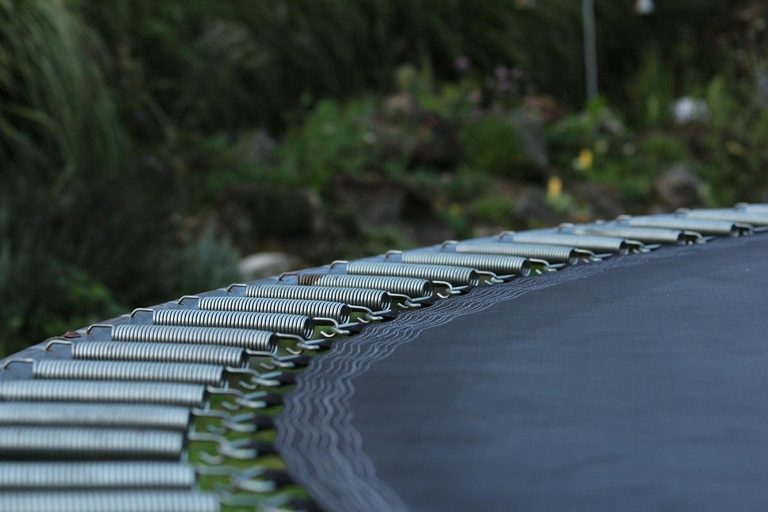
Spring pad. A pad that has gone flat, torn or slid out of place leaves the springs and frame exposed. That's a common way for kids to get pinched or scraped. Replace it before anyone jumps again.
Net. Tears, brittle mesh, or a net that pulls loose from its poles means it's time for a new one. A torn net doesn't stop a fall.
Frame. This is where you have to stop jumping. A cracked weld, a bent leg or rust that has eaten into the steel means nobody should use the trampoline until the frame is fixed or replaced. A frame with only surface rust can be cleaned and kept an eye on. Structural damage usually means buying a new trampoline, especially on cheaper models where a new frame costs nearly as much as a whole new trampoline.
In short, the mat, springs, pad and net can all be swapped out. A failing frame means the trampoline is done.
Warranties and what they tell you
A warranty shows how long the maker expects each part to hold up. Springfree's warranty covers the mat, springs, net, frame, net poles and pads for 10 years on purchases made after Sept. 1, 2017. It covers defects under normal home use. It does not cover general wear and tear, burns, cuts or snags.
Many other brands give less coverage on the parts that wear fastest. Springfree's own comparison chart (keep in mind it comes from a competitor) lists Acon at 5 years on the mat and springs, 1 year on the net, 2 years on the pads and 10 years on the frame. It lists Vuly Thunder at 1 year on the springs, net and pads. Brands change their terms, so check the current warranty before you buy.
The takeaway is that a warranty covers defects, not the sun, the weather or the neighborhood kids. Keep your receipt, register the trampoline, and plan on replacing the mat, springs and net yourself at some point.
Sources (10)
- Springfree Trampoline: How Long Do Trampolines Last?
- Springfree Trampoline: Are Rusty Trampoline Springs Safe?
- Springfree Trampoline: Warranty Information
- Springfree Trampoline: Best Trampoline Warranty
- Acon: How Long Do Trampolines Last? Ways to Extend Its Lifespan
- Trampolines.com: The Weather Report
- Trampolines.com: When Should You Do Trampoline Mat Replacement
- Trampolines.com: 10 Signs You Need a Trampoline Replacement
- Gardeningetc: When to Replace a Trampoline
- cheapies.nz owner discussion