Reserve Parachutes and AADs: Skydiving's Backup Systems Explained
Every sport skydiving rig carries two parachutes, and most carry a small computer that can open the reserve on its own. How the reserve, the AAD and the rigger's repack schedule keep skydivers alive.
One of the first questions people ask about skydiving: "What if the parachute doesn't open?" The answer is that every skydiver carries a second one, and usually a small computer that can open it automatically.
Two parachutes
A sport skydiving container holds two canopies:
- The main parachute, the one you use on almost every jump. Skydivers pack it themselves (or pay a packer).
- The reserve parachute, a separate canopy in its own compartment, used only when the main has a problem.
If the main malfunctions, the skydiver cuts it away (releases it with a handle) and pulls the reserve. Students practice this sequence on the ground over and over before their first jump.
The reserve is packed by a rigger
In the U.S., reserves must be inspected and packed by an FAA-certificated parachute rigger, and repacked on a schedule, currently every 180 days, even if it was never used. The rigger checks the canopy, lines and container and seals it.
The AAD
An automatic activation device (AAD) is a small computer in the container. It measures altitude and how fast you're falling. If you're still falling at freefall speed below a set altitude, often around 750 feet for a typical sport setting, it fires a small cutter that opens the reserve container.
AADs are a last-resort backup. They exist for the situations where a skydiver can't act: knocked out in a collision, disoriented, or lost track of altitude. Most drop zones require them for students, and most experienced skydivers jump with one too. AADs have their own maintenance schedule and service life.
How well does it work?
Malfunctions of the main happen, which is exactly why the reserve exists. Reserve parachutes open reliably when deployed, and AADs have saved many lives. The USPA tracks fatalities every year, and most come from human error under a good canopy (hard landings and turns too close to the ground), not equipment failure.
See AFF vs. tandem: the path to a skydiving license and debunking skydiving myths.
For tandem jumpers
On a tandem, the instructor wears a rig with a main, a reserve and an AAD, built for two people. You don't need to know any of this to jump. But it's nice to know it's there.
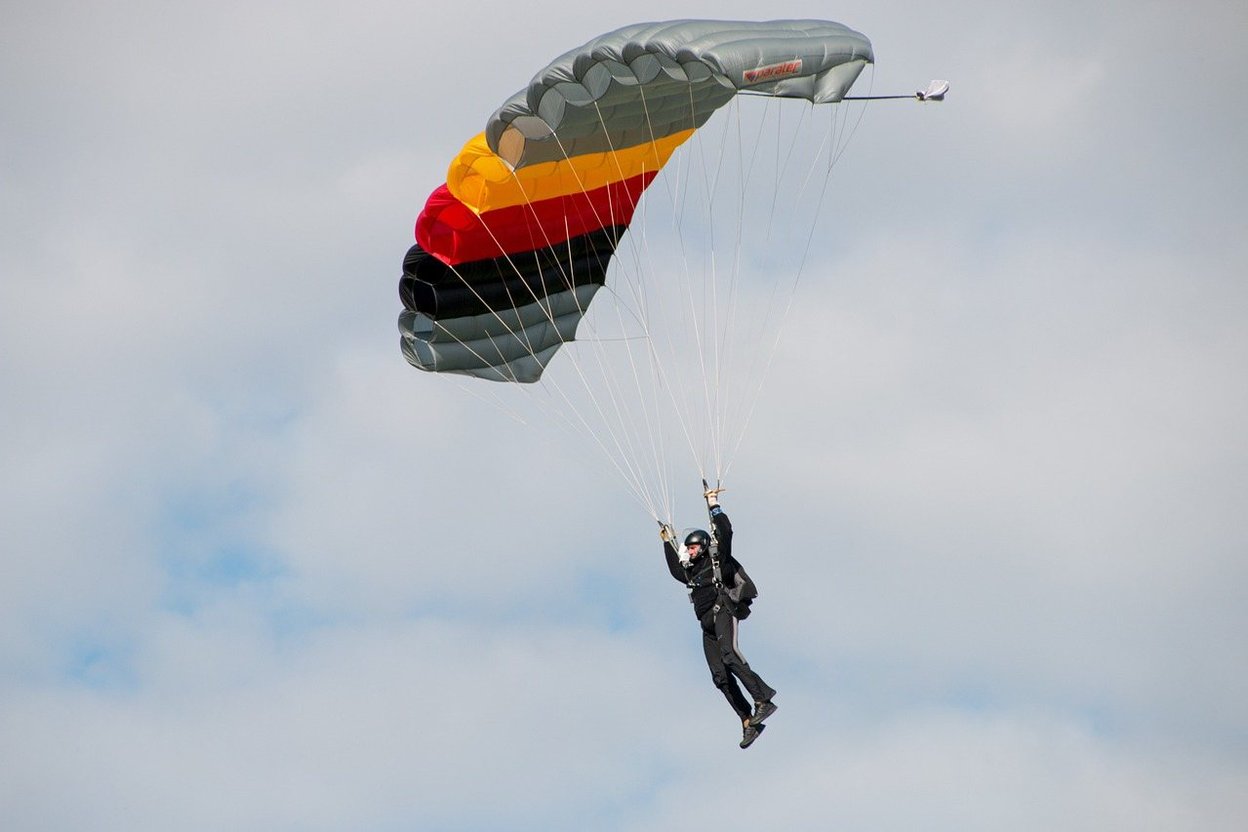
Photo by FrankBeckerDE on Pixabay.