Gear Up and Jump Off: The Skydiving Equipment That Actually Keeps You Alive
Learn what gear a skydiver's rig must carry, who may pack the reserve, and the altitude and AAD rules federal law and USPA require.
You've seen the video: someone at the airplane door with a bulky pack on their back, then a smile and they're gone. Most of what keeps that jumper safe is in that pack. Every sport skydiver in the United States wears one harness carrying two parachutes, a main and a reserve. Students also need an automatic activation device, a rigid helmet and an altimeter they can see. Federal rules and the United States Parachute Association (USPA) set exactly what goes in the system, who may pack it, and how often.
The Rig: One Harness, Two Parachutes
Skydivers call the pack a "rig." Its formal name is the harness and container system. Federal law sets its minimum contents. Under 14 CFR § 105.43, anyone jumping with a single-harness, dual-parachute system must have at least:
- one main parachute
- one approved reserve parachute
- one approved single-person harness and container
The main is the parachute you plan to land under on every jump. The reserve is the backup. The rules treat them differently, and the reason is clear once you look at who is allowed to pack each one.
Who Packs Your Parachutes, and How Often
The main parachute must have been packed within 180 days before it is used. Three kinds of people may pack it:
- a certificated parachute rigger
- the person making the next jump with that parachute
- a non-certificated person working under the direct supervision of a certificated rigger
In practice, that means you can learn to pack your own main.
The reserve has stricter rules. Only a certificated rigger may pack it. Under 14 CFR Part 65, Subpart F, no one may pack, maintain or alter a personnel-carrying parachute meant for emergency use without a senior or master parachute rigger certificate from the FAA. Riggers also need proper facilities. The regulation requires a smooth-top table at least 3 feet by 40 feet, plus suitable housing for drying and protecting parachutes.
A reserve made entirely of nylon, rayon or other synthetic fibers must be repacked within 180 days before use. If it contains any silk, pongee or other natural fiber, the limit drops to 60 days. The 180-day synthetic interval is fairly recent. The FAA raised it from 120 days in a final rule published November 19, 2008, which took effect December 19, 2008.
The reserve canopy is also built to a federal standard. The FAA certifies emergency and reserve personnel parachute assemblies under Technical Standard Order TSO-C23, such as TSO-C23d. For the wider picture, the FAA's Advisory Circular AC 105-2E, "Sport Parachuting," was issued December 4, 2013. It gives safety guidance to jumpers, riggers and pilots working under Part 105.
The Automatic Activation Device
The third key item inside the rig is the automatic activation device, or AAD. It is a backup system meant to activate the reserve when the jumper hasn't deployed a parachute in time. Federal law doesn't require one on every solo rig. If one is installed, though, 14 CFR § 105.43 requires it to be maintained according to the manufacturer's instructions.
The AAD becomes mandatory in two cases. The first is tandem jumps, covered later in this article. The second is students, as the next section explains.
What a Student Wears
If you sign up for a solo course, USPA's Basic Safety Requirements decide your kit. Section 2-1.M of the Skydiver's Information Manual requires every student to have:
- a rigid helmet
- an altimeter they can see
- an operational AAD that meets the manufacturer's maintenance schedule
- a piggyback harness-container with a single-point riser release and a reserve static line (RSL)
There is also a rule for jumps near water. A solo student must wear flotation gear whenever the planned exit point or landing area is within 1 mile of an open body of water. USPA also requires participants to be at least 18 years old.
Why the Altimeter Matters: Opening Altitudes
The altimeter is on the list because skydiving runs on fixed deadlines. Under USPA's Basic Safety Requirements, the minimum container opening altitudes above ground level are:
- 5,000 feet for tandem jumps
- 3,000 feet for students and A-license holders
- 2,500 feet for B-, C- and D-license holders
Each license level gets a slightly lower minimum. Even the most experienced jumpers have to be under a parachute by thousands of feet up. The altimeter tells you when that moment arrives.
Tandem: The Instructor Is Part of the Equipment
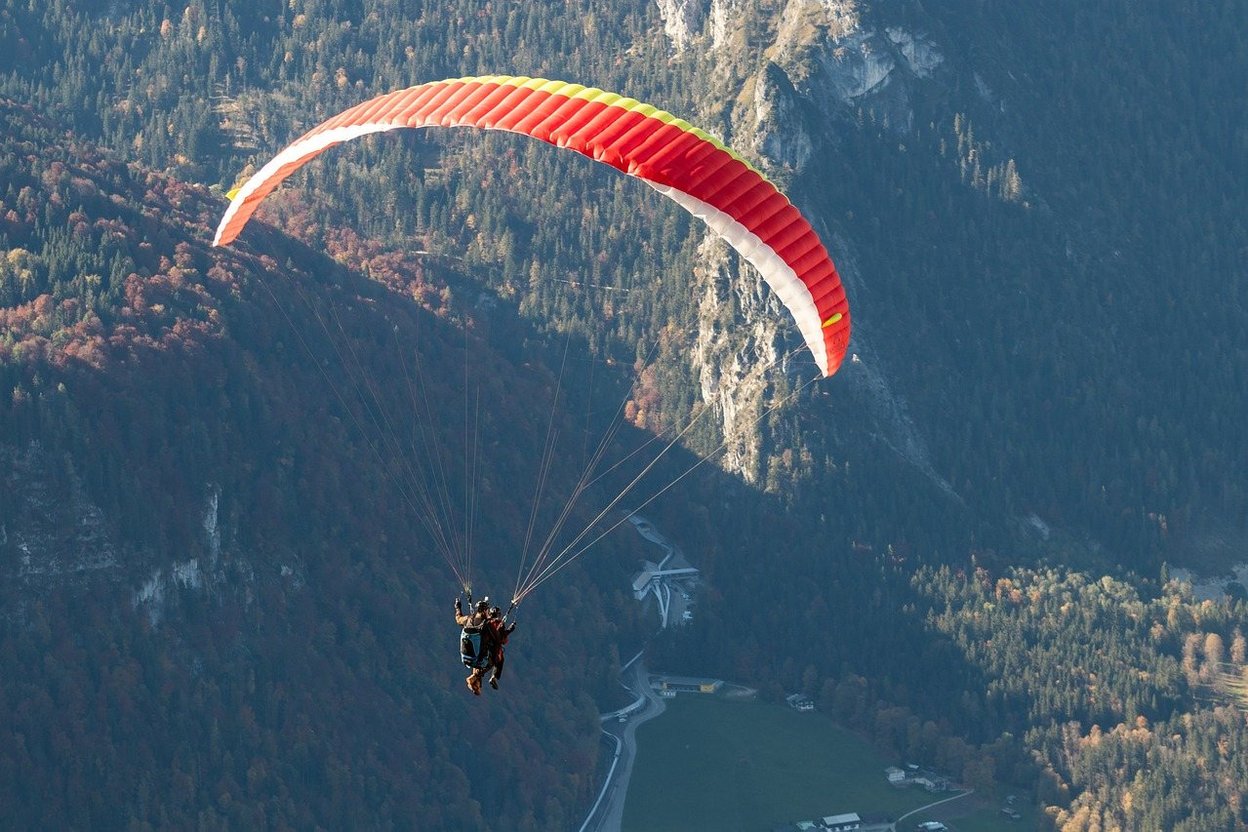
Most people start with a tandem jump. In a tandem, you are harnessed to an instructor who wears the rig. Federal rules set standards for both the gear and the person. Under 14 CFR § 105.45, the parachutist in command of a tandem jump must:
- have at least 3 years of parachuting experience
- have made at least 500 freefall jumps on a ram-air parachute
- hold a master parachute license from an FAA-recognized organization
- be certified as properly trained by the equipment manufacturer or an acceptable tandem instructor course provider
The tandem harness and container must also contain an operational AAD.
Night Jumps Add One More Item
Jumping after dark adds a requirement. Under Part 105, a parachute operation between sunset and sunrise requires the person descending to display a light visible for at least 3 statute miles.
Does All This Gear Work?
The numbers suggest the system of gear, packing rules and training does its job. In 2024, USPA recorded 9 civilian skydiving fatalities in the U.S. across about 3.88 million jumps. That is 0.23 deaths per 100,000 jumps, and the first single-digit fatality year since record-keeping began in 1961. In 2025, the count rose to 16 fatalities across an estimated 3.47 million jumps, a rate of 0.46 per 100,000.
Those figures show the risk is low but not zero. They also show the value of everything above. When you strap into that pack, you are trusting two parachutes, a regularly repacked reserve, a maintained AAD and an altimeter. Each one exists because a rule requires it.
Sources (8)
- Electronic Code of Federal Regulations, 14 CFR Part 105 (Parachute Operations): ecfr.gov
- Electronic Code of Federal Regulations, 14 CFR § 105.45 (Tandem Parachute Operations): ecfr.gov
- Electronic Code of Federal Regulations, 14 CFR Part 65, Subpart F (Parachute Riggers): ecfr.gov
- Federal Register, FAA final rule on parachute reserve packing interval (E8-27459): federalregister.gov
- FAA Advisory Circulars (AC 105-2E, Sport Parachuting): faa.gov
- FAA Dynamic Regulatory System, Technical Standard Orders: drs.faa.gov
- United States Parachute Association, Skydiver's Information Manual: uspa.org
- United States Parachute Association: uspa.org