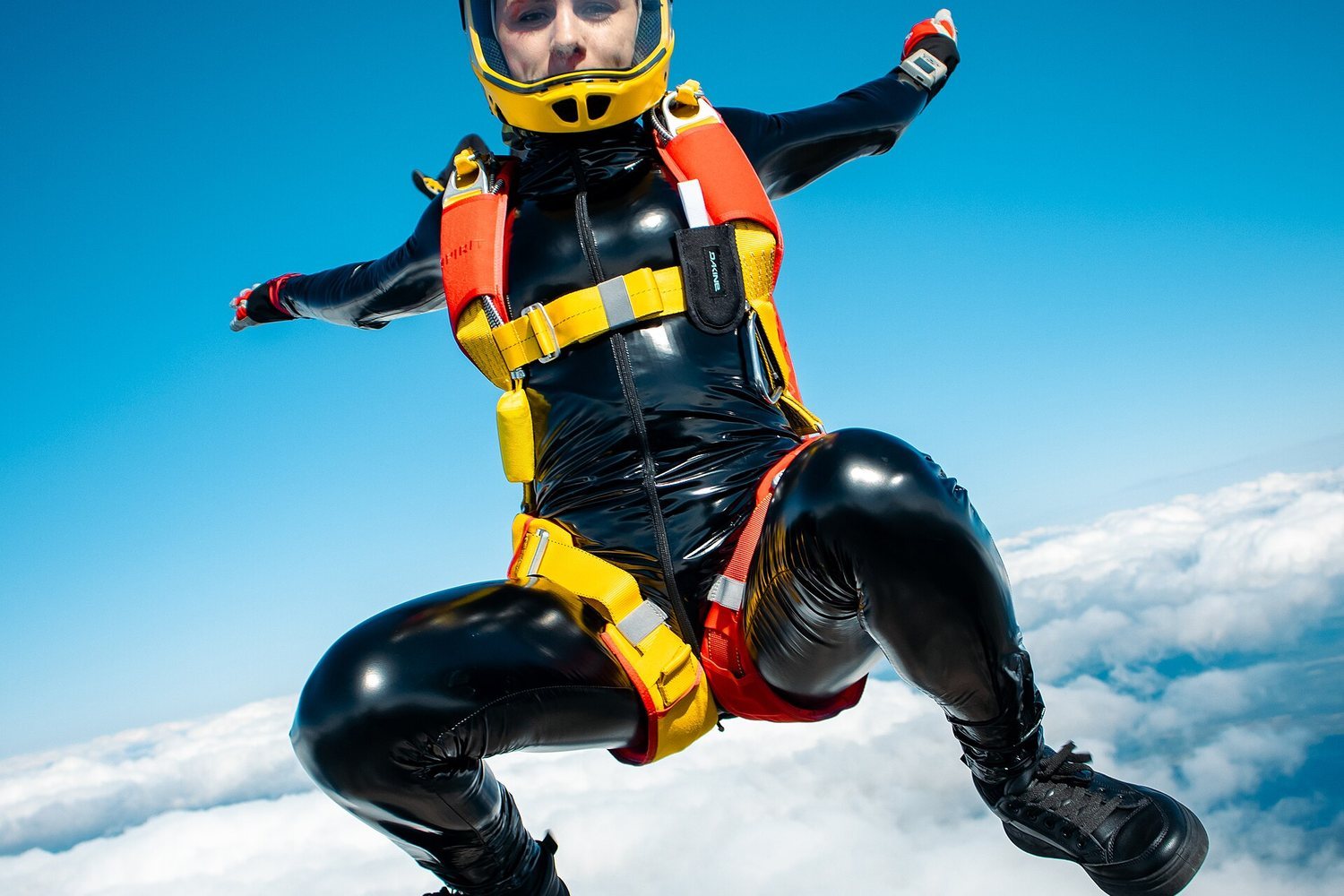
Freefalling Facts: The Skydiving Myths That Don't Survive the Numbers
Separates skydiving myths from facts, using USPA fatality rates, FAA gear and instructor rules, and training requirements to show the real risks.
You've seen the clip: someone steps out of an airplane door, the wind rips at their cheeks, and your stomach drops just watching. It's hard not to think that people die doing this. Some do, but far fewer than most people imagine. In 2024, the United States recorded just nine civilian skydiving deaths, the lowest count since records began in 1961. Here's what the gear rules, the instructor requirements and the training actually look like, and which popular beliefs about skydiving fall apart once you check them.
Myth: Skydiving is a death wish
The numbers have moved a long way. In 1961, the United States Parachute Association (USPA) counted 11 deaths per 100,000 skydives. The worst single year came in 1981, with 56 civilian fatalities.
Compare that with recent years:
- 2023: 10 fatalities, a rate of 0.27 per 100,000 jumps
- 2024: 9 fatalities, a rate of 0.23 per 100,000 jumps, the first time the count fell into single digits
- 2025: 16 fatalities, a rate of 0.46 per 100,000 jumps
The 2024 rate works out to about one death for every 435,000 jumps. The 2025 rise shows that the numbers swing from year to year. Even so, every recent year sits far below where the sport started.
Tandem jumps, where a first-timer is harnessed to an instructor, have an estimated record of about one fatality per 500,000 jumps. That figure is an estimate, not an exact count, but it puts the jump most beginners make among the safest kinds of skydive.
Myth: If the parachute fails, you're out of luck
That low fatality rate comes partly from the gear. Every sport skydiver wears two parachutes, a main and a reserve, and federal law controls how both are packed.
Under Federal Aviation Administration (FAA) rule 14 CFR § 105.43, the main parachute must have been packed within the last 180 days by one of three people: a certificated parachute rigger, the person jumping, or someone working under a rigger's direct supervision. The reserve has a stricter rule. Only a certificated, appropriately rated rigger may pack it. That must happen within 180 days if the canopy is made of rot-resistant synthetic fiber, or within 60 days if it is made of natural fiber such as silk.
There is also a backup for the backup. FAA rules require every tandem system to carry a working automatic activation device (AAD), maintained to the manufacturer's instructions. USPA requires AADs on student rigs as well. An AAD fires the reserve on its own if the jumper hasn't opened a parachute by a preset altitude. If a nervous student freezes in freefall, the reserve opens anyway.
Myth: Your tandem instructor is just someone who's jumped a few times
The person strapped to your back has to meet federal standards. Under 14 CFR § 105.45, a tandem "parachutist in command" needs:
- at least 3 years of parachuting experience
- at least 500 freefall jumps on a ram-air (rectangular, steerable) parachute
- a master parachute license
- tandem instructor training approved by the equipment manufacturer
Weather has rules too. FAA regulation 14 CFR § 105.17 bans jumping into or through clouds. Jumps must meet Visual Flight Rules limits for visibility and distance from clouds. On a gray, low-ceiling day, nobody jumps, however keen the customers are.
The real risk: human judgment
So if strict gear and instructor rules don't remove all the danger, what is left? According to USPA, most skydiving accidents come from human error, not equipment failure. The most common problems are judgment errors during landing. The danger rarely sits in the dramatic moment at the airplane door. It usually comes in the last few seconds of a jump, when a skydiver steers the parachute toward the ground.
That's why training focuses so much on the end of the jump.
Myth: You need weeks of training, or none at all
Both versions are wrong. A tandem beginner gets a short briefing and relies on the instructor. Learning to jump on your own takes a structured program.
USPA's Skydiver's Information Manual sets out the Integrated Student Program. It covers emergency procedures, canopy control and landing. USPA doesn't require a fixed number of hours for the first ground school, called Category A, but drop zones typically spend 3 to 6 hours on it.
After that, earning a USPA A license, the first license level, takes at least 25 jumps. A student must also complete every item on the A-License Progression Card, make at least 5 group jumps, and pass oral, written and practical exams. It's a real program, not an afternoon. It also isn't an impossible one.
Myth: Teenagers can jump with a parent's permission
Not at USPA Group Member drop zones. USPA's Basic Safety Requirements set 18 as the minimum age. Since 2014, a parent's signature doesn't change that.
Myth: You fall faster and faster the whole way down
Falling bodies stop speeding up once air resistance balances gravity. For a skydiver falling belly-to-earth, USPA's manual uses 120 mph as the standard terminal velocity when estimating freefall time. That's fast, but it is a steady speed, not one that keeps climbing.
The extremes look very different, because above most of the atmosphere there's almost no air to slow a falling body. On October 14, 2012, Felix Baumgartner jumped from a balloon capsule at 127,851 feet (38,969 meters). He reached 843.6 mph (Mach 1.25) and became the first person to break the sound barrier in freefall.
Myth: Baumgartner still holds the altitude record
He doesn't. On October 24, 2014, Alan Eustace rose near Roswell, New Mexico, hanging directly from a balloon instead of riding in a capsule. He jumped from 135,889 feet (41,419 meters), more than 8,000 feet higher than Baumgartner, and reached 822 mph. Baumgartner kept the speed mark for that jump. Eustace took the height record.
The bottom line
Skydiving still carries risk, and the people who know it best say the main danger is human judgment, not broken gear. But the old picture of a reckless stunt doesn't fit the facts. Two parachutes are packed under federal rules, and a device opens the reserve automatically if needed. Tandem instructors need hundreds of jumps and years in the sport. Jumping into clouds is banned. The yearly death count is now in the single or low double digits. The fear you feel watching that video is real. The odds behind it are much better than most people think.
Sources (5)
- United States Parachute Association: uspa.org
- USPA Skydiver's Information Manual: uspa.org
- 14 CFR Part 105, Parachute Operations (eCFR): ecfr.gov
- 14 CFR § 105.17, Flight visibility and clearance from cloud requirements: ecfr.gov
- Wikipedia (Felix Baumgartner; Alan Eustace): wikipedia.org