When to replace a trampoline mat, net, and springs
Learn the signs that a trampoline mat, net, pads, springs, or frame needs replacing, plus typical part costs and when to buy a new trampoline.
The kids have spent all summer on the trampoline, and on a cool fall morning you finally look at it closely. The mat looks a little gray, there's a gap in the net near the zipper, and one spring has an orange crust of rust. The short answer to what needs replacing: any part that shows damage gets fixed or replaced before anyone jumps again. If the frame itself is bent, cracked, or rusted, or if several parts are failing at once, it's time to replace the whole trampoline. Here's how to check each part and what it typically costs.
The short answer
Replace parts when they show damage, not on a fixed schedule. No government agency publishes an official replacement schedule for backyard trampoline parts. The lifespans below come from manufacturers and retailers, so treat them as rough guides and check your own manual and warranty.
- Mat: about 1 to 8 years, depending on quality and sun exposure. Sources disagree here. One retailer puts mat life at 1 to 5 years. An engineering guide says 3 to 8 years for typical home use.
- Safety net: about 3 years. One retailer recommends replacing it on that schedule.
- Springs: about 3 to 4 years.
- Frame: about 3 to 8 years.
- Whole trampoline: most last 5 to 10 years, depending on brand, materials, and upkeep. Cheap ones may last only one or two years, according to Malcolm Phillipps of trampoline maker Jumpflex. A very short warranty can be a clue that you're looking at a short-lived model.
The rule for deciding is simple. If one part is worn, replace that part. If the frame is damaged or several parts are failing together, a new trampoline is usually the better buy.
The mat: what to look for
The mat takes the most punishment, and sunlight is its biggest enemy. One engineering guide calls UV radiation "the single largest environmental factor that degrades a trampoline mat." UV makes the fibers brittle and less elastic. Summer heat, freezing winters, rain, and mildew add to the damage. A season of steady sun is why fall is a good time for a close look.
Signs a mat needs replacing:
- Frayed or loose stitching around the edge or at the V-rings, the metal loops the springs hook into. This is described as a "high-risk failure point," because that's where the mat can tear free under load.
- Brittle or faded fabric. If the mat looks chalky or feels stiff, the fibers have lost strength.
- Small tears. They grow with every bounce.
- Permanent sagging that adjusting the springs doesn't fix.
For holes, Springfree offers this rule of thumb:
- Under ½ inch: probably harmless, but watch it.
- ½ to 3 inches: can usually be repaired.
- Over 3 inches: consider replacing the mat or the whole trampoline.
Quality makes a big difference. Cheap mats without good UV protection often fail within 1 to 2 years. Premium mats can last around 8 years. If your mat is wearing out fast, a better replacement may outlast the trampoline's other parts.
The net and pads
The net and pads keep jumpers off the frame and springs, so they need the same attention as the mat.
Replace the net if:
- It's torn. "Even a small tear can spread quickly," one retailer warns.
- It sags.
- It's no longer firmly attached to the poles or frame.
Sun weakens netting just as it weakens the mat, so look for UV protection when you buy a new one.
Replace the pads if they are:
- Faded or cracked from sun, rain, and snow.
- Flattened so they no longer cushion a fall.
- Shifted or torn so springs, hooks, or frame show through.
The American Academy of Pediatrics (AAP) is firm here. Check the pads over the springs, hooks, and frame every time children jump, and replace worn pads before use. Inspect the net for tears, holes, or split seams, and replace damaged netting before anyone bounces again. A torn net or a gap in the padding means the trampoline is closed until it's fixed.
Springs and frame
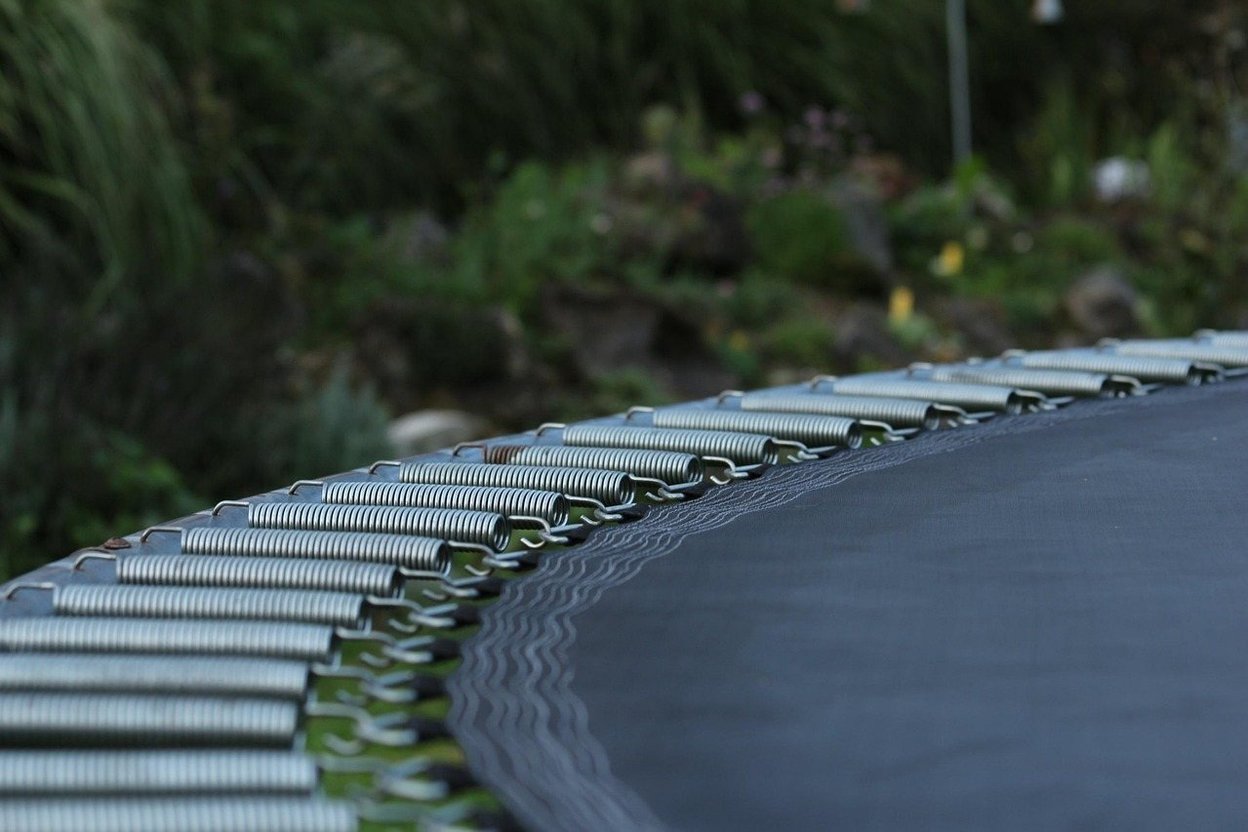
Springs wear out quietly. Check each one for three problems:
- Rust. Light surface spots are something to watch. Springs that are badly rusted should be replaced.
- Stretching. A spring that looks longer than its neighbors, or has gaps between its coils at rest, is losing strength. Springfree says to replace stretched springs as soon as possible.
- Breakage. Any cracked or snapped spring comes out right away.
One or two bad springs are an easy, cheap swap. Rust on many springs, or several broken ones, means the trampoline is near the end of its life. Usually the frame and mat have been through the same weather.
The frame decides between repair and replacement. Frames that are cracked, bent, warped, or badly rusted generally can't be fixed properly, so the whole unit should be replaced. Pay close attention to:
- Leg joints
- Welds
- The places where the frame touches wet ground
If the trampoline wobbles or feels shaky when someone jumps, check and tighten the screws and bolts first. If it still feels unstable after that, look harder at the frame itself.
Repair or replace, and what it costs
Springfree lists these typical replacement prices:
- Mat: about $49 to $200 or more
- Enclosure net: usually under $100
- Springs: about $10 to $20 or more each
- Frame: up to $500 or more
Retail listings in 2026 give a similar picture for a common 12-foot round trampoline. Mats ran from about $30 for a universal mat at Walmart to about $70 for a model-specific mat at Target. A 12-foot net for six poles was around $48, and pad sets were about $53 to $59. These are ballpark figures as of October 2026, and prices vary by seller.
Check the fit before you buy. The frame size, the number of V-rings or springs, and the spring length (measured unstretched) all have to match your trampoline. A 72-hook mat made for 5.5-inch springs is a different part from an 80-hook mat made for 7-inch springs, even if both say "12 ft." Measure your trampoline, count the springs, and confirm the part with the manufacturer if you can.
When to buy a whole new trampoline:
- The frame is damaged.
- Two or three major parts need replacing at once. The parts can cost close to a new trampoline.
- Your child has outgrown a junior model. Check the maximum user weight. A small trampoline used beyond its limit wears out faster and is less safe.
Inspection routine and safety context
Advice on how often to inspect varies a lot:
- AAP: check the pads every time children jump.
- Trampolines.com: a weekly visual check.
- Jumpflex: a thorough check once each season.
A reasonable middle ground is a quick walk-around before each jumping session, a closer monthly check of the stitching, springs, and frame joints, and a full inspection each season. Fall is a natural time for that seasonal check, after a summer of sun and before freezing weather.
Here's why the checks matter. The AAP reports about 110,000 emergency room visits a year linked to trampoline accidents, and more than 800,000 children injured on trampolines from 2009 to 2018. Older data from the U.S. Consumer Product Safety Commission (CPSC) shows the trend isn't new: ER-treated trampoline injuries rose from about 37,500 in 1991 to almost 100,000 in 1999.
The AAP advises against home trampolines altogether, and it says netting and padding don't significantly reduce injury risk. For families who keep one, its rules are:
- One jumper at a time.
- An adult supervising.
- No flips or somersaults.
- No children under 6.
Also check your homeowner's insurance policy. Many policies don't cover trampoline injuries.
The bottom line: a trampoline with a torn mat, a damaged net, missing pads, or broken springs stays closed until it's repaired.
Sources (12)
- Trampolines.com: 10 Signs You Need a Trampoline Replacement
- Trampolines.com: When Should You Do Trampoline Mat Replacement
- Gardeningetc: When to replace a trampoline
- Acon24: How long do trampolines last?
- Engineerfix: How Long Do Trampoline Mats Last?
- Springfree Trampoline: Signs you need a trampoline replacement
- Walmart: 12 ft trampoline replacement mat listing
- Target: Machrus Upper Bounce 12ft Trampoline Replacement Mat
- HealthyChildren.org (AAP): Trampolines: What You Need to Know
- HealthDay: AAP Strongly Discourages Home Trampolines
- NBC DFW: Pediatricians warn of trampoline injuries
- CPSC: CPSC Reports Sharp Rise in Trampoline Injuries (2000)
Photo by Schanin on Pixabay.