How to Clear Leaves and Debris Off a Trampoline Mat and Net
Learn how to sweep, rinse, and gently wash leaves and debris off your trampoline mat and net, plus tips to keep them from coming back.
You look out the back window on a crisp October morning and the trampoline is covered in soggy leaves, a few twigs and a dark smear of something that used to be a maple leaf. The kids want to jump before the Halloween party. The fix is simple. Sweep the mat with a soft broom, rinse it with a gentle hose, wash it with a soft brush only if it needs it, and let everything dry fully before anyone bounces. Below is how to do each step without damaging the mat, plus how to keep the leaves from coming back.
The quick answer: sweep, rinse, wash gently, dry
Most fall cleanups take four steps:
- Sweep. Use a soft broom or brush to push leaves and twigs off the mat. Springfree, a trampoline maker, calls a quick sweep before each jump the cheapest way to keep leaves under control. Acon24, another retailer, also recommends a broom or soft brush and says to clear the mat and frame regularly through autumn.
- Rinse. A garden hose on a gentle setting loosens dirt and the stains leaves leave behind.
- Wash, only if needed. A soft brush or sponge with mild soap (or plain water, depending on your brand) handles the grime a rinse doesn't lift.
- Dry. Wipe off any standing water and let the mat dry completely in the sun before anyone jumps.
Speed matters more than technique here. Wet leaves and standing water encourage mold and mildew, according to Springfree's maintenance checklist, and Acon24 also says to let every part dry fully to keep mold away. A pile of leaves left on the mat over a rainy week does more harm than a few missed sweeps on dry days. If a storm dumps debris overnight, deal with it that day.
Step by step: the mat
Take off the net or work around it. Zupapa's cleaning guide says to remove the safety net first so you can reach the whole mat and the edges where debris collects. If your net is a pain to take down, you can clean the open mat through the entrance. You'll just have less room to reach the edges.
Clear the loose stuff. Sweep off leaves, twigs and acorns with a broom. Zupapa also suggests a hair dryer for blowing small debris out of tight spots.
Wet the mat. Spray it with a hose or pour on a bucket of lukewarm water, which Springfree and Zupapa both suggest.
Clean it gently. Scrub with a soft sponge, brush or rag. Zupapa says to clean both the top and the underside. Springfree says soap and water are usually enough.
Rinse off every trace of soap. Leftover soap can leave the mat slick, which is the last thing you want under bouncing feet. Rinse until the water runs clear.
Dry it. Pat or wipe off standing water, then let the mat air-dry in the sun. Don't let anyone jump until it's completely dry.
What to skip:
- Pressure washers. Springfree's checklist warns they can damage the mat's fibers and stitching.
- Harsh chemicals. Springfree says to avoid strong cleaners and to ask the manufacturer before using any product not listed in the care instructions.
Check your owner's manual first. Brands disagree on soap. Springfree, Zupapa and Acon24 allow mild soap or detergent. Berg, a European trampoline maker, advises only a cloth and lukewarm water, with no dish soap, soap powder, solvents or hot water. Your manual is the final word for your mat, and following it may matter for the warranty.
The net and padding
The net catches as many leaves as the mat does, especially along the bottom where it meets the frame.
- Brush the leaves off. A soft brush or your hand clears most dry leaves. Work from the outside so you aren't pushing debris back onto a clean mat.
- Wipe the net and pads. Acon24 recommends a damp cloth with mild soap, followed by a thorough rinse to remove all soap residue. If your manual says water only, use water only.
- Look for damage while you're there. Zupapa says to check for broken areas once the net is off, and Springfree says to check every few weeks that the net is securely attached and has no tears. Cleaning is the perfect time, since you're already looking at every inch.
- Don't machine-wash the net. Zupapa says to clean it the same way as the mat, by hand, and not to put it in a washing machine.
Let the net and pads dry fully before you put them back. Folding a damp net into place traps moisture, which is exactly what mildew needs.
How often to do it
Your weather and your trees set the pace, and Springfree notes that climate affects how often you'll need to clean. A sensible leaf-season routine:
- Before every jump: do a quick visual check and sweep off anything that has landed. Springfree recommends this check before each use.
- At least weekly in peak leaf season: sweep the mat and the enclosure net, per Springfree's checklist.
- Once or twice a month: do a full soap-and-water (or water-only) wash. Springfree's cleaning guide says that's typically the most you'll need, and another Springfree page suggests at least once a month, so monthly is a good floor.
- After storms: wipe down the mat and clear blown-in debris.
- Monthly: walk all the way around the trampoline and look at the frame, springs, net and pads.
A good target is to finish the heavy cleanup before Thanksgiving, when most trees are bare and you can switch to a lighter winter routine.
Keeping leaves off in the first place
The best cleanup is the one you skip. A few habits cut down how many leaves land on the trampoline:
- Give it room. If the trampoline sits under a tree, Springfree recommends at least 3 to 5 feet of clearance between the mat and the branches overhead. That's a safety measure for jumpers as well as a leaf one.
- Trim problem branches. Springfree's checklist also advises cutting back branches that scratch the net or drip sap onto the mat.
- Cover it between jumps. Springfree suggests laying a tarp, shade cloth or old sheet over the mat when nobody's using it. Leaves slide off a tarp, and water drips through shade cloth or a sheet, so you can pull the cover off and jump.
About full weather covers: Acon24 recommends them to protect against rain and snow and to slow rust and wear. Springfree says they make the most sense for severe weather, long-term storage or long trips. For frequent jumpers they're probably more work than they're worth, since on Springfree models the enclosure net has to come off before the cover goes on. Whatever you use, make sure the mat is dry before covering it, and lift the cover now and then through winter. Moisture trapped underneath creates the same mildew problem you were trying to prevent.
What to watch for while you're up close
Cleaning puts your face a foot from every part of the trampoline, so use the time to spot problems:
- Mold or mildew: dark spots or a musty smell mean moisture has been sitting too long. Clean the spot, then dry everything fully.
- Rust on springs and frame: Springfree says to check traditional springs each season for stretching, rust or detachment. It also suggests a rust-protection spray for the frame, springs and ladder, and lubricant for squeaky springs.
- Holes, frayed stitching or sagging: Springfree lists all three as mat warning signs.
- Loose net attachments: a net that has pulled away from its poles or frame won't catch a jumper.
If a spring is loose or damaged, Zupapa says to contact the manufacturer for a replacement. If the mat has a hole or the net has a tear, keep everyone off until the part is repaired or replaced with one meant for your model. As the weather turns colder, Springfree also says to let ice melt on its own and never to jump on an icy mat.
Sources (6)
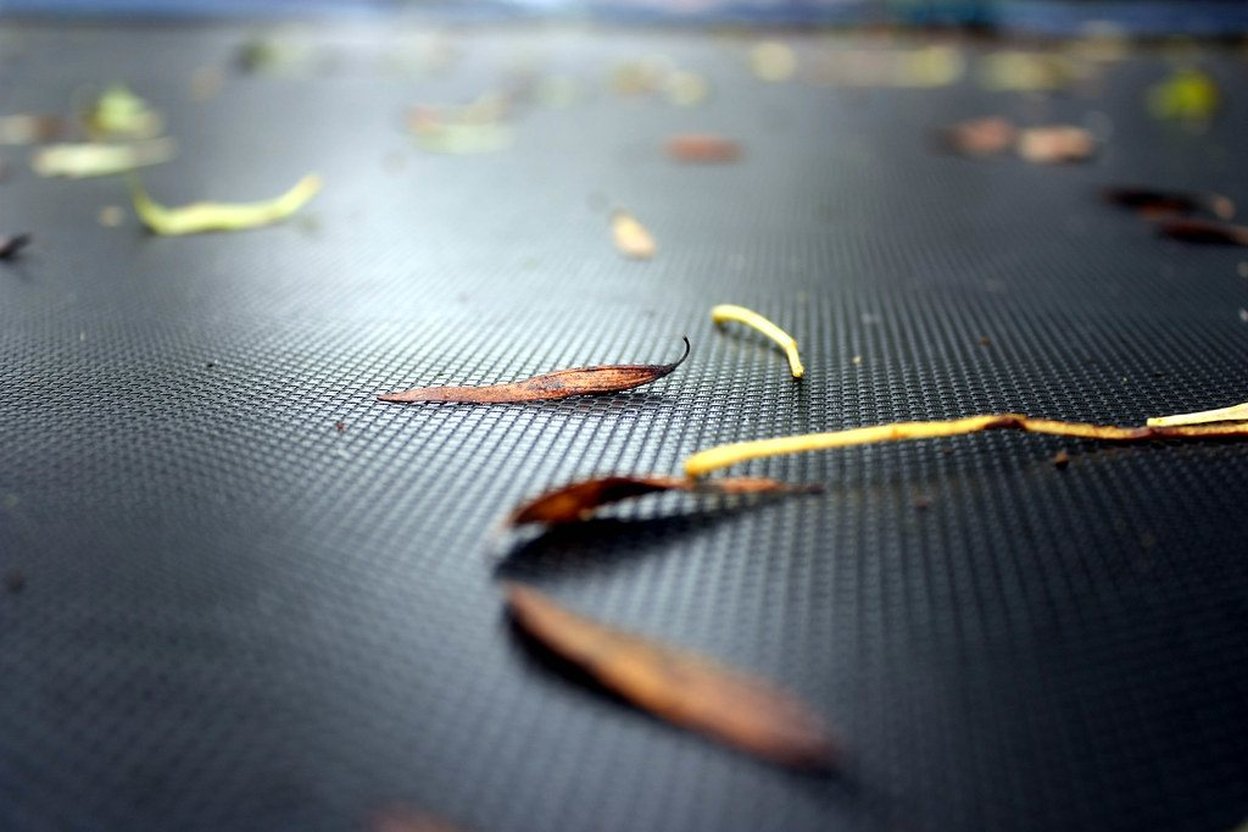
Photo: autumn leaves on the trampoline by Byrnsey, BY 2.0.