Plyometrics for Beginners: Start Safe
Plyometrics (jump training) builds power, speed and springier legs, but beginners get hurt by doing too much too soon. How to learn to land first, which jumps to start with, and how many to do.
Plyometrics is a fancy word for jump training: quick, explosive movements where your muscles stretch and then fire hard, like a spring. Done right, it builds power, speed and a higher jump. Done wrong, it's a fast way to sore knees and sprained ankles. The secret for beginners is simple: learn to land before you learn to jump.
Are you ready?
Plyometrics puts a lot of force through your joints. Before you start:
- Build a base of strength. If you can't do a set of slow, controlled bodyweight squats and lunges with good form, start there for a few weeks.
- Be pain-free. Skip jump training if your knees, ankles, hips or back already hurt.
- Warm up first, every time: five to ten minutes of easy movement, then some skips and light hops.
Strength coaches often like to see athletes squat a good amount of weight before heavy jump training. For beginner, low-level jumps, solid bodyweight strength is the starting point.
Step 1: Learn to land
A good landing looks like this:
- Land softly and quietly, on the middle of your feet, then let your heels come down.
- Knees over your toes, not caving inward.
- Hips back and knees bent, like sitting into a chair.
- Chest up, with a slight forward lean, and back flat.
Practice with "land and hold" drills: jump a few inches, land, and freeze in that position for two or three seconds. Check your knees. If they're caving in, slow down.
Step 2: Start with these
Beginner jumps, roughly from easiest to harder:
- Pogo hops: small, quick bounces on the balls of your feet.
- Squat jumps: squat down, jump straight up, land softly.
- Jumping jacks and skipping.
- Broad jumps: jump forward with both feet, stick the landing.
- Lateral hops: side to side over a line.
- Low box jumps: jump up onto a low, sturdy box and step down, don't jump down.
Save single-leg bounds, depth jumps (dropping off a box and exploding up) and high boxes for later.
How much to do
Count foot contacts: every landing counts as one.
- Beginners: roughly 50 to 80 contacts per session.
- Two sessions a week, with at least a day off between.
- Quality over quantity. Stop the set when your landings get loud or sloppy.
Add a few contacts or a slightly harder jump every week or two, not every session.
Where to jump
- Good: a gym floor, a rubber mat, grass or a running track.
- Bad: concrete, which is hard on joints, and slippery floors.
- Wear supportive shoes. Save barefoot jumping for when you're much stronger.
Common beginner mistakes
- Doing plyos when you're already tired.
- Going for height before landing well.
- Doing them every day. Your tendons need time to adapt.
- Landing stiff-legged.
Pair it with
Plyometrics works best alongside strength training, and it's one piece of our vertical jump plan. For a lower-impact start, try rebounding on a mini-trampoline or jump rope.
Sources (2)
IDEA Health & Fitness Association: Look Before You Jump · PT Pioneer: Plyometric Training
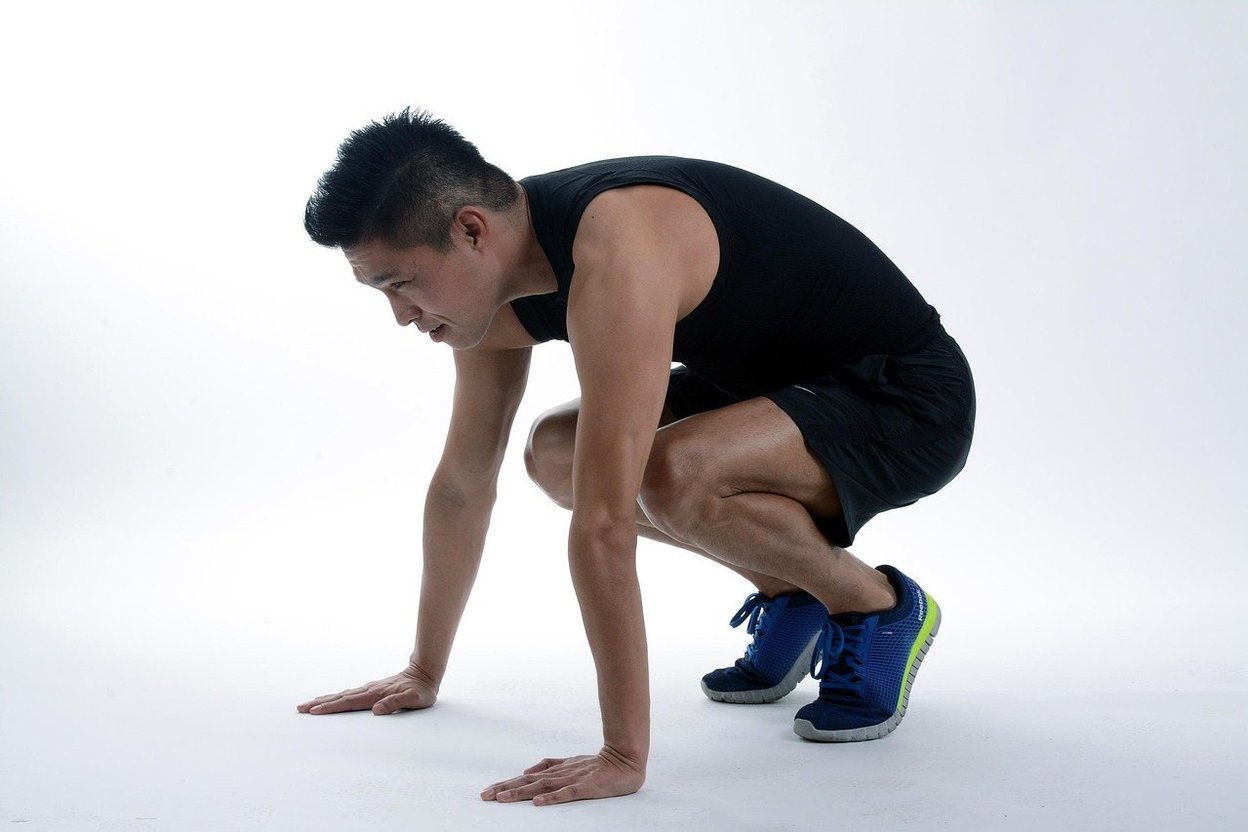
Photo by Keifit on Pixabay.