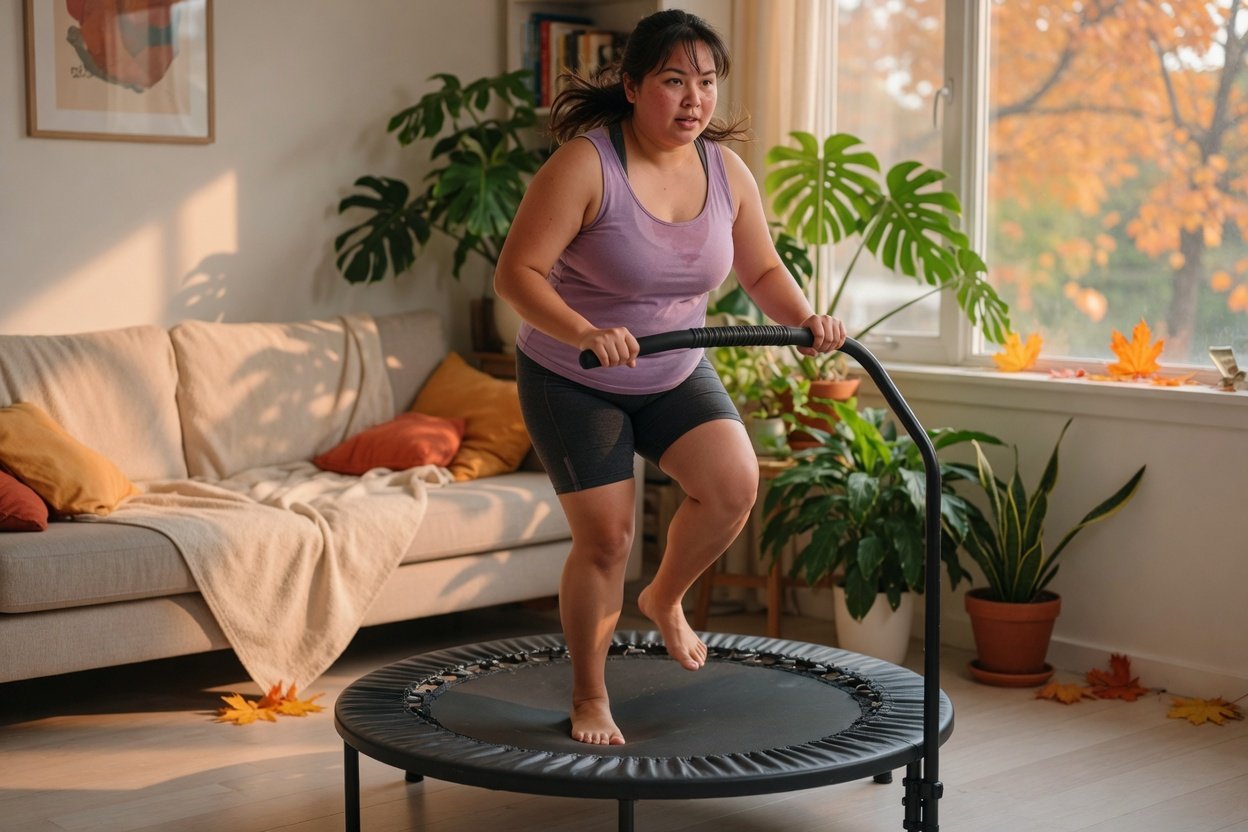
Rebounding: Mini-Trampoline Workouts for Beginners
Rebounding on a mini-trampoline is a low-impact way to get your heart rate up and work balance and legs. How to choose a rebounder, a beginner routine, and safety tips.
Rebounding is exercise on a small, personal trampoline. It's popular because it gets your heart rate up while being gentler on the joints than running or jumping on hard floors, and you can do it in a living room while watching TV.
Check with your doctor first if you have balance, joint, heart or pelvic floor concerns, or if you're pregnant.
Choosing a rebounder
- Sturdy frame and a weight limit comfortably above your weight.
- Bungee cords or springs: bungee rebounders generally give a softer, quieter bounce; springs feel firmer.
- Stabilizing bar: a handle helps beginners and anyone working on balance.
- Size: around 36–48 inches across is typical for home use.
- Folding models store easily.
The basic moves
- Health bounce: small gentle bounces with feet staying on the mat. The beginner foundation.
- Jog in place: light jogging, knees soft.
- Jumping jacks: feet out and in, arms optional.
- Twist: small bounces rotating the hips side to side.
- High knees: lift knees with a light bounce.
A 15-minute beginner routine
- 2 min health bounce (warm-up)
- 2 min jog
- 1 min jumping jacks
- 2 min health bounce (recover)
- 2 min twists
- 1 min high knees
- 2 min jog
- 3 min easy bounce and stretch (cool down)
Do it two or three times a week to start, and add time as you get comfortable.
Safety tips
- Keep the rebounder on a flat surface, away from furniture and walls.
- Bounce in the center of the mat.
- Start small; you don't need big jumps for a good workout.
- Kids should be supervised, and only one person on it at a time.
- Check cords or springs for wear.
Pair it with strength
Rebounding builds endurance and balance; add squats, lunges and core work for strength. For bigger goals, see how to jump higher and winter jump workouts.