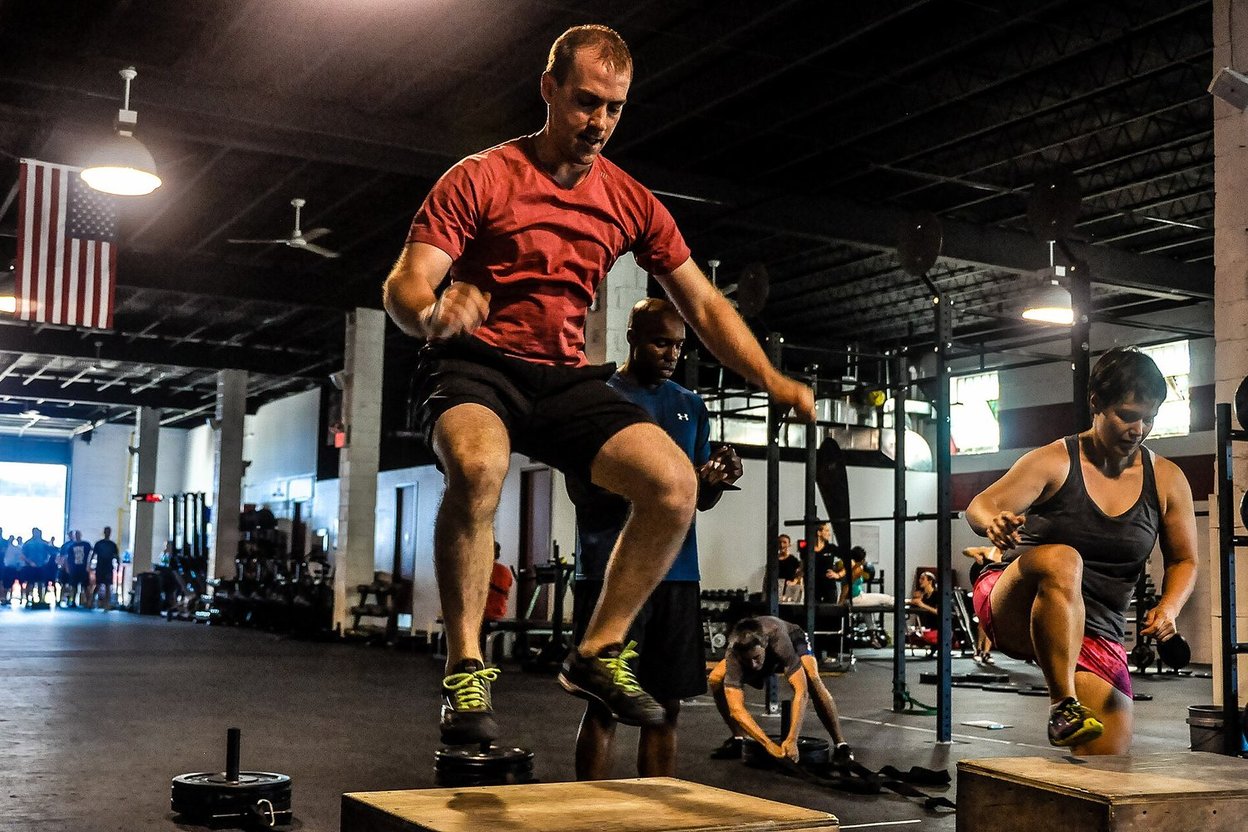
Box Jumps: How to Start Without Getting Hurt
Box jumps build explosive power, but missed jumps scrape shins and high boxes strain Achilles tendons. How to pick a box height, land right, step down, and progress safely.
You're standing in front of a box at the gym. Your eyes keep going from the top edge to your shins and back. The answer to starting without getting hurt is to begin lower than feels cool. Learn to land before you learn to leap. Move up only when your jumps are clean. This guide covers a safe setup, a plate-based starting point, the landing, and exactly when to raise the box.
What box jumps are for
Box jumps are designed for power, not conditioning. Keep your sets short and your rest honest, and don't treat them as a cardio finisher.
Set up the box first
A few details protect your shins before you jump at all.
Check these before every session:
- Use a stable box. Wooden boxes are stable, while soft boxes can flip and wobble.
- Consider a foam box if shin scrapes worry you. Jumping onto foam removes the fear of slicing your shins open.
- Start small. Stackable plyo boxes start as low as 4 inches, and most plyo box sets include a 6-inch box, which is ideal for novices.
The main risk is a foot slipping off the box mid-jump while the other stays on, which can injure the shin.
Step 0: stairs
Begin with step-ups on a stable raised surface like a staircase. They build coordination and leg strength before any jumping happens.
Learn the landing first
Stand on top of the box, step off and land softly on the ground. This trains the landing before you add the takeoff. Land with soft knees.
Sources disagree on foot width. TrainHeroic says to take off and land with two feet, hip-width apart. Rep Fitness describes landing about shoulder-width apart. Both agree on two feet and a soft landing. Pick the stance that feels stable and stick with it.
Start on the floor with plates
You don't need a box at the start. TrainHeroic suggests putting a 15lb solid rubber plate flat on the ground and jumping onto it daily. Then add a 10lb plate on top of the 15lb plate and keep progressing.
Rep Fitness gives a useful measuring stick: a 45lb bumper plate is 2.8 inches tall.
Here is the plate math, using the 2.8-inch figure:
- Three 45lb plates stack to about 8.4 inches.
- Four 45lb plates stack to about 11.2 inches.
TrainHeroic says to progress until you reach "three or four 45lb plates or a 20-inch box." Those two targets are not the same height. Three or four plates is roughly 8.4 to 11.2 inches, well short of 20. Treat the plate stack as the first stage and a box as the next, and don't assume they match.
Beat the fear of the box
CrossFit's advice is to find the height where the fear stops and lower the box to a comfortable height. Build confidence there. Then push the threshold by adding a 10-lb plate.
Two cues that help:
- Swing your arms up hard and push through your toes.
- Picture yourself on top of the box and focus on the finish.
Takeoff, landing and the snapdown
Use a two-feet takeoff and a two-feet landing. To practice absorbing force, try the snapdown from Tiger Fitness:
- Reach your arms overhead and hop up.
- Drop into a hip hinge.
- Swing your arms down like a skier.
- Stomp your feet.
Step down, don't jump down
Use a step-down box instead of jumping down. Tiger Fitness says this helps you avoid rolling an ankle. CrossFit also says learning to step down, rather than rebounding, can help manage box-jump fear.
Rebounding means jumping back onto the box the moment your feet touch the ground. TrainHeroic teaches it, but it is the faster, more demanding option. Our read, which is an opinion, is to treat it as a later skill. Make stepping down automatic first.
Sets, reps and rest
Two rest rules can look like they conflict, but they cover different gaps:
- Between jumps, rest 5 to 10 seconds (BroBible).
- Between sets, rest at least 60 to 90 seconds so you recover fully for power work (Tiger Fitness).
- Limit sets to three to five reps to keep them safe and powerful (Tiger Fitness).
Put together, a set might be three to five jumps with a short reset after each. Then take a longer break before the next set. Combining the two is our reading of the sources, not a prescription from either one.
When to move up
Raise the box only when you pass these checks:
- You can land a set of 5 perfect box jumps (Tiger Fitness).
- Your landings feel controlled at the current height.
- The step down is routine.
Hold the biggest heights back. TrainHeroic suggests turning the box on its end to try 30 inches only once you're proficient.
Variations for landing control
Once the basics are solid, Full Strength PT offers two drills:
- Jump over a hurdle to bring back an explosive takeoff while forcing landing control.
- Add an overhead target. It makes landing more reactive, because you can't look at the ground.
Common mistakes
- Jumping onto a wobbly box. Choose a stable box.
- Letting one foot slip off the edge. Aim for a clean two-footed landing.
- Chasing height before control. Use the 5-perfect-jumps rule.
- Jumping down instead of stepping down. Use a step-down box.
- Rushing between jumps. Rest 5 to 10 seconds.
These sources don't cover warm-ups, footwear, medical red flags or who should skip box jumps. If you have an injury or pain, check with a qualified professional before starting.
Advice as of November 2026.
Sources (7)
- Safer setup for box jumps (r/crossfit)
- Rep Fitness: How to Improve Box Jumps and Overcome the Fear
- TrainHeroic: Box Jumps
- CrossFit: Beating Box-jump Fear
- Full Strength PT: Box Jumps, How to Use Them Correctly for Rehab and Training
- BroBible: Why Box Jumps Are Bad
- Tiger Fitness: 5 Tips to Improve Your Box Jump Skills