Who Has to Report a Skydiving Accident, and to Whom?
Find out who must report a skydiving accident to the NTSB, USPA, or OSHA, what counts as reportable, and how and when to file.
You're on the dropzone deck on a cool fall Saturday with a coffee, watching canopies come in. One landing looks rough and staff start jogging across the field. You might wonder whether anyone is now legally required to report it. That depends on what happened. If the accident involves the airplane, the aircraft operator must notify federal investigators right away. Most injuries under canopy or on landing are handled under the sport's own reporting system and by local emergency services. Here's how each part works.
The short answer
The legal duty depends on whether the airplane was involved.
- The airplane is involved. If a jumper hits the tail, someone aboard is killed or seriously hurt, or the aircraft is substantially damaged, the aircraft operator must notify the NTSB (National Transportation Safety Board). Federal rules require it "immediately, and by the most expeditious means available."
- The injury happens under canopy or on landing. Hard landings and canopy problems usually fall outside the NTSB rule, but that isn't settled law (more on that below).
- The sport's own reports. The USPA (United States Parachute Association) asks members to file incident reports for many kinds of events. These come from the association's Skydiver's Information Manual (SIM), not from federal law.
- Emergencies. A death or serious injury also means calling 911 and dealing with local authorities, just like any other emergency.
What counts as an NTSB "aircraft accident"
Federal regulation 49 CFR 830.2 defines an aircraft accident as an occurrence connected with operating an aircraft. The window runs from the moment anyone boards with the intent to fly until everyone has gotten off. The event must involve death, serious injury or substantial damage, and each of those terms has a specific meaning:
- Fatal injury: an injury that causes death within 30 days of the accident.
- Serious injury: a hospital stay of more than 48 hours that starts within 7 days of the injury. Most fractures also count (except simple fractures of fingers, toes or nose), as do severe bleeding, nerve, muscle or tendon damage, internal organ injury, and second- or third-degree burns or burns over more than 5% of the body.
- Substantial damage: damage that affects the aircraft's structural strength, performance or flight characteristics and would normally need major repair or a replacement part. Limited engine damage, dents in the skin, and damage to landing gear, tires or wingtips are excluded.
A real example: in August 2006 near Lodi, California, a skydiver struck the tail of a Beech 99 operated by Parachute Center. The jumper was seriously injured and the plane was substantially damaged, and the NTSB classified it as an accident.
Injuries after exit are less clear. A jumper who leaves the plane has arguably "disembarked," so a hard landing several minutes later usually doesn't seem to fit the definition. The NTSB hasn't spelled this out for skydiving, though. If a case is borderline, call the NTSB or ask an aviation attorney.
How and when to notify the NTSB
The duty belongs to the operator of the aircraft, which in practice means the dropzone's aviation side or the company running the jump plane. The jumper doesn't have to call, and neither does the jumper's family.
- Phone first: The NTSB Response Operations Center takes accident reports 24/7 at 844-373-9922. A watch officer can also be reached at 202-314-6290, and the NTSB lists both numbers for public safety agencies. The NTSB says a phone call is enough at first.
- Written report within 10 days: After an accident, the operator files NTSB Form 6120 within 10 days. For an incident that required immediate notification, the written report is needed only if the NTSB asks for it. Each crewmember who is physically able attaches a statement of what happened as they saw it.
- Preserve everything: The operator must keep the wreckage, cargo, mail and records until the NTSB takes custody or releases them. Wreckage may be moved only to free injured or trapped people, prevent further damage, or protect the public.
- The FAA isn't a substitute: The NTSB is a separate agency. Aviation lawyers stress that the notice required by Part 830 goes to the NTSB, not the FAA. Telling the FAA doesn't satisfy the NTSB requirement.
What USPA expects
Most skydiving mishaps never involve the airplane, and USPA's incident reporting system covers them. The SIM (section 4-8) says members "should fill out an incident report" for a long list of events, including:
- Any fatality
- Injuries that need more than local first aid
- Any injury to a student or tandem student, however minor
- Reserve deployments (the jumper had to use the reserve parachute)
- AAD (automatic activation device) activations, where a backup device opened the reserve on its own
- Off-field landings and landings on obstacles
- Emergency exits from the aircraft
- Collisions
- Damaged gear
For first-time tandem jumpers, the key item is the third one. Any injury to a tandem student is on the list, so a sprained ankle on your first jump should lead to a report.
Who files: When someone dies, the dropzone's Safety and Training Advisor (S&TA) is expected to file. The S&TA is the USPA-appointed safety contact at that dropzone. Anyone else can file too, including witnesses, and reports can be anonymous.
How and when: USPA prefers the online form at uspa.org/ir. Printed or typed reports can be mailed to USPA headquarters. Neither USPA page sets a deadline; it only asks for reports to be filed in a timely manner.
What happens next: USPA removes dates, locations and names before storing the information. The goal is to learn from incidents, not to punish anyone. USPA uses the reports to find patterns and share safety lessons across the sport.
Other reporting that may apply
Instructors, pilots and packers are employees, so workplace rules can also apply. Under OSHA (Occupational Safety and Health Administration) rules, employers must report:
- A work-related death within 8 hours. A death counts if it happens within 30 days of the incident.
- An in-patient hospitalization, amputation or loss of an eye within 24 hours.
Employers can report by calling 1-800-321-6742, calling the nearest OSHA office, or using OSHA's online form. Emergency room treatment alone isn't reportable. Two points are unclear. OSHA excludes events on commercial or public transportation such as airplanes, and it hasn't said whether a skydiving flight falls under that exclusion. Customers also aren't employees, so a tandem student's injury isn't an OSHA matter.
After OSHA, the usual emergency contacts apply: 911, local police and, after a death, the coroner or medical examiner. State and local rules vary. We're not aware of any state law written specifically for skydiving incidents, so ask the dropzone what applies locally.
What a first-timer should do
Before your tandem jump, ask the dropzone two questions: what is your incident process, and who is your S&TA? A well-run dropzone will answer both quickly.
If you see something involving the airplane, the NTSB asks eyewitnesses to email a statement, with a phone number, to witness@ntsb.gov. For anything else, such as a rough landing, a reserve ride or a minor injury, anyone can file with USPA at uspa.org/ir. If your Thanksgiving story includes a tweaked ankle, that's worth reporting too.
Sources (10)
- 49 CFR 830.2: Definitions (Cornell LII)
- 49 CFR 830.5: Immediate notification (Cornell LII)
- 49 CFR 830.10: Preservation of wreckage and records (Cornell LII)
- 49 CFR 830.15: Reports and statements to be filed (Cornell LII)
- NTSB: Report an Accident or Incident
- NTSB report, 2006 Beech 99 N205TC, Lodi, CA
- Shackelford Law: Is It an Accident or an Incident, and Do I Need to Report?
- USPA SIM Section 4-8: Incident Reporting
- USPA: Incident Reporting
- OSHA: Report a Fatality or Severe Injury
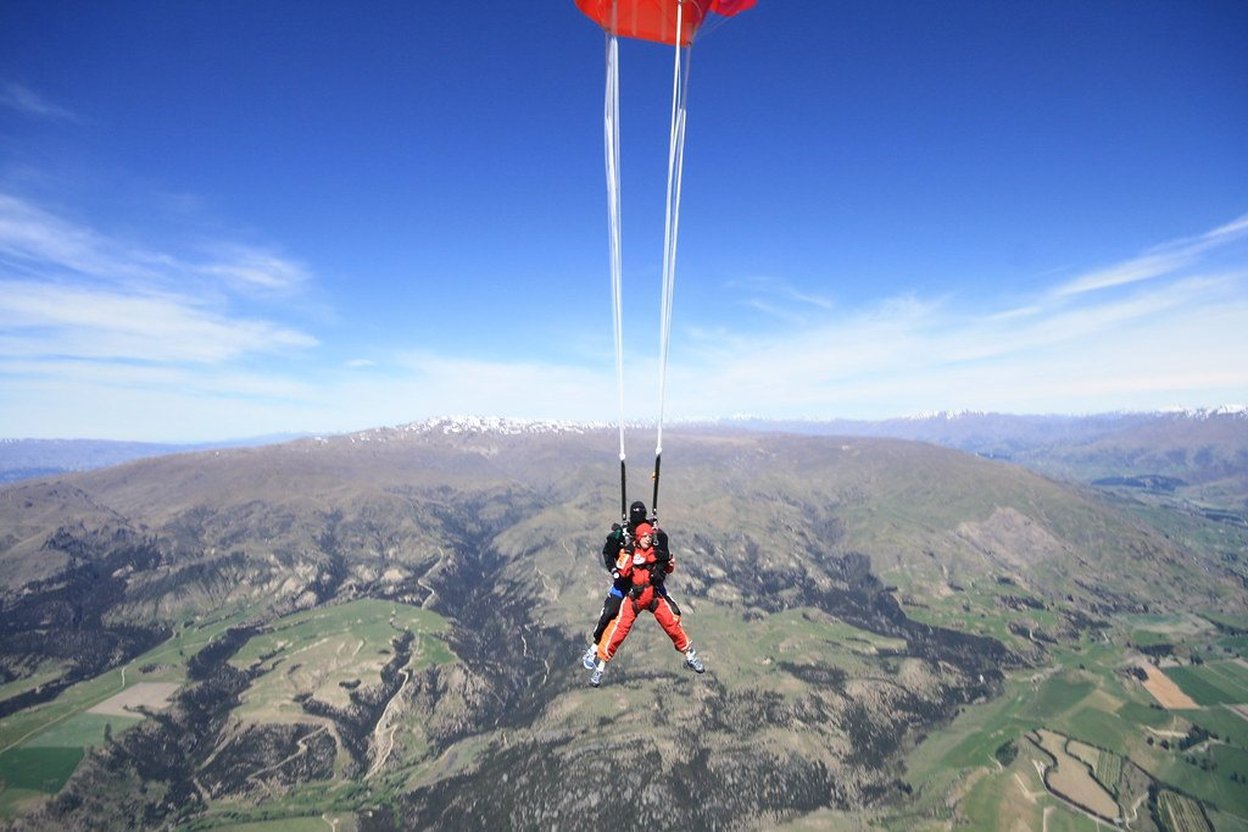
Photo: Skydiving - Parachute by AllWays Rental NZ, BY 2.0.