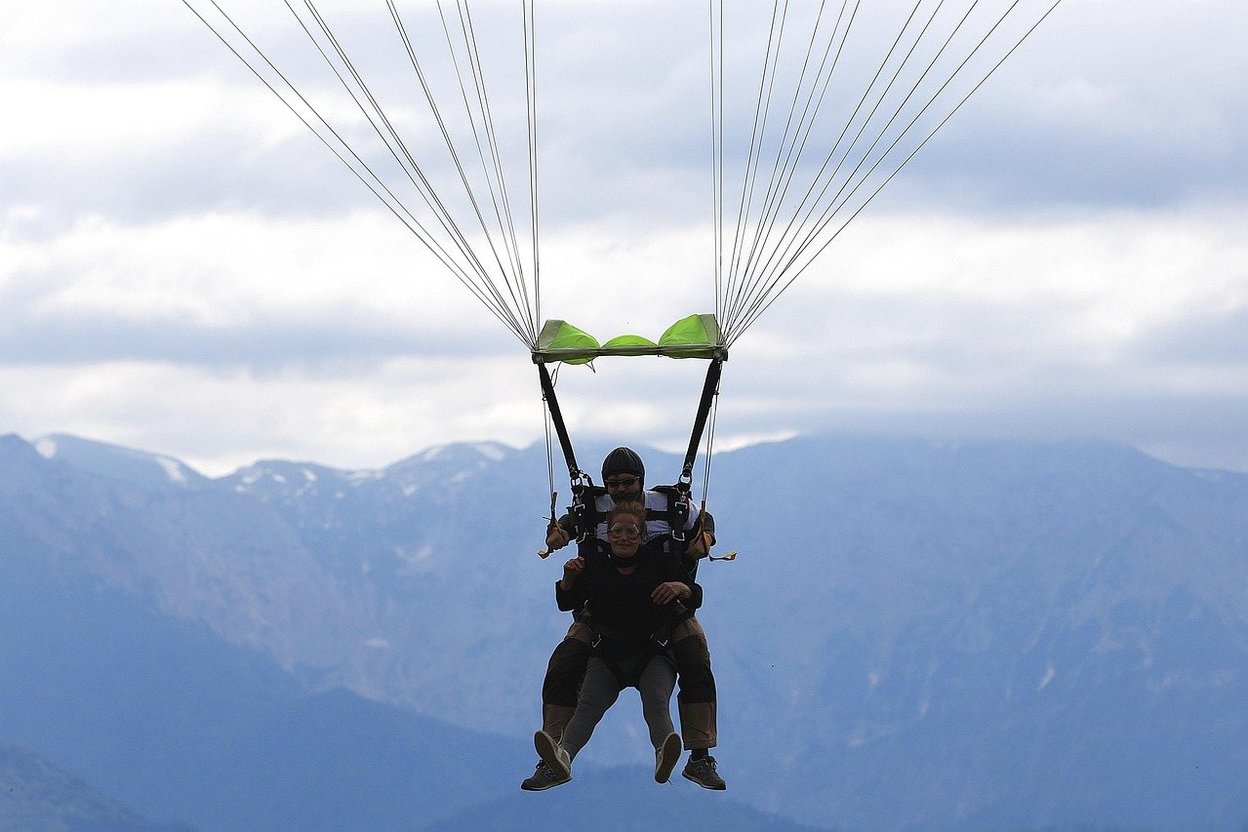
What to Wear for a Tandem Skydive in Cold Weather
Layers, long pants, closed shoes and gloves for a cold tandem skydive, plus what the dropzone's jumpsuit covers and what to leave in the car.
You booked the jump back in summer, and now the date is getting close. The leaves are turning, mornings are frosty, and you're standing at the closet wondering what you can wear that will keep you warm two and a half miles up. The quick answer: wear several thin layers, long pants, lace-up closed-toe shoes and good gloves, then let the dropzone's jumpsuit go over all of it. The rest of this guide covers how much colder it gets up there, how to layer, what the dropzone gives you, and what to leave in the car.
The short answer: dress for the sky, not the ground
The weather at the airport doesn't tell you much about the weather at exit altitude. Several dropzones put it at roughly 30 to 40°F colder where you jump. Skydive Midwest reports a smaller drop of 20 to 30°F at 14,500 feet, so the real gap depends on the day. Then you leave the plane and fall at about 120 mph, and that wind cuts through anything loose or thin.
Here's the basic checklist:
- Thin, snug layers on top: a base layer, a warm mid-layer and something windproof
- Long pants, not shorts
- Warm socks and lace-up, closed-toe shoes
- Gloves, ideally with thin liners
- A neck gaiter to cover your neck and lower face
Most dropzones put tandem students in a jumpsuit, and it goes over your clothes. Skydive Orange provides one to tandem jumpers at no extra charge and notes that it fits over winter clothing. Skydive Tecumseh recommends a jumpsuit too, because it protects your clothes and stops loose fabric from flapping at 120 mph. Plan your outfit so it fits under one.
Why it's colder up there
Air cools as you climb. Skydive Tecumseh, Skydive Perris and Skydive Cross Keys all use the same rule of thumb: the temperature falls about 3°F for every 1,000 feet of altitude.
Tandems commonly exit around 13,500 feet, so here's the math. Skydive Cross Keys gives this example: 32°F on the ground works out to roughly -8.5°F at 13,500 feet. A late-fall morning in the 50s still leaves you in the teens or low 20s at the door of the plane.
Freefall then adds wind chill. At about 120 mph, the cold feels much sharper on any bare skin than the thermometer suggests.
You aren't up there long, though. Skydive Cross Keys says a tandem from 13,500 feet gives about one minute of freefall and about five minutes under canopy. Other operators quote figures from about 45 seconds of freefall up to a full minute, and canopy rides of four to seven minutes. The parachute ride is slower and calmer, but you're still in cold air the whole way down. Skydive Cross Keys says frostbite is very unlikely if you dress properly, though mild frostnip on exposed spots like cheeks or ears can happen.
Layer by layer
Layering works because several thin layers trap warm air between them and still let you move. Parachutist, the U.S. Parachute Association's magazine, makes this point, and so do Skydive Monroe and Skydive Orange. One puffy coat also won't fit under a jumpsuit or harness, and its loose fabric flaps in freefall.
Base layer. Start with long johns or a thermal top and bottoms. Wool is a good choice. Moisture-wicking synthetics also work and keep sweat off your skin while you wait around on the ground.
Mid-layer. Skydive Monroe recommends fleece. A fitted fleece pullover or a light wool sweater adds warmth without bulk.
Windproof outer. A thin windproof jacket or shell blocks the airflow that steals heat. The jumpsuit adds another layer on top, but a windproof layer underneath helps a lot on a really cold day.
Pants. Wear long pants. Skydive Midwest allows shorts but discourages them, partly because longer pants protect your legs on seated, slide-in landings. Skydive Perris also recommends long pants. Thermal leggings under comfortable pants or joggers work well.
Socks. Warm wool socks. Don't stack so many pairs that your shoes get tight, because tight shoes cut off circulation and make your feet colder.
Shoes. Closed-toe, lace-up shoes, laced tightly. Skydive Midwest doesn't allow flip-flops, slip-ons, heels or bare feet, and it keeps backup shoes on hand. In the cold, Skydive Cross Keys prefers windproof materials such as leather over mesh or fabric uppers.
Fit matters both ways. Loose clothing flaps hard in freefall, but Skydive Midwest also warns against anything so tight it limits your movement. Aim for snug and comfortable, so you can still lift your legs and arch.
Hands, face and feet
Fingers, cheeks and toes get cold first, so give them some extra attention.
Gloves. Dropzones disagree here. Skydive Orange suggests insulated gloves with thin liners so you can still use your fingers, and says thick ski gloves are unnecessary and can get in the way of handling equipment. Skydive Monroe recommends thick gloves with liners underneath. Skydive Tecumseh supplies gloves but notes you may prefer your own. Ask your dropzone what it likes before you buy anything.
Latex liners. Some jumpers wear thin latex gloves under their winter gloves to block the wind. Skydive Perris and Skydive Cross Keys both mention it.
Neck gaiter. A neck gaiter or buff covers your neck and the lower part of your face, which are the spots most exposed to the wind. It's a cheap way to avoid the frostnip mentioned above.
Hand and toe warmers. Air-activated warmers like Hot Hands and Toasty Toes fit inside gloves or socks. Skydive Tecumseh suggests using them on the ground, which is where most of your waiting happens. If you want to carry them on the jump, check with your instructor first.
Eyes and head. The dropzone gives you goggles. Head coverings are more limited. Skydive Perris says tandem students can't wear helmets, and many other dropzones say something similar. Your neck gaiter and the jumpsuit collar are your main protection from the neck up.
What the dropzone provides and what to leave behind
Most dropzones typically provide:
- A jumpsuit that goes over your clothes
- Goggles
- The harness and all parachute equipment, fitted by your instructor
- Sometimes gloves (Skydive Tecumseh does) and sometimes backup shoes (Skydive Midwest does)
Leave these on the ground:
- Hats and scarves. Skydive Midwest doesn't allow them because they blow off. A neck gaiter is the snug alternative.
- Jewelry. Skydive Midwest asks you to remove rings, necklaces, bracelets, watches and dangling earrings.
- Anything in your pockets. Phones, keys and lip balm should all stay behind. Empty every pocket before you suit up.
If your fall plans include a Halloween costume or a festive Thanksgiving sweater, wear it for the photos and change before you get in the plane.
These rules come from individual dropzones, and each one sets its own. Read your dropzone's what-to-wear page or call before you go.
Cold-day logistics
Before you plan an outfit, make sure your dropzone is open that day. Seasons vary a lot. Skydive Tecumseh closes November through March. Skydive Midwest operates April through October. Skydive Cross Keys jumps only on winter weekends from November 1 through March 31 and closes in January. Skydive Orange closes from mid-December to mid-January. In Southern California, Skydive Perris averages about 68°F in the afternoon in January and February.
Weather can also cancel a jump. Skydive Orange says extreme windchill or severe cold can lead to cancellations, and Skydive Cross Keys says it won't jump if it decides it's too cold. Skydive Monroe calls clouds, high winds and rain no-gos and suggests keeping your timing flexible, because winter weather is less predictable. Leave room in your schedule, especially around holiday weekends.
Bring a thermos of something hot for the drive home. Your fingers will thaw quickly, and you'll be telling people about the jump for a long time.
Sources (8)
- Skydive Orange: What to Wear When Skydiving in the Cold
- Skydive Perris: Where to Go Skydiving in Winter
- Skydive Tecumseh: What to Know About Jumping in the Cold
- Skydive Cross Keys: Skydiving in Winter, Pro Tips
- Skydive Cross Keys: Tandem Skydiving
- Skydive Midwest: What to Wear
- Parachutist (USPA): Safety Check, Winter Jumping
- Skydive Monroe: Winter Skydiving, What to Wear When It's Cold
Photo by WFranz on Pixabay.