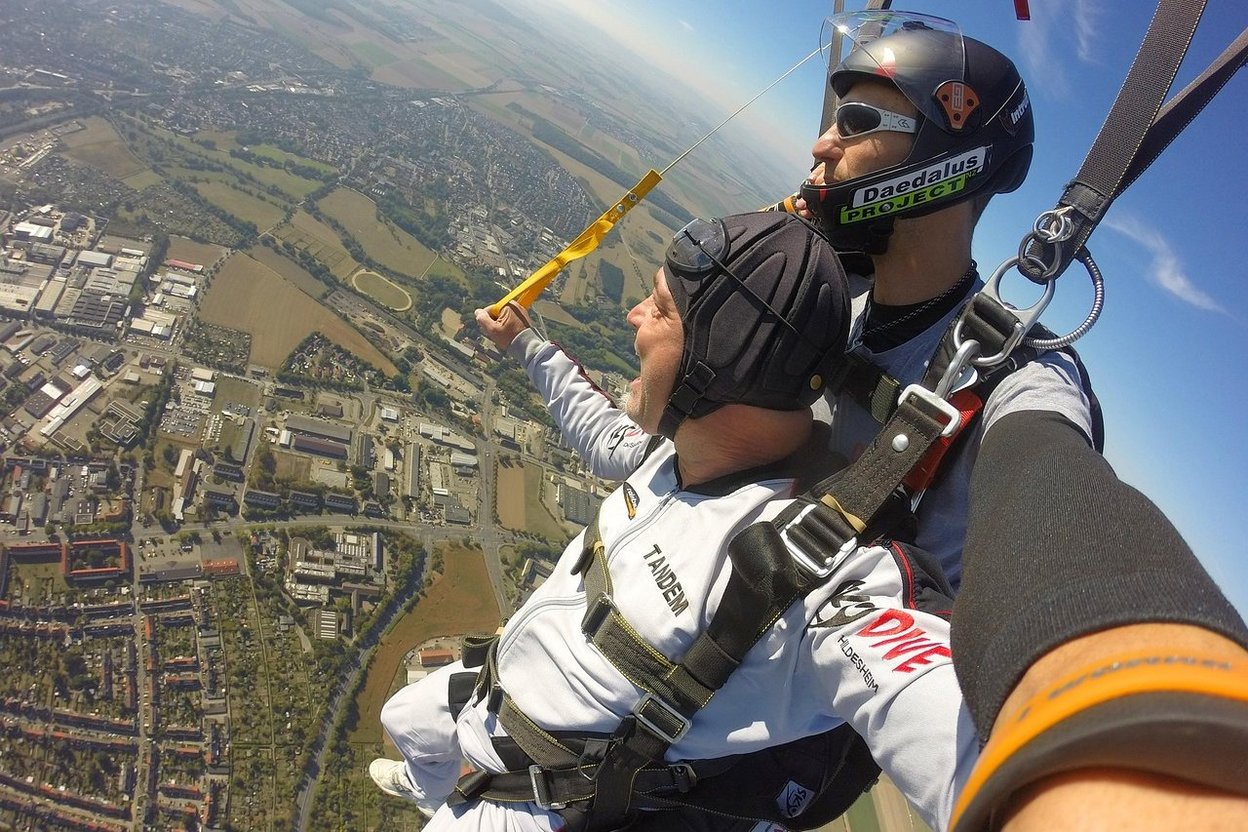
How old is too old for a tandem skydive?
No US age cap applies to tandem skydiving. Learn which health, weight, and mobility checks matter before you book.
You may be checking the age requirement before booking a tandem jump for yourself or someone you love. In the United States, there is no upper age limit for a tandem skydive; your health, mobility, and the dropzone’s requirements determine whether you can jump.
A birth year alone does not rule you out. You’ll need to meet the minimum age and medical requirements, fit the dropzone’s weight limit, and be able to follow instructions for landing.
The short answer: there is no "too old"
There is no maximum age for tandem skydiving in the United States. Dropzones assess whether you can safely take part by looking at your health, weight, and mobility, not by setting a cutoff based on your birth year.
That assessment includes whether you can get into the required body position and lift your legs for landing. A health condition or mobility limitation may affect your eligibility, so discuss your circumstances with the dropzone before you book.
Older jumpers have set records well past age 100. Al Blaschke made a tandem jump at 106, and other record-setting jumpers have taken part at ages 102, 103, and 104.
If you’re considering a jump, contact the dropzone directly and describe any health or mobility concerns. Its staff can explain its requirements and tell you whether to seek medical advice before booking.
What the rules say in the US
In the United States, tandem skydivers must be at least 18, and there is no national maximum age. The United States Parachute Association (USPA) sets safety guidance, while tandem equipment manufacturers’ rules also apply to the operation.
USPA guidance calls for a medical condition to be handled in one of three ways: the participant provides a doctor’s note clearing them to jump, signs a liability waiver, or does both. Ask the dropzone which option applies to your situation and what paperwork it requires.
The tandem manufacturer’s requirements are part of the rules instructors and dropzones follow. The minimum age is 18; turning 18 does not automatically mean you meet every other requirement.
Dropzones also set practical eligibility limits, including weight limits. Check the rules with the specific location where you plan to jump, and ask how it handles medical clearance before paying or traveling.
What really limits older jumpers
Your health and ability to manage the jump matter more than your age. A dropzone will consider its weight limit and whether you can move into the required position, follow instructions, and lift your legs for landing.
That leg position helps keep your feet up as the instructor prepares for touchdown. If pain, stiffness, or limited mobility makes that movement difficult, tell the dropzone before booking so its staff can assess your situation.
Heart, lung, and neurological conditions deserve a conversation with both your doctor and the dropzone. Be specific about your condition and any symptoms that could affect exertion, awareness, or movement. A doctor’s clearance may be required under the USPA medical standard.
Bone health and medications also belong in that conversation. Tell your doctor and the dropzone about conditions affecting your bones and any medicines you take; the dropzone can explain its screening requirements.
Waiting periods after certain events apply to every jumper, regardless of age. Ask the dropzone whether a recent illness, injury, surgery, or other medical event affects when you can jump, and follow any medical guidance it requests.
Doctor's notes and age-70 rules abroad
US dropzones do not set a universal age cutoff in the rules described here, so contact your chosen location about its own policies. If you’re 70 or older, ask whether it requires a medical form or doctor’s note before you book.
Some operators outside the United States do require additional medical paperwork for older jumpers. Operators in the UK, Norway, and Dubai ask for a doctor’s form at age 70 or older.
Those policies apply to the operators in those locations, not to every dropzone worldwide. If you’re traveling for a jump, confirm the age threshold, form, and submission deadline directly with the operator.
Oldest tandem jumpers on record
Tandem skydiving records show that people have jumped at ages 102, 103, 104, and 106. These records illustrate how far beyond traditional retirement age a tandem jump has been possible.
Al Blaschke made a tandem jump at 106. Kenneth Meyer jumped at 102, Dorothy Hoffner at 104, and Rut Larsson at 103.
A record shows that someone completed a jump at a particular age; it does not establish that every person of the same age will qualify. Your own health, mobility, and the dropzone’s requirements determine whether you can take part.
How safe it is, and how to prepare
Skydiving carries risk, and the USPA reported 2024 fatality figures for the sport. Those figures cover skydiving overall and do not provide a tandem-specific or age-specific rate.
For older jumpers, landing is a practical point to discuss. A hard landing can result in an injury, and your ability to lift your legs and follow the instructor’s directions is part of preparing for touchdown.
Before booking, ask the dropzone:
- What is your weight limit, and how do you assess mobility?
- Do you require a doctor’s note for my health conditions or medications?
- Can I discuss my ability to lift my legs for landing with an instructor?
- What waiting periods apply after an illness, injury, surgery, or medical event?
- What should I bring, and when should I arrive?
Give clear answers about your health and movement, and ask for any required medical paperwork before choosing a jump date. If you have a concern about a specific condition, check with your doctor and the dropzone before booking.
Photo by sraeuschel on Pixabay.