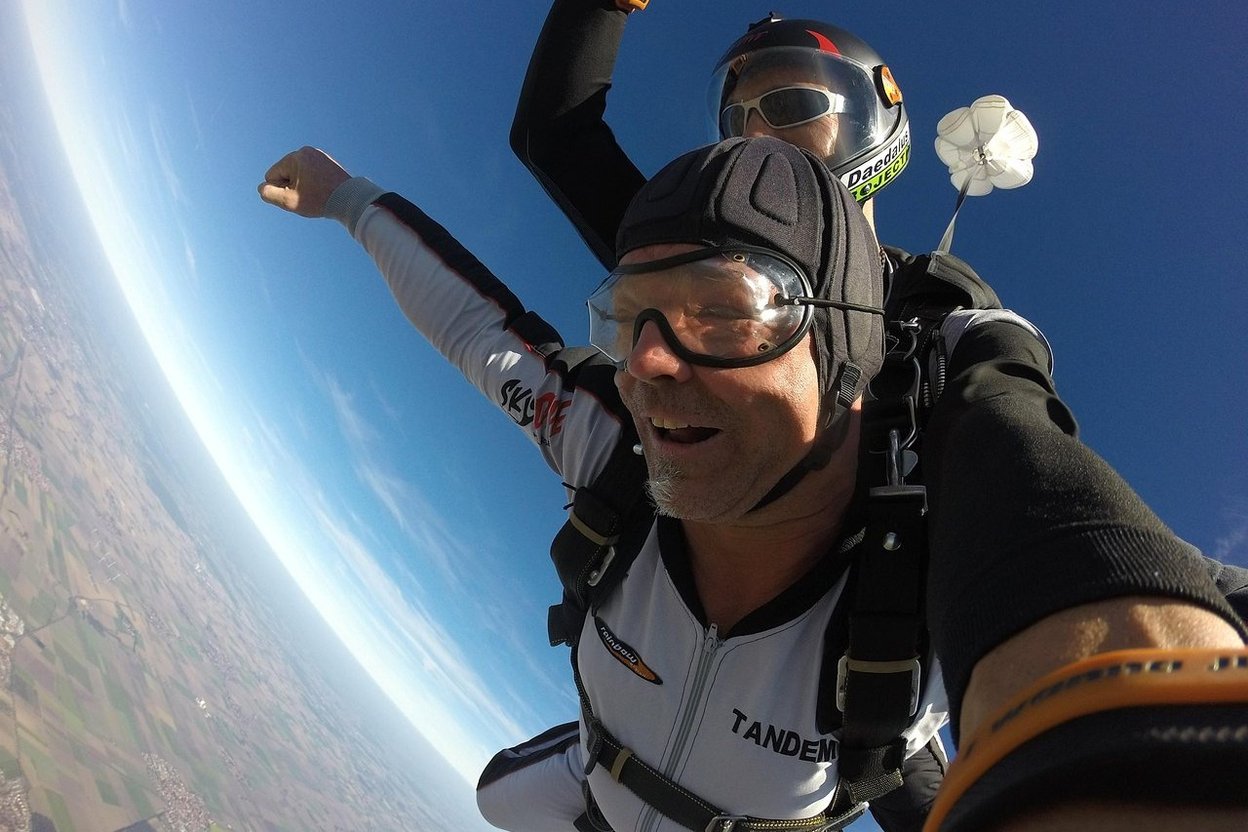
Will a late-October tandem skydive get canceled for wind?
Wind can delay a tandem skydive, but no national limit exists. Learn who makes the call, typical dropzone limits, and rebooking rules.
If you’re checking the forecast for your late-October jump and seeing wind in it, yes, wind can delay or reschedule your tandem skydive, but there is no national wind cutoff for tandem jumps. The dropzone and your instructor make the call based on conditions at the time.
A wind call usually means waiting or rebooking. Your payment options depend on the dropzone’s policy, so check the terms before you book.
The short answer
A late-October tandem skydive can be delayed or rescheduled for wind, but the decision comes from the dropzone and instructor, not a national tandem limit. Published dropzone limits run around 25 mph steady, with separate limits for gusts and winds higher up.
A forecast alone does not settle the decision. The team assesses conditions on jump day, and a hold can give the wind time to ease. If conditions stay outside the dropzone’s limits, you’ll be offered a reschedule under its policy.
A wind call is usually a hold or rescheduling decision, not a lost payment. Many dropzones offer a rain check or free rebooking, though deposit rules vary. Before you book, read the weather and cancellation terms for your specific location so you know whether the payment stays on file, how long you have to rebook, and whether a fee applies.
Who actually decides
Your tandem instructor and dropzone make the wind call for your jump, using current conditions and their safety procedures. The USPA Basic Safety Requirements set wind limits for some student jumps: 14 mph for solo students using ram-air canopies and 10 mph when using round reserves. They give no numerical limit for licensed jumpers or tandems, and require winds to be judged before every jump.
The UPT Sigma tandem manual also gives instructors no single wind number. It directs them to keep evaluating conditions and make conservative decisions. It notes that no wind at all can create problems for heavier students or those with limited mobility, so a calm reading by itself does not settle whether conditions are suitable.
The Federal Aviation Administration rule for parachute operations addresses cloud clearance and visibility, not wind speed. You can check its cloud and visibility requirements, while your dropzone supplies the operational wind limits for its jumps.
That means the same forecast can lead to different calls at different locations. Your instructor considers the conditions where you’ll exit and land, then decides whether to proceed, pause, or reschedule.
The numbers dropzones actually use
Published tandem limits vary by dropzone, and the examples range from about 21 knots to 25 mph. Those figures may include gusts or upper-level wind conditions, so check how your location defines its limit.
Skydive South Boston in Massachusetts says it does not jump when surface winds exceed 25 mph, the gust spread exceeds 10 mph, or upper winds exceed 30 mph. Chicagoland Skydiving Center in Illinois describes winds over 25 mph or gusty conditions as unsuitable.
Start Skydiving in Ohio sets a tandem limit of 21 knots, including gusts. When conditions hit its limits, it pauses jumping for 30 minutes or more before reassessing.
Steady surface wind is only part of the picture. Gusts create changing conditions, while turbulence near trees and buildings can affect the canopy close to the ground. Wind at exit altitude also counts, so a manageable reading at the landing area may not represent conditions higher up.
Treat these figures as examples, not a national standard. Your dropzone’s current rules and the instructor’s assessment determine whether your jump goes ahead.
Why late October can be trickier
Late October brings stronger average winds than August in Chicago, Boston, and Dayton, while Houston and Los Angeles remain calmer in NOAA long-term averages. Your location therefore affects the odds of a wind hold.
Cold can impose a separate limit. Start Skydiving does not fly students, including tandem students, when the ground temperature is below 40°F. Skydive Chicago also lists low temperatures as a reason for delays.
Dress for colder air at altitude. Ask your dropzone what clothing it recommends for your jump date, and plan for the ground temperature to feel different from conditions during the skydive.
If your jump gets called
Your payment and rebooking options depend on the dropzone, so read its current policy before booking. These examples show how rules differ by location.
Skydive Chicago offers a one-year rain check or free rescheduling; the deposit stays on file and is not refunded. Skydive Spaceland Houston’s rain check never expires, and it does not offer refunds. It also says it will not cancel ahead of time based on a forecast.
At Skydive Perris, the deposit remains on file, with a $50 fee for rescheduling within 24 hours. Skydive South Boston waits 30 minutes before rescheduling a jump affected by weather, and its rain check is good for a year.
Start Skydiving offers free rescheduling within the season after a two-hour wait. Chicagoland Skydiving Center holds your price for a year and requires 48 hours’ notice to reschedule.
These terms are specific to each business and can change. Confirm the current policy with your dropzone, including how long a credit lasts and whether you need to wait before the weather call is final.
How to improve your odds
Book an early slot to give yourself more room if delays build later in the day. Keep your schedule open: dropzones may ask you to allow two to four hours, or the whole day.
Call the dropzone before changing plans based on your home forecast. Weather can differ over a few miles, and the dropzone can tell you how conditions look at the jump site.
Read the deposit and rescheduling policy before you book. Save the dropzone’s phone number so you can check the day’s status directly.
Sources (1)
Photo by sraeuschel on Pixabay.