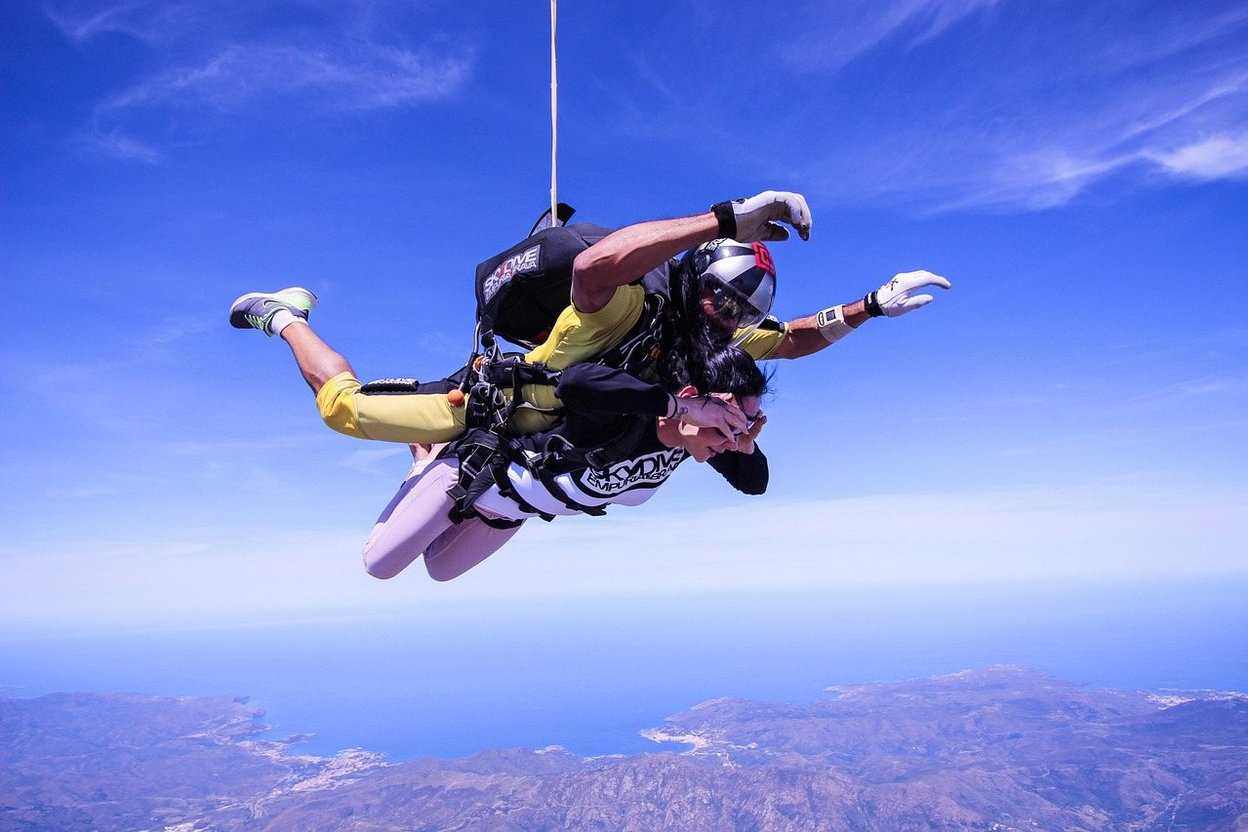
Can you skydive with glasses or contacts?
Yes, you can skydive in glasses or contacts. Learn what dropzones provide, what to tell your instructor, and how long to wait after LASIK.
You're filling out the booking form for your first tandem jump and you reach up to push your glasses back up your nose. Will they stay on at 120 mph? Should you wear contacts? Will the wind dry your eyes out? The short answer is yes: you can skydive in glasses or in contacts. Every jumper wears goggles, and the dropzone supplies them. This guide covers what to wear, what to tell your instructor and how to come home with the glasses or lenses you arrived with. It also covers how long to wait after LASIK.
Short answer: yes, with goggles
Wearing glasses or contacts won't keep you from making a tandem skydive. Goggles are part of everyone's gear, including people with perfect eyesight. Skydive Orange says goggles are required for every jumper, including people who wear no corrective eyewear at all. Skydive Tecumseh says the same thing: every jumper wears goggles as eye protection, with or without glasses or contacts.
The reason is the wind. Skydive Monroe requires goggles on full-altitude jumps and puts freefall wind at about 120 mph. At that speed, uncovered eyes water, squint and stop working well. Goggles keep them open and protected.
You don't need to buy anything. The dropzone provides the goggles. Your job is to tell them about your eyewear. Mention glasses or contacts when you book, then mention them again at check-in and to your instructor while you're getting geared up. Skydive Long Island says contact wearers follow the same rules as everyone else and should tell their instructor so the fit can be checked. Skydive Tecumseh and Skydive Perris both say that staff will sort out the fit and supply special goggles if you let them know ahead of time.
These rules are set by each dropzone, not by a single national rule. The details below come from individual dropzones, so check with the one you're booking.
Glasses: how goggles fit over them
If you wear glasses, the dropzone will hand you over-glasses goggles. They're larger goggles built to sit over your frames and hold them against your face. Skydive Long Island calls goggles over glasses the most popular and accessible option. Skydive Tecumseh says its goggles fit over all but the most oversized glasses, and Skydive Perris says its goggles fit over most prescription glasses.
Your frames matter too. Skydive Orange says glasses need to fit snugly, because loose frames can shift inside the goggles and cause discomfort or blurry vision. If your everyday pair slides down your nose, think about wearing a better-fitting pair, or contacts, on jump day.
Bring a backup pair. Skydive Perris says the goggles are usually secure but not guaranteed. A spare pair in the car means you can still drive home if something goes wrong.
Don't plan on wearing sunglasses. Skydive Orange says students generally can't wear them, because they can block your view and keep your instructor from seeing your eyes. Instructors watch your eyes to see how you're doing. Skydive Long Island says jumpers can switch to sunglasses with a retainer, sun-protective goggles or a helmet with a clear visor once they're qualified, which means after training, not on a first tandem.
If you get hooked and keep jumping, licensed jumpers have more options:
- Prescription skydiving goggles. Skydive Perris and Skydive Monroe both mention these for frequent jumpers.
- A neckband. Skydive Mag recommends one so your glasses aren't lost in freefall. It also suggests impact-rated frames (EN.166 or ANSI Z87.1) and non-polarized lenses, because polarized lenses can make a wrist altimeter hard to read.
- A clip-on foam gasket. Skydive Mag says this seals the gap between the frame and your face, which helps if your eyes are sensitive to wind.
Contacts: the better option, with a few cautions
If you can choose, many dropzones would rather you wear contacts. Skydive Orange says it prefers contacts because glasses lost in freefall can't be recovered. Without frames inside the goggles, the goggles can also seal closer to your face.
Wind is still the main issue. Skydive Monroe says dry eyes come from wind exposure, and in freefall that wind is about 120 mph. Skydive Orange says wind can make your eyes water, and in rare cases the tearing can shift or dislodge a lens. That's why you should tell your instructor you're wearing contacts, even though it seems like a small thing.
Dropzones have an easy fix for this: tape. Skydive Tecumseh says it often covers the goggles' ventilation holes for contact wearers for extra security. Skydive Long Island suggests closing the vent ports with a small strip of tape to help prevent dry eyes. You might expect taped vents to cause fogging, but Skydive Long Island says fogging is less of a concern because the airflow clears it once you exit the plane.
Losing a lens is rare. Skydive Perris calls losing a contact in freefall "very rare" because the goggles are fastened securely. Skydive Monroe says its regular goggles can be fastened tightly enough to hold lenses in place. No published numbers exist on how often it happens, so treat "rare" as what dropzones report from experience. Rewetting drops and a spare pair of lenses are still worth bringing.
Depth perception and vision limits
Once your eyewear is sorted, you might wonder how well you actually need to see. For a tandem, you don't need much. Skydive Perris says tandem students follow their instructor's directions on landing and don't need their own depth perception. Your instructor is flying the canopy and judging the ground.
Solo jumping is different. Skydive Perris says depth perception and peripheral vision matter more for solo jumpers. Skydive Long Island says it's "downright dangerous" for a solo jumper not to be able to see, and Skydive Tecumseh also counts seeing well as part of safety, especially when you're flying alone.
There's no published minimum vision standard for tandem jumps. Skydive Perris offers a rule of thumb: if your depth perception is good enough to drive legally, you should be able to skydive. That's one dropzone's opinion, not an official rule. If you have a specific eye condition, ask your eye doctor and your dropzone before you book.
After LASIK: how long to wait
If you've had LASIK, the question is timing, and dropzones give different answers.
Skydive Orange says most medical professionals recommend waiting at least a month after LASIK before jumping, and that you should follow your own doctor's guidance. Skydive Monroe publishes a stricter timetable:
- 24 hours to 1 month: "DO NOT SKYDIVE," for both tandem and licensed jumpers.
- 1 to 6 months: At your discretion, with a full-face helmet and input from your doctor.
- 6 months to 1 year: Tandem goggles are allowed, but a full-face helmet is strongly recommended.
- After 1 year: At your discretion.
Skydive Monroe explains why. Wind can damage the healing corneal flap, and tandem goggles have vent holes that let air in. The dropzone also says it may ask for a doctor's note saying you've healed enough. Skydive Long Island also says to follow a medical professional's advice and suggests taping the goggle vents.
Taken together, that's a range of about one month to one year, depending on the dropzone and how you're healing. That range comes from dropzone policies, not eye-surgery research. Your surgeon knows your eyes, so ask them before you book. Then ask the dropzone whether it wants a note. If you had surgery this fall and want to jump around Thanksgiving, sort this out early so you don't have to reschedule.
Checklist for jump day
- Mention your eyewear when you book, and again at check-in and to your instructor.
- Wear glasses that fit snugly, or wear contacts if that's an option for you.
- Bring a backup pair of glasses or spare lenses, plus rewetting drops.
- Leave sunglasses in the car. You'll get dropzone goggles for the jump.
- Ask about taping the vents if you wear contacts or have dry or sensitive eyes.
- Check the goggle fit before boarding. They should feel tight and stay put when you turn your head.
- After LASIK, follow your surgeon's timeline and bring a doctor's note if the dropzone asks for one.
Once that's done, you can stop thinking about your eyes and enjoy the view.
Sources (8)
- Skydive Orange: Can You Skydive With Glasses or Contacts?
- Skydive Tecumseh: Skydiving with glasses or contacts
- Skydive Monroe: Can You Wear Glasses or Contacts Skydiving?
- Skydive Monroe: Skydiving After LASIK Eye Surgery
- Skydive Long Island: Can You Skydive With Glasses or Contacts?
- Skydive Perris: Skydiving, Vision and Depth Perception
- Skydive Mag: Jumping With Glasses
- USPA Skydiver's Information Manual
Photo by nmn1329 on Pixabay.