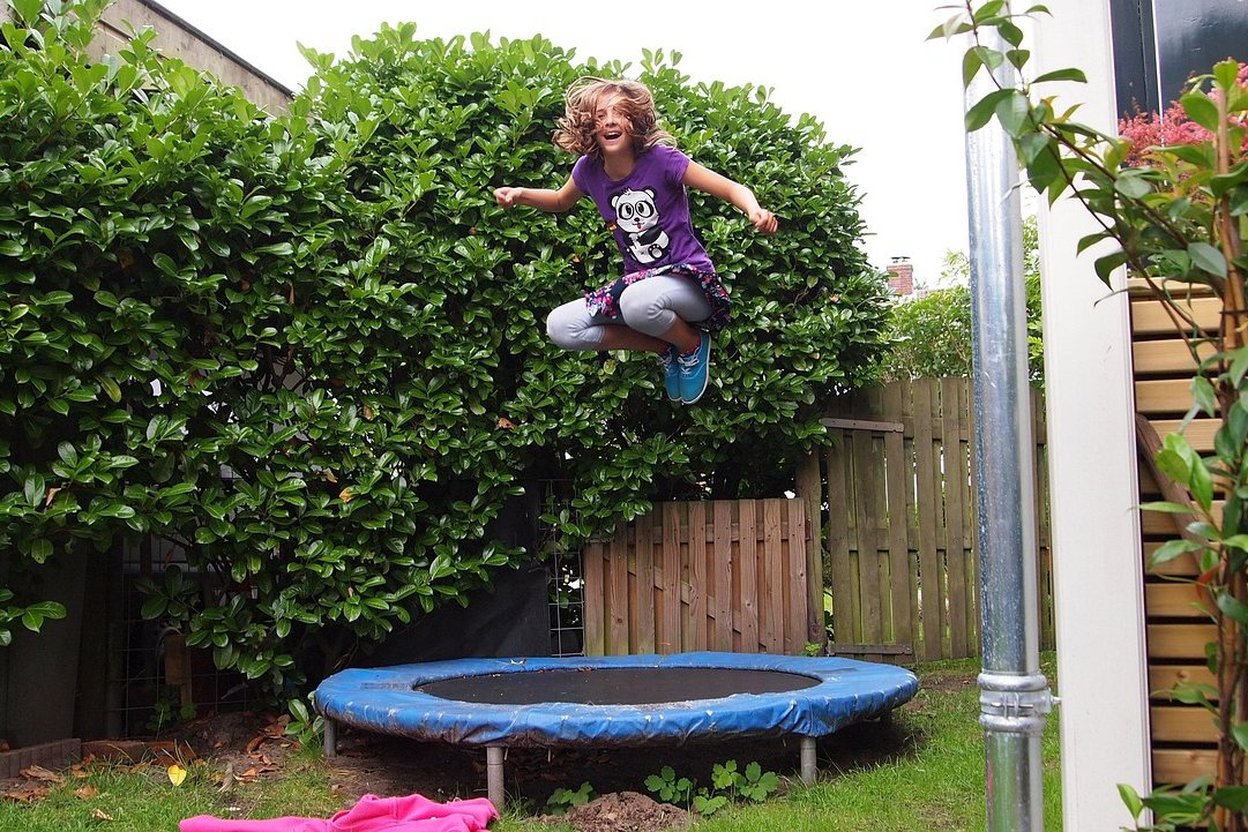
Can an HOA make you take down a backyard trampoline?
An HOA can make you remove a trampoline only under a valid, properly adopted rule. Learn where to find that rule and how to respond to a notice.
You may be checking your HOA rules before buying a trampoline or responding to a notice about one already in your yard. An HOA can usually require you to remove a backyard trampoline when a valid community restriction prohibits it. The controlling documents and your state’s law determine whether that restriction applies.
A trampoline may still be allowed under rules that require approval, screening, or safety measures. Before you buy, install, or take one down, check the governing documents and ask the HOA to identify the specific rule it is applying.
Short answer: usually yes, if the rule is in the right place
An HOA can ban or limit a trampoline when the recorded CC&Rs or properly adopted rules authorize that restriction. The exact wording of your documents and the law in your state determine whether the HOA can enforce it.
A restriction may prohibit trampolines outright or set conditions for placement, appearance, or safety. Read the provision closely: a rule about exterior structures or recreational equipment might apply, but its wording and adoption process matter.
No court ruling specifically about an HOA trampoline ban turned up in the materials informing this article. The answer therefore rests on general HOA law and practitioner guidance, not a trampoline-specific court decision. State law can affect how an association adopts and enforces restrictions, so check the rules that apply where you live.
If your HOA sends a removal notice, ask it to identify the provision it relies on and provide the relevant document. That gives you a concrete basis to assess whether the restriction applies to your lot and whether the association followed its own procedures.
Where the rule has to come from
The restriction’s authority usually comes from recorded CC&Rs, architectural guidelines, or properly adopted board rules. A ban stated only in a board resolution may be open to challenge, as a California FAQ explains; the governing documents and the process used to adopt the rule are key.
Check the recorded declaration first, then review amendments and any architectural or use rules it authorizes. Look for language covering play equipment, exterior structures, visibility, or safety. If a board rule adds a restriction that the CC&Rs do not authorize, ask the HOA to explain its authority and point to the adoption procedure it followed.
Common areas are treated differently from private lots. The HOA typically has more direct control over equipment placed in a shared area, while a restriction on your private lot needs support in the governing documents and applicable law.
Keep a copy of the rule and any approval you receive. If the HOA relies on a resolution, request the resolution’s text, adoption date, and the document that gives the board authority to adopt it.
Middle-ground rules many HOAs use
Many HOAs regulate trampoline placement and appearance without banning every backyard trampoline. Your community’s documents set the specific conditions, and measurements vary by association.
An architectural committee may require written approval before installation. A community could also require screening from the street, setbacks from lot lines, or a height cap. For example, a rule might require a trampoline to sit behind a fence or hedge and away from a neighboring property; use your HOA’s actual measurements rather than assuming a standard distance.
Other rules focus on the equipment itself. An association might permit an in-ground model, require anchoring, or ask you to carry insurance. It may also require a safety net, maintained padding, or removal when the trampoline is damaged or no longer in use.
Ask for the approval criteria in writing, including any required site plan, dimensions, or product details. If you already own a trampoline, propose a specific adjustment, such as screening or relocation, and request written confirmation that it satisfies the rule before making changes.
Why HOAs worry: injuries, liability and insurance
Injury risk, liability concerns, and insurance restrictions often motivate HOA limits on trampolines. Those concerns help explain a rule, but they do not give an HOA independent authority to regulate your property; that authority must come from the governing documents and state law.
The Consumer Product Safety Commission reported a sharp rise in trampoline injuries in 2000, including an increase in emergency-room-treated injuries from 1991 to 1999, as described in its trampoline injury report. The American Academy of Pediatrics has also advised against recreational trampoline use by children, citing injury risks.
A trampoline can raise an attractive-nuisance concern when children may access it without permission and get hurt. A fence and secured access can reduce that exposure, though they do not replace safe supervision or maintenance. Your homeowner’s insurer may also impose conditions or exclusions for trampoline-related claims, so ask your carrier what your policy covers.
The liability concern sits with you as the homeowner when the trampoline is on your property. The HOA’s role in making a rule still depends on its governing authority, not on its concern about potential claims.
If you get a letter: fines, hearings and your options
A violation letter should identify the rule, explain the alleged violation, and tell you how to request a hearing or appeal under your community’s procedures. Deadlines and protections vary by state, so check your state’s law and the HOA documents.
Florida provides a clear statutory example: before a fine or suspension takes effect, the owner must receive notice and an opportunity for a hearing before a committee, as set out in Florida Statutes Section 720.305. Review the statute for current requirements and confirm that your association follows them.
California has its own notice and hearing requirements for HOA discipline. The California Civil Code provision on discipline and fines is summarized in Section 5850. Check the current law and your association’s enforcement policy for the applicable process and limits.
Respond by the deadline in the notice. Ask for the rule, evidence of the violation, and a hearing if the governing documents or state law provide one. If you can cure the issue by moving, screening, or removing the trampoline, request a written cure period and confirmation that compliance will close the matter. Keep copies of every notice and response, and check your state’s requirements before paying or disputing a fine.
Checklist before you buy or install
Before buying or setting up a trampoline, work through these steps:
- Read the CC&Rs and related architectural rules for restrictions on trampolines, play equipment, and exterior structures.
- Get written architectural review committee approval before installation when the rules require it. Keep the approval with your community records.
- Call your homeowner’s insurer and ask whether your policy covers trampoline-related injuries or imposes conditions.
- Plan for a fence and safety net, and check the HOA’s requirements for placement, screening, anchoring, and upkeep.
If you have already received a violation notice, ask the HOA to identify the exact rule and deadline in writing before you decide how to respond.
Sources (3)
Photo by FotoRieth on Pixabay.