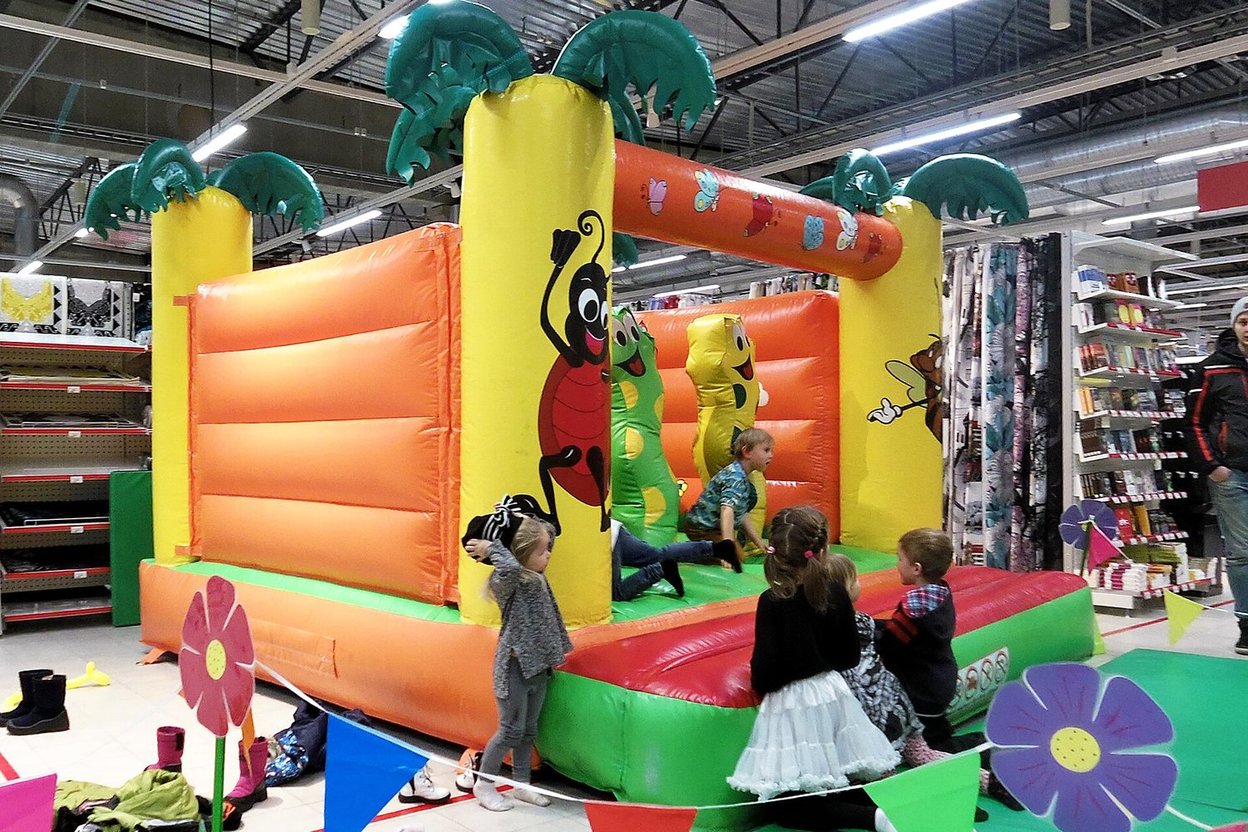
How to Start a Bounce House Rental Business
Bounce house rentals are a real small business: low startup compared with many, strong weekend demand, and room to grow. The steps: market research, equipment, insurance, rules, pricing and bookings.
You've seen them anchored in a backyard, filling a school field-day, or dominating a church festival. The parents renting them mostly ran the transaction in minutes — and the operator packed up and drove to the next job. Party rental is ranked among the top 10 most profitable small businesses in the United States, and a bounce house operation can go from idea to first booking in as little as two to four weeks on a startup budget of $5,000 to $30,000. First-year income potential runs $50,000 to $150,000. Peak season is April through October, so cash flow is seasonal — plan for it from day one.
Choose Your Business Model
There are two ways to run this business, and the choice shapes every decision that follows.
The mobile rental model sends a unit to the customer's location. A regular-sized inflatable averages $125 for a four-hour rental. A common pricing rule of thumb: charge one-tenth to one-twelfth of what you paid for the unit per rental day. On a $2,000 bounce house, that's $165–$200 per booking. Per-event income typically lands between $150 and $500.
The storefront model brings customers to a fixed indoor location. Storefronts can charge $7 to $10 per child, or offer a private-party package — $250 for 20 children is one commonly used structure.
Most new operators start mobile. The overhead is lower, and you can test demand before signing a lease.
Register the Business
The legal foundation is straightforward, but it has real steps.
Before you spend a dollar on equipment, work through this paperwork:
- Apply for an Employer Identification Number (EIN) through the IRS — it's free.
- Choose a business structure. Most solo operators form an LLC for liability separation.
- Identify your NAICS code. Many party rental operations sit in NAICS 532289 (All Other Consumer Goods Rental).
- Check your state's amusement-ride permit requirements. This is where most new operators are caught off guard.
State laws vary significantly. Florida statute says an amusement ride may not be operated without a current permit issued by the department. Ohio bars operation without a permit under Revised Code 1711.53. Texas puts amusement rides under Occupations Code Chapter 2151, which includes insurance duties. These are not edge cases — inflatable bounce houses fall under amusement-ride law in a growing number of states. Check your state before you set up a single unit.
Safety, Liability, and Insurance
The safety record of inflatables is mixed, and operators who understand the data take it seriously.
A study published in Pediatrics estimated that 64,657 children were treated in U.S. emergency departments for inflatable bounce house-related injuries from 1990 through 2010. The Consumer Product Safety Commission recorded 11 deaths involving inflatables blown over or away by wind from 2003 to 2017. Those wind deaths are the reason anchoring is not optional.
ASTM F2374 is the industry standard covering the design, manufacture, operation, and maintenance of inflatable amusement devices. Commercial operators are expected to follow it.
Practical insurance and operations requirements include:
- Specialized inflatable liability insurance, which costs $800 to $2,000 per year — this is distinct from standard general liability and is written specifically for inflatables.
- A written wind policy: know the manufacturer's wind-speed limit for each unit, and have a clear rule for when to deflate.
- Anchoring every setup to manufacturer specifications, every time.
- Capacity limits and adult supervision at each event.
Buy the Right Equipment
Commercial-grade inflatables are not the same product as a backyard bounce house from a consumer retailer. The construction specs matter: look for 14 oz commercial vinyl on a 1300×1300 denier base, with double and quadruple stitching and reinforced seams. Advanced anchoring systems are a must given the wind-death data above. Multi-layer vinyl and double- or triple-stitched seams are what prevent blowouts over years of rentals.
A commercial-grade classic bounce house costs $1,500 to $3,500 new. The practical advice from operators who have done this is to start with one or two units rather than buying a full fleet. This keeps initial exposure low while you build a customer base and work out logistics.
One timing issue that is easy to overlook: popular units sell out. In 2026, 13×13 castle inflatables sold out on May 11 and did not return to stock until August 3. If you plan to launch for peak season, buy equipment in late winter or early spring.
Get a Delivery Vehicle
A capable truck or cargo van is part of the startup cost whether you budget for it or not. Plan on $10,000 to $30,000 for a used vehicle adequate for the job. Vehicle choice affects how many units you can move per day and whether you can eventually run simultaneous deliveries with a second driver.
Price Your Rentals and Manage Cash
The 10-to-12-percent pricing rule gives you a floor: a unit that costs $2,500 should rent for at least $250 to $300 per day. At the low end of the market, a regular-sized inflatable averages $125 for four hours.
For cash management, one widely cited framework splits revenue into thirds: one-third for personal pay, one-third back into the business, and one-third held for operating expenses and off-season reserves. The off-season reserve matters because peak season ends in October and revenue can drop significantly through winter.
Scale Your Fleet
Fleet size is the clearest driver of annual income. The ranges below are estimates, not guarantees:
- 3 to 5 units: $20,000 to $50,000 per year
- 8 to 15 units: $60,000 to $130,000 per year
- 20 or more units: $150,000 or more per year
A starter fleet — three commercial-grade inflatables plus a used delivery truck — runs $20,000 to $55,000 all in. That's the realistic entry point for someone aiming at a part-time-to-full-time income arc rather than a single-unit side project.
The Off-Season
Peak season runs April through October. The months outside that window are when the business either stalls or gets stronger, depending on how you manage them.
The one-third operating reserve from the cash-management framework exists precisely for this period. Use the off-season to service and repair equipment, pursue indoor events (school gyms, church halls, convention spaces), and prepare spring marketing before competitors do. Operators who treat winter as dead time tend to start every season behind. Operators who use it to reinvest and prepare tend to start every season booked.
The business itself is not complicated: a durable product, a legal foundation, the right insurance, and reliable service. The operators who last are the ones who understand the numbers from the beginning.
---
Sources (7)
- Starting a Bounce House Business: What to Know Before You Begin — Jungle Jumps
- How can I get my own bounce house business? — Quora
- How to Start a Bounce House Rental Business in 2026 — Bizzby
- Bounce House Rental Guide for People Starting Out — Inflatable Path
- Starting a Commercial Bounce House Business — Eye Candy Inflatables
- Inflatable Rental Business Start-Up Guide — i2K Play
- How to Start a Bounce House Rental Business: The Complete Guide — Inflateo