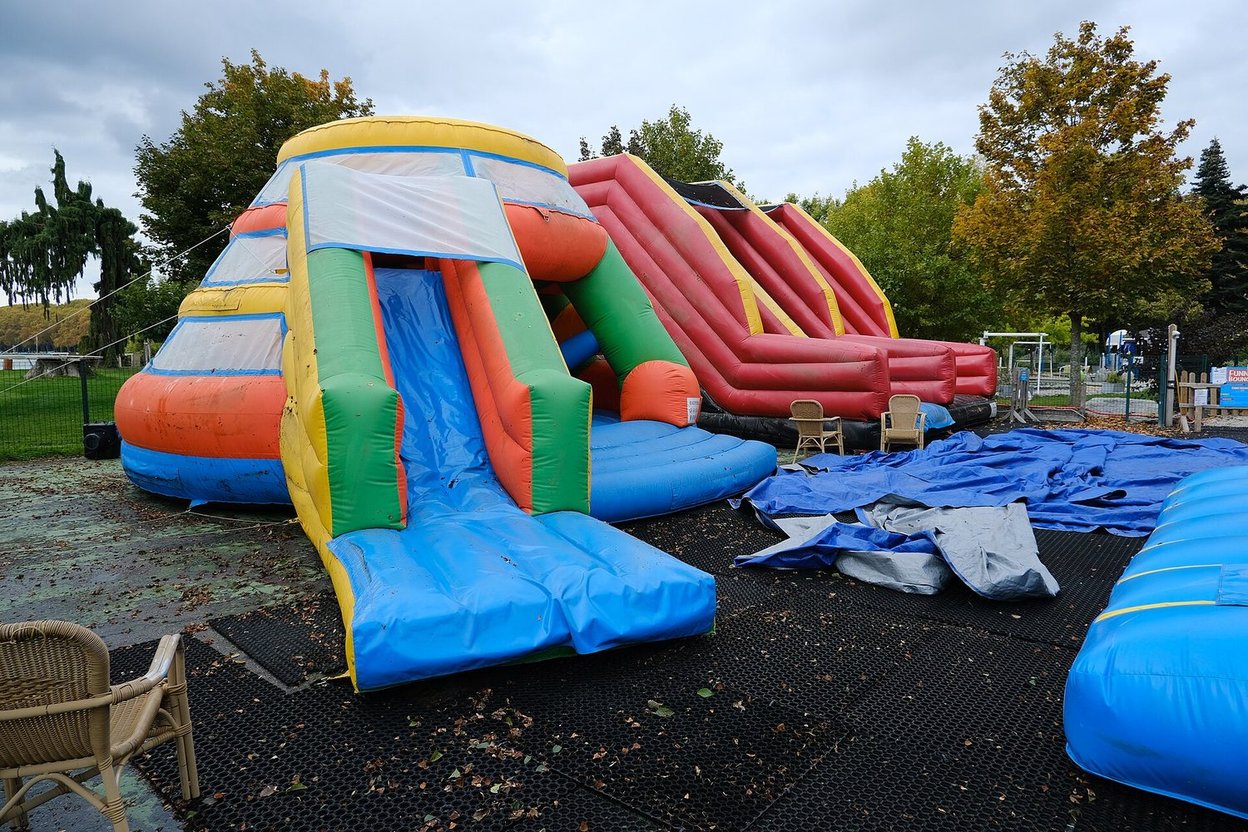
Cleaning and Storing Inflatables Over Winter
An inflatable put away wet or dirty can be ruined by spring. How rental operators clean, dry, inspect and store bounce houses and blowers for winter, and what to fix before the busy season.
For bounce house rental businesses in cold-weather states, fall is the end of the busy season. How you put your inflatables away decides whether they come out ready to rent in spring, or come out with mold, mildew and chewed seams. Here's how to store them right.
Step 1: Clean every unit
- Inflate it on a clean tarp or clean ground.
- Sweep or vacuum out debris: grass, leaves, food, sand.
- Wash with a mild soap and water or a cleaner made for vinyl inflatables. Avoid harsh chemicals that can damage the vinyl or the seams.
- Rinse well.
- Disinfect high-touch areas if you use a disinfectant, following the product label and the manufacturer's guidance.
Step 2: Dry it completely
This is the most important step. A unit rolled up even a little damp can grow mold and mildew over the winter, which stains the vinyl, smells, and can damage the material.
- Leave it inflated in the sun or a dry, ventilated space until every seam, corner and pocket is dry.
- Open zippers and flaps to let air move.
- Check inside walls and baffles.
If you can't get it dry outside, dry it in a garage or warehouse with fans.
Step 3: Inspect and repair
Look over every unit now, while you have time:
- Seams and stitching: look for fraying or loose threads.
- Tears and holes: patch small ones now.
- Netting: check for holes and weak spots.
- Anchor points and D-rings.
- Zippers and Velcro.
- Inflation tubes.
Keep a log of repairs and any items to order. Fix it in winter and you won't be scrambling in April.
Step 4: Roll and pack it
- Deflate fully.
- Fold the sides in, then roll loosely toward the inflation tube so air can escape.
- Strap it and put it in a storage bag or tarp.
- Label it so you know which unit is which.
Step 5: Store it right
- Indoors, dry, and off the floor. Pallets or shelving keep units off cold, damp concrete.
- Temperature: avoid extreme cold if you can. Very cold vinyl can crack if it's handled while frozen. Let units warm up before unrolling them in spring.
- Protect from rodents. Mice love a quiet, rolled-up bounce house. Use traps, keep food out of storage, and check periodically.
- Don't stack heavy items on top of rolled units.
The blowers
- Clean the intake and blades.
- Check the cord and plug for damage.
- Store in a dry place.
- Test them before spring.
Other winter tasks
- Inspections and permits. Some states regulate inflatables as amusement devices and require inspections or permits. Check whether yours renew in spring.
- Insurance. Review your policy before the season.
- Marketing. Build your spring calendar now: schools, churches, birthday parties. See how to start a bounce house rental business.
- Winter income. Some operators rent indoor units for gyms and event centers in winter.
Spring startup
When you bring units out:
- Let them warm up before unrolling.
- Inflate and inspect again.
- Clean off any dust.
A few hours of care in fall can add years to an inflatable's life, and keep your business ready for the first warm weekend.
Photo: Bouncy castle (51011964132).jpg) by Guilhem Vellut from Annecy, France, CC BY 2.0.